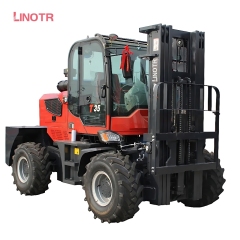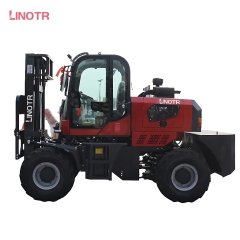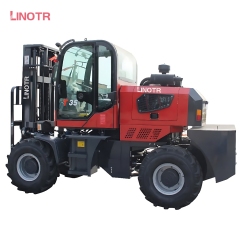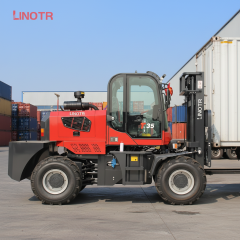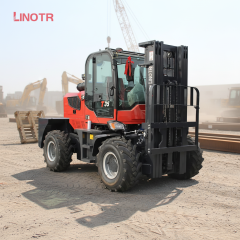
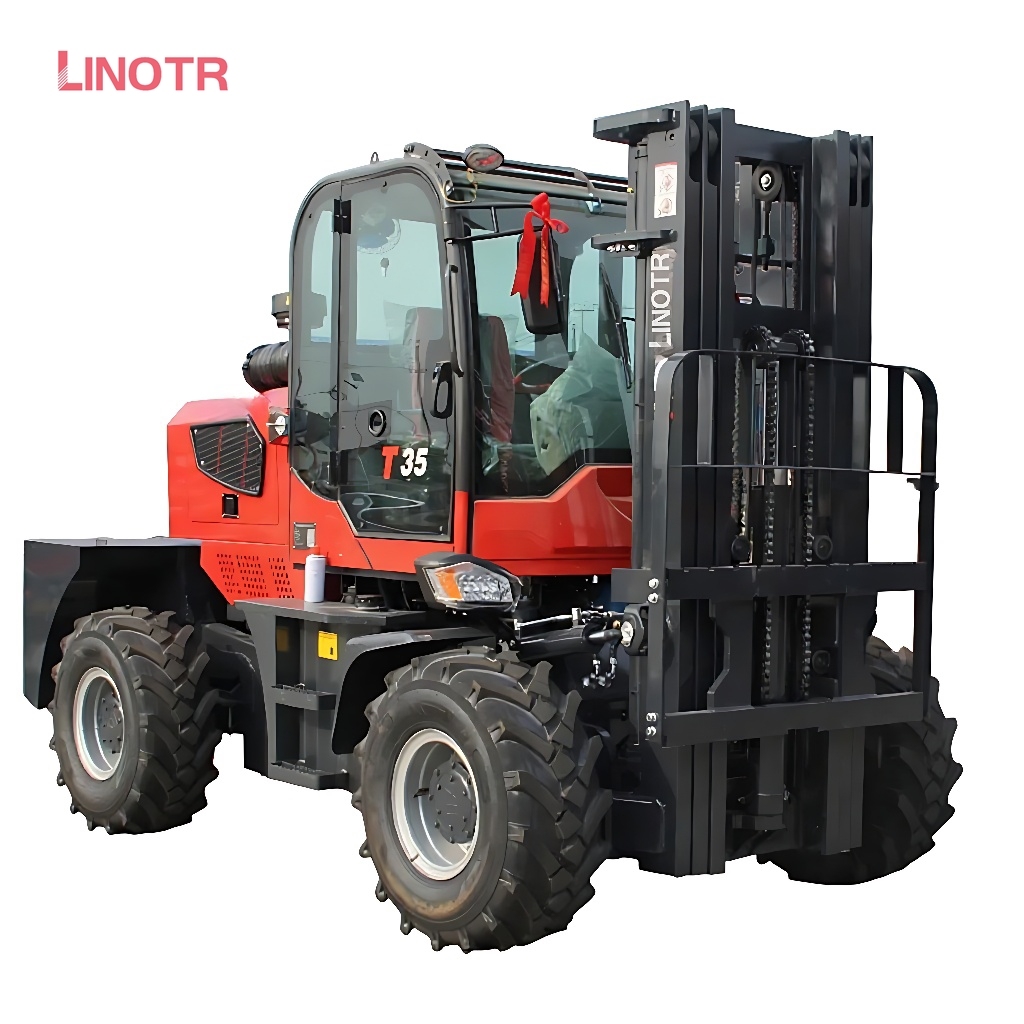
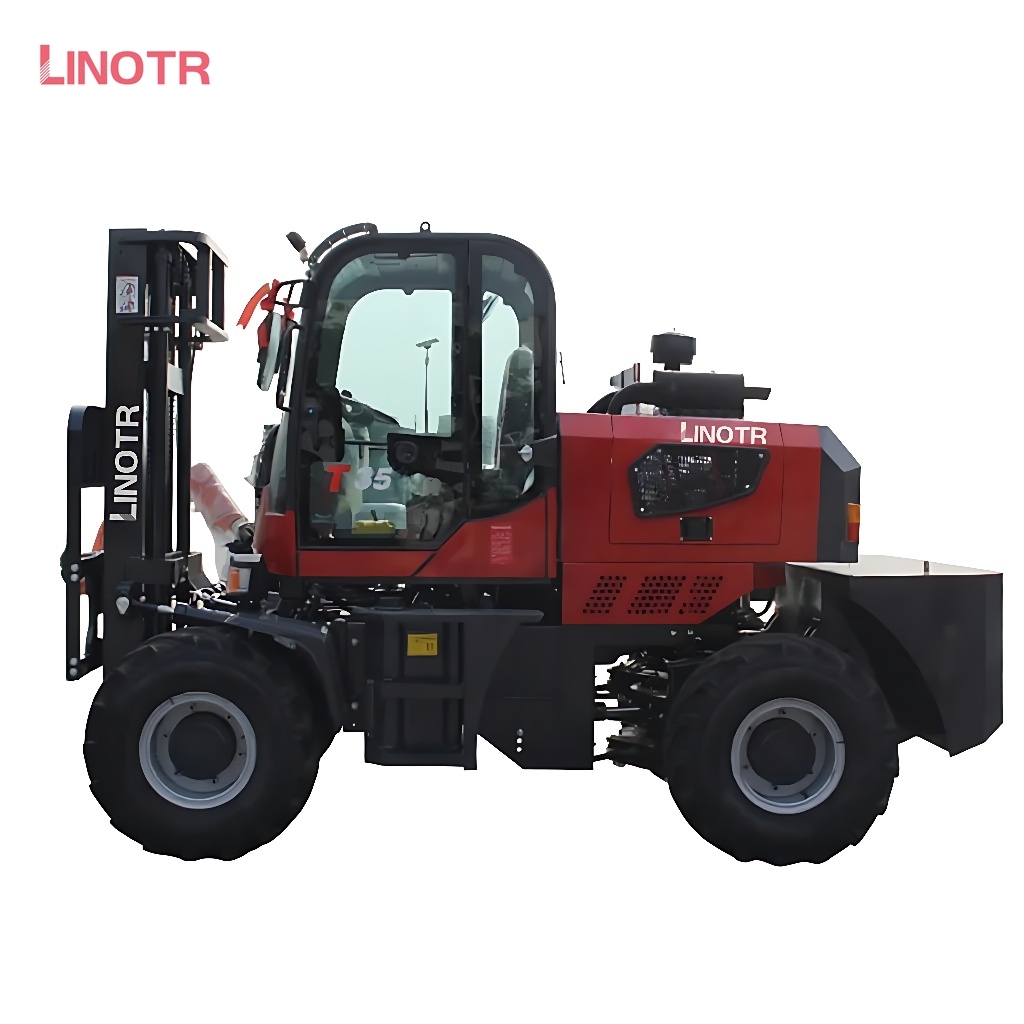
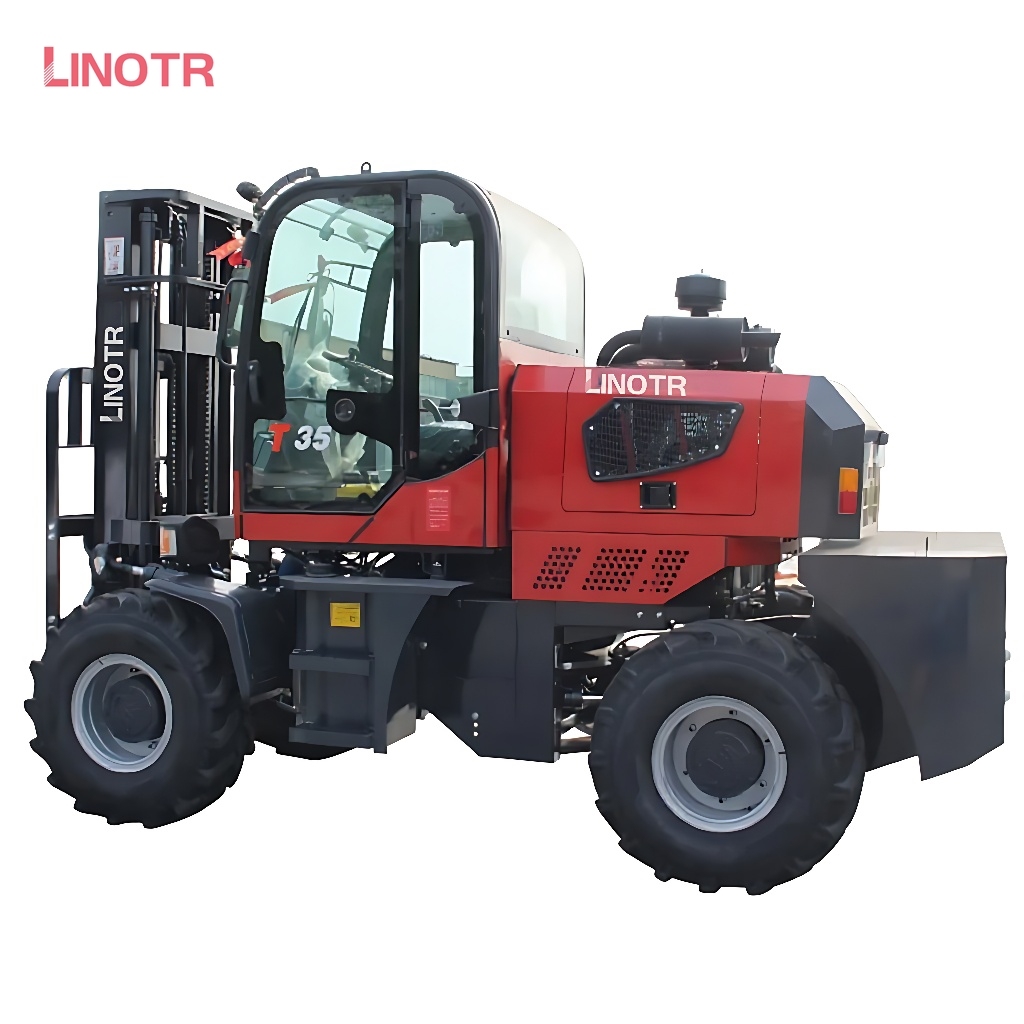
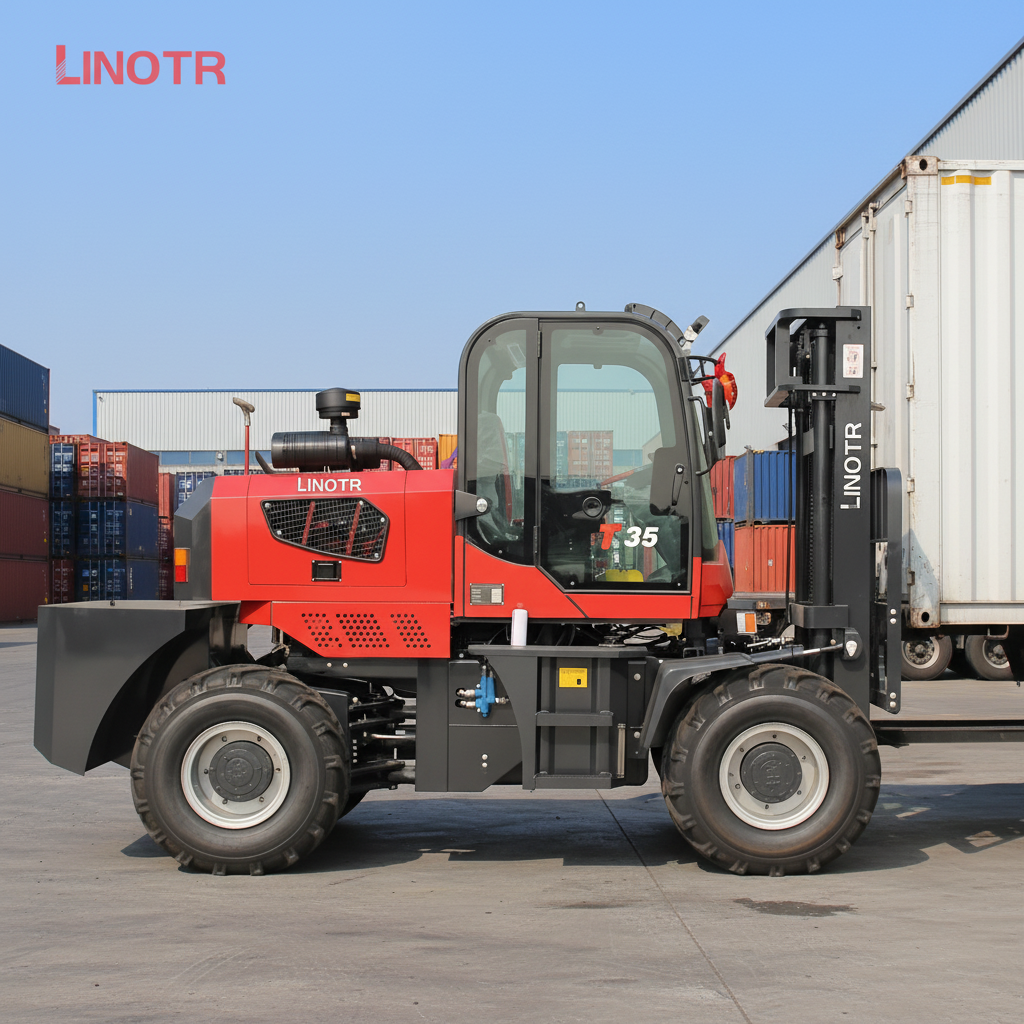
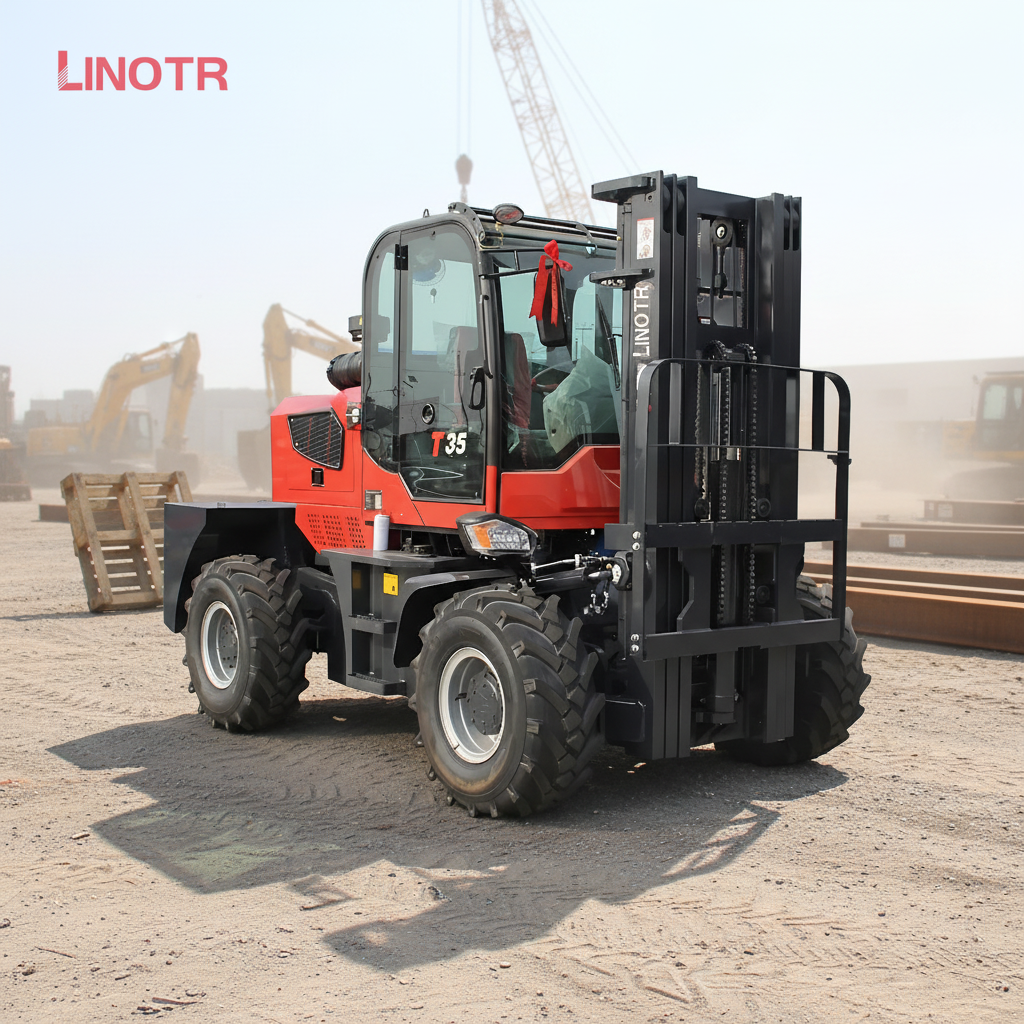
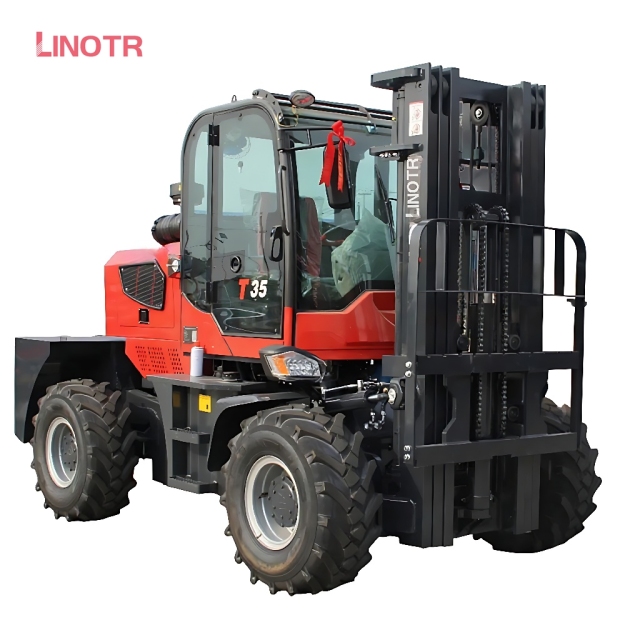
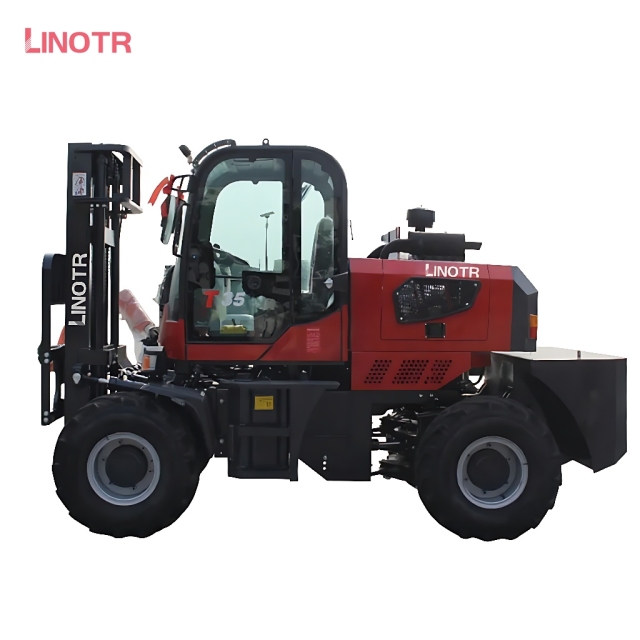
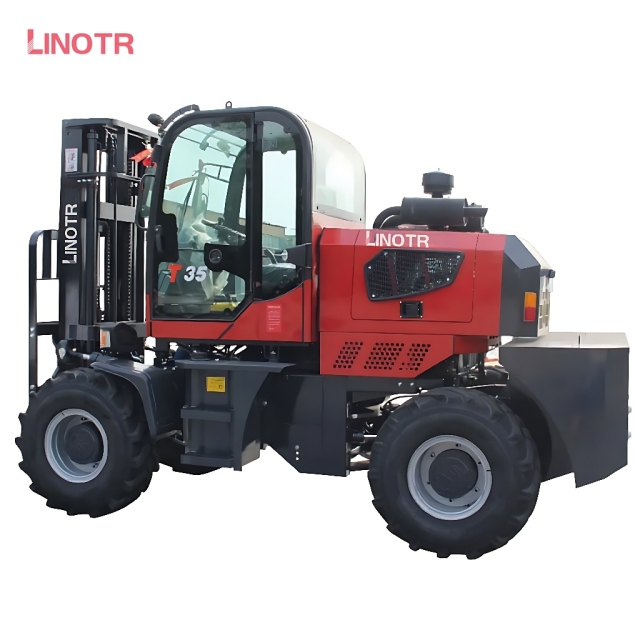
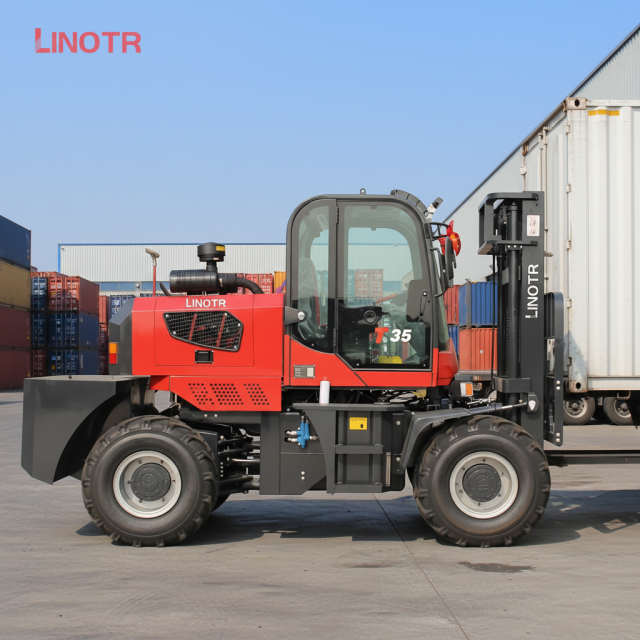
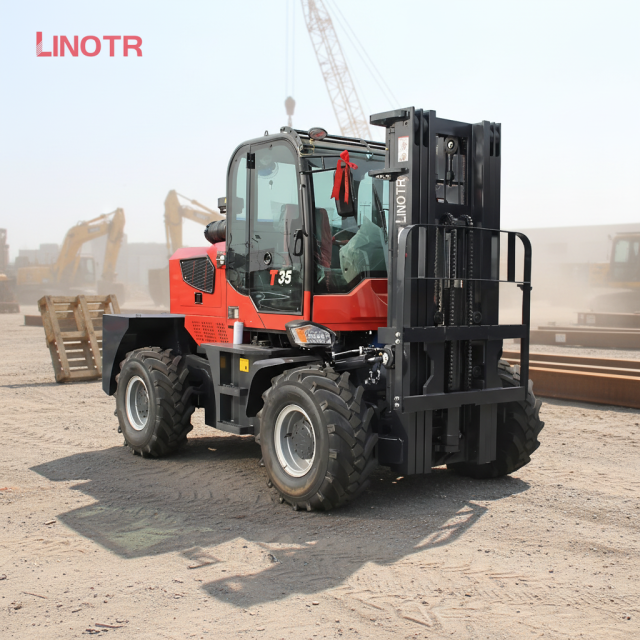
| Model : CPDY-40 | |
| rated loading | 4000KG |
| overall weight | 5300KG |
| Fork Length | 1.22m |
| maximum traction force | 50KN |
| maximum breakout force | 140KN |
| maximum grade ability | 30° |
| maximum dump height | 4000mm |
| overall dimension (L×W×H) | 5600*2000*2800mm |
| minimum turning radius | 3000mm |
| Engine Model | ZY4102 |
| type | Vertical, in-line, water cooled, 4-stroke diesel engine |
| NO. of cylinder-bore*stroke | 4-102*100 |
| rated power | 78kw—1450r/min |
| torque converter | ZY280 |
| gearbox mode | Power shaft normally engaged straight gear |
| gears | 2 forward & 2 reverse |
| maximum speed | 30km/h |
| main reducing spiral | bevel gear grade 1 reduction |
| decelerating mode | Planetary reduction grade 1 |
| wheel base (mm) | 2300mm |
| wheel tread | 2000mm |
| ground clearance | 300mm |
| system working pressure | 16.5MPa |
| boom lifting time | 4.83S |
| total time | 9.15±0.5s |
| service brake | air assist disc brake on 4 wheels |
| parking brake | Manual disk brake |
| type specification | 1670-20 |
| front tyre pressure | 0.35Mpa |
| rear tyre pressure | 0.35Mpa |
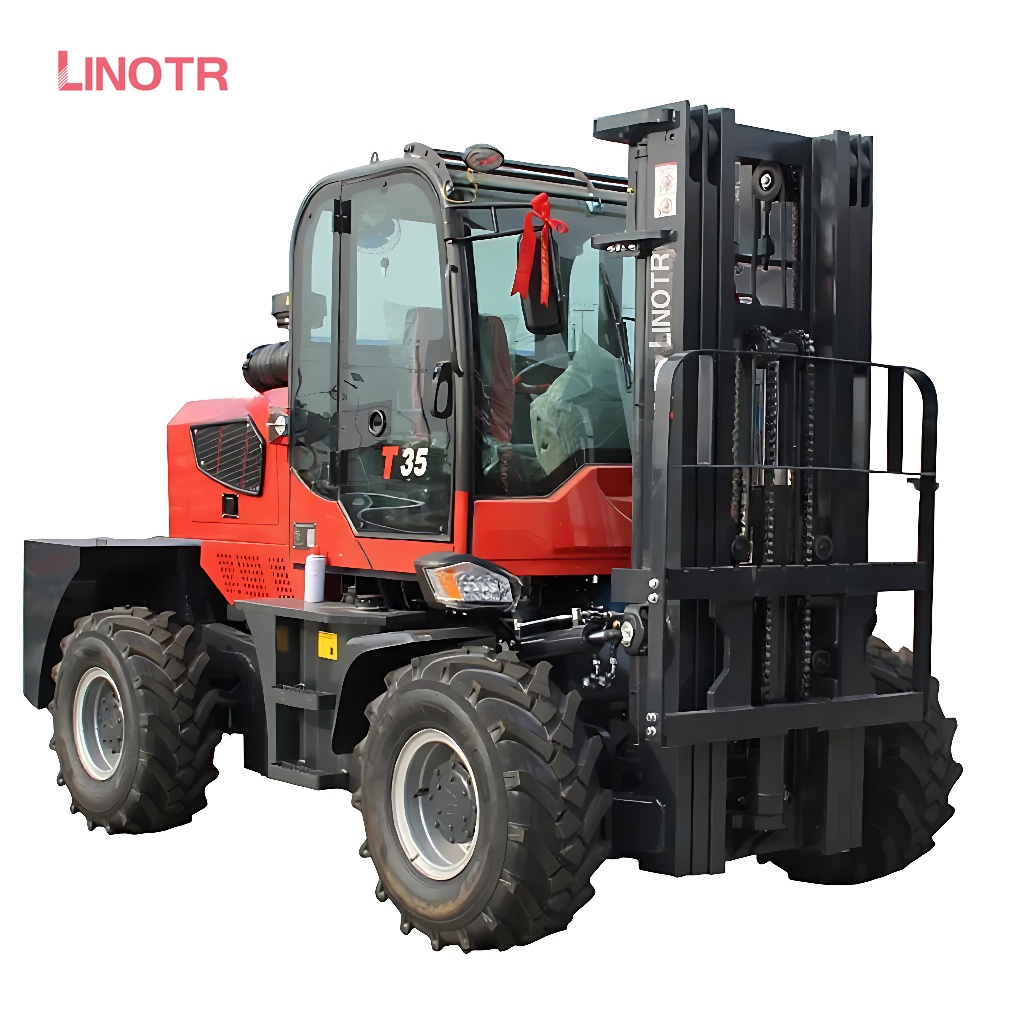
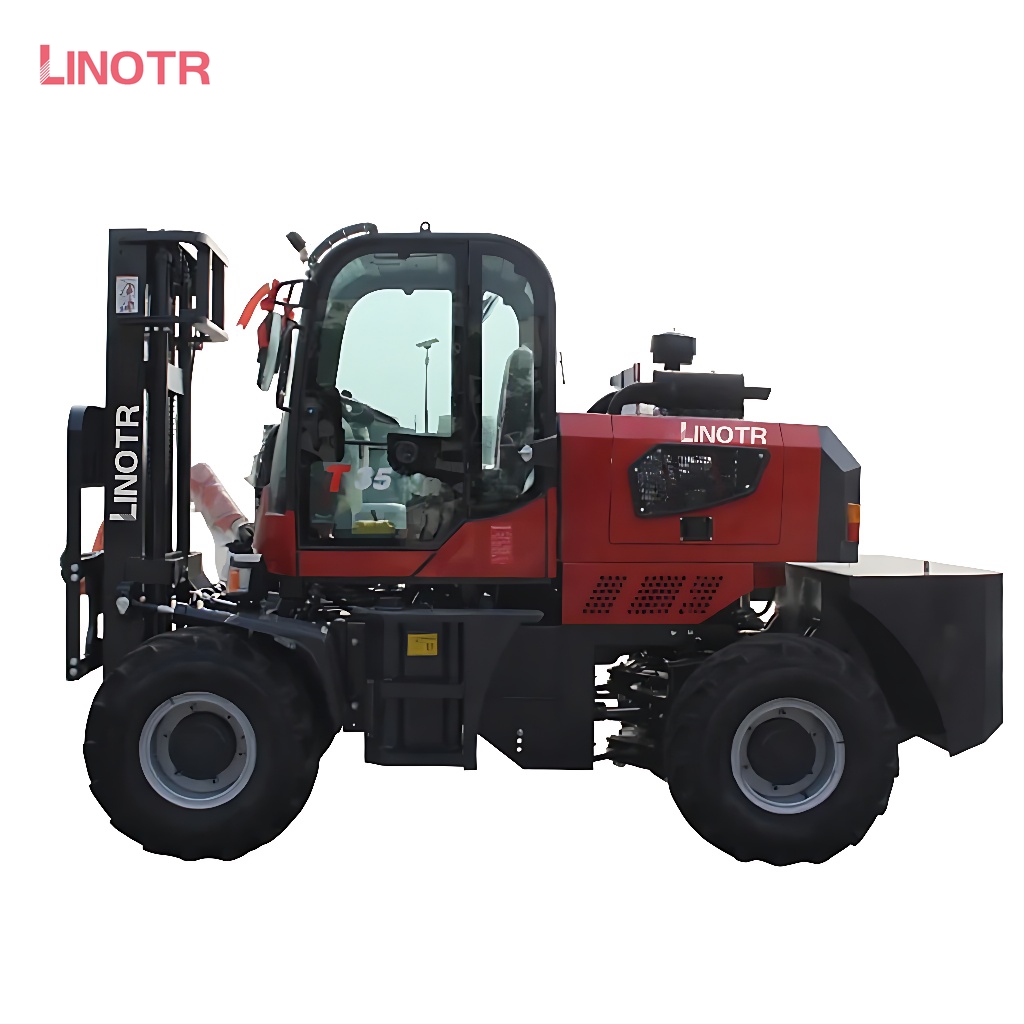
Building materials are the everyday diet: pallets of bricks, blocks, kerbs and paving lifted off a loose stockyard and set onto a truck bed, where the load is heavy and the surface gives under the wheels. Bulk bags and bagged goods — aggregate, sand and cement — move across a yard that softens after rain, where ground conditions matter as much as lifting power. Long packs of timber, board or pipe come off a stack cleanly and travel over ruts and broken concrete without the load swinging free. Stillages, crates and site plant move between compounds over compacted hardcore, in whatever weather the programme has to run through. Rental and hire fleets use it for mixed duty that moves between a paved depot one week and a raw site the next.
We build a full material handling range rather than a single machine: electric pallet trucks and stand-on stackers for warehouse and dock work, and diesel forklift trucks and rough terrain machines for heavier outdoor duty, covering roughly 1.5T to 5T. Fleet buyers can standardise on one supplier across indoor and outdoor sites and match each job to the right power type and capacity instead of buying from several sources. Our factory in Jining, Shandong covers more than 56,000 m², employs over 500 people including more than 60 engineers, holds ISO 9001 and CE certification, and our machines work in more than 100 countries. Tell us your load, terrain and duty cycle and we will help you select the correct model from the range.
We supply material handling equipment as a complete range rather than a single machine: electric pallet trucks and stand-on stackers for warehouse and dock work, and diesel and rough-terrain forklifts for heavier outdoor duties, covering roughly 1.5T to 5T. That breadth lets fleet buyers standardise on one supplier across indoor and outdoor sites and match each job to the right power type and capacity. Tell us your load, terrain and duty cycle, and we will help you select the correct model from the range.
Start with a walk-round while the machine is cold: look for stones, wire and cuts in the tyres, and check for slow pressure loss. Check engine oil, coolant and hydraulic oil, and top up before the machine goes to work rather than when it comes back. Test the brakes on level ground before the machine goes anywhere near a ramp or the top of a stockpile.
The cooling pack suffers first, so clear the radiator, air filter and hydraulic cooler after dusty shifts. Keep the grease points on the mast, steer axle and tilt cylinders on a fixed schedule, because on unpaved ground they need attention far more often than they do on concrete. Inspect the mast chains, fork carriage and load backrest for slack or wear, since a stretched chain shows up first as a load that will not sit level.
A gravel yard is hard on tyres, so check for cuts, embedded stones and slow leaks as part of the daily walk-round. Run the cold pressures listed in the specification rather than softening them for comfort. If the machine spends its life on broken concrete and flint, treat replacement tyres as a running cost rather than a one-off.
Every machine ships with a detailed operation manual, and we provide maintenance video tutorials and lifetime remote technical support. If something goes wrong on site, our technical team can talk your mechanic through the fault on a video call before you pull the machine out of service. That keeps a small fleet working without a specialist dealer on the doorstep.
If the machine works outside, on stockyards, compounds, building sites or ramps between levels, this 4WD rough terrain forklift is the right starting point because it is built around uneven surfaces and mixed ground. If the work is inside a building, at racking or in tight aisles, an electric pallet truck or a stand-on stacker is the better tool, and a diesel machine should not be run indoors at all. Many sites need both, which is why the range runs from warehouse equipment up to this capacity.
Check gate widths, ramp gradients and the surface of the apron or yard against the dimensions in the specification, since these decide whether an existing layout suits a machine of this size. Confirm that the forks reach your pallet depth and the truck-bed or stockpile height you load to most often. If the yard is tight at any point, give us the measurements and we will check the fit with you before the machine is built.