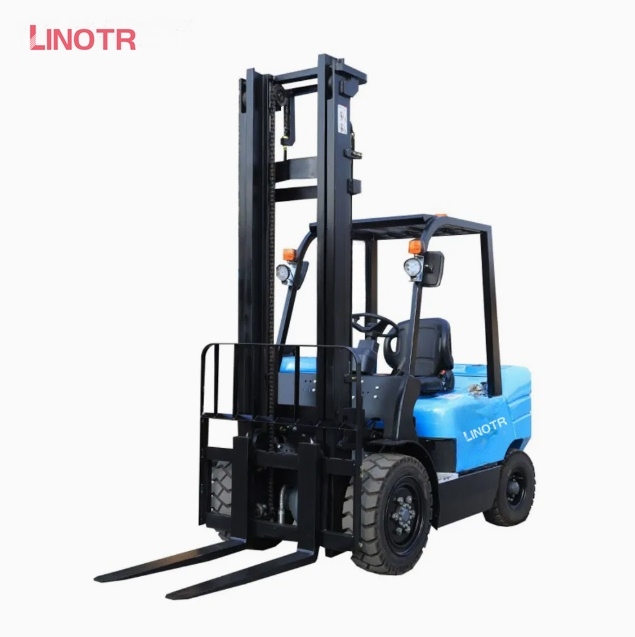
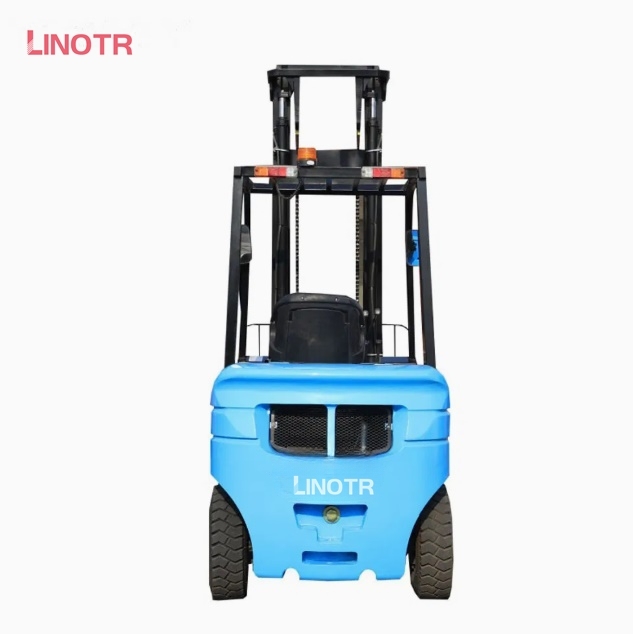
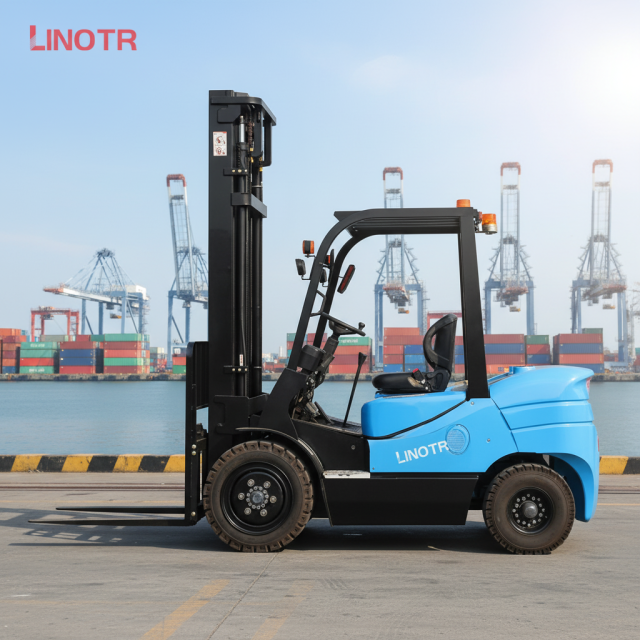
| Model :CPC-50 | ||
| propulsion | - | Diesel |
| Rated lifting capacity | kg | 5000 |
| Load center distance | mm | 500 |
| Driving style | - | seated |
| Maximum height (with blocking shelf, unloaded) | mm | 4250 |
| Maximum lifting height | mm | 3000 |
| Full height of the gantry (forks on the ground) | mm | 2275 |
| Free lifting height | mm | 150 |
| Height of roof rack | mm | 2350 |
| Overall length (with/without forks) | mm | 4310/3240 |
| Front overhang | mm | 560 |
| Rear overhang | mm | 580 |
| Wheelbase | mm | 2100 |
| Minimum Ground Clearance | mm | 175 |
| Overall width | mm | 1480 |
| Minimum Turning Radius (Outside) | mm | 2930 |
| Minimum Right Angle Aisle Width | mm | 2900 |
| Mast tilt (front/rear) | deg | 6/12 |
| Fork size | mm | 1070×150×50 |
| total weight | Kg | 6750 |
| Number of wheels (X = drive wheels) | - | 2X2 |
| Tire Type | - | pneumatic tire |
| Tire Size (Front) | - | 300-15-18PR |
| Tire Size (Rear) | - | 7.00-12-14PR |
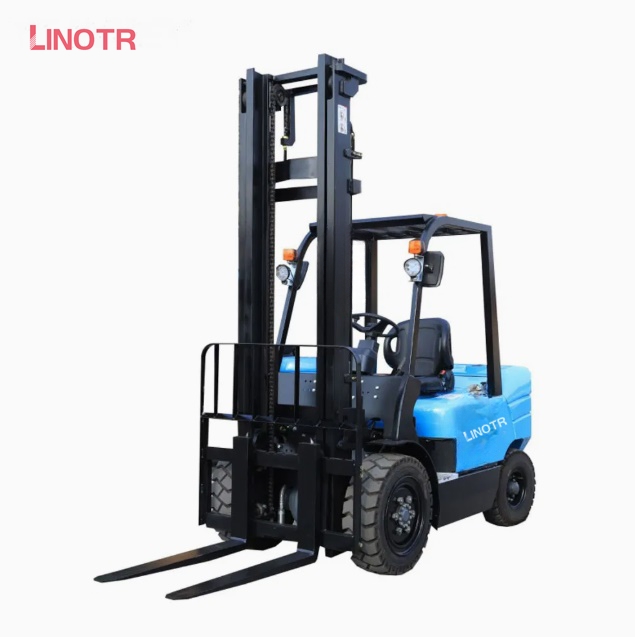
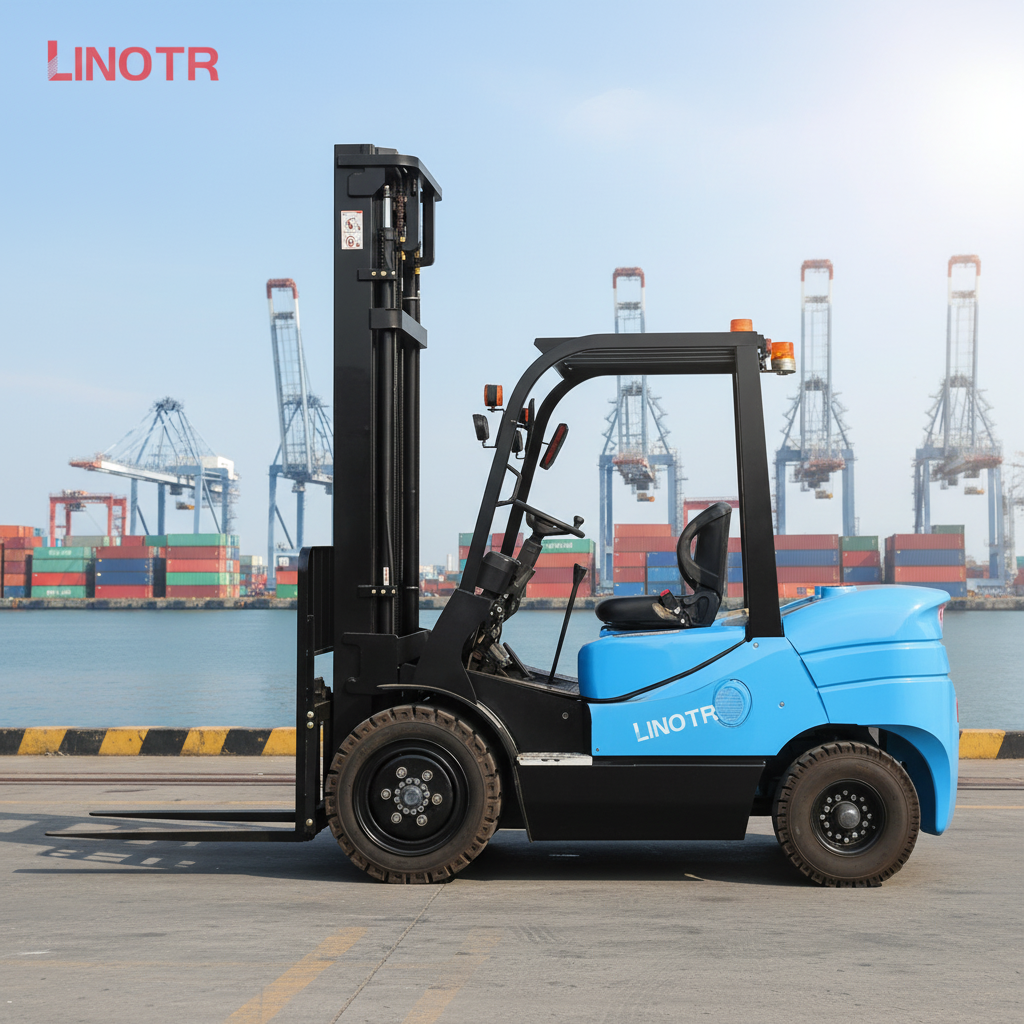
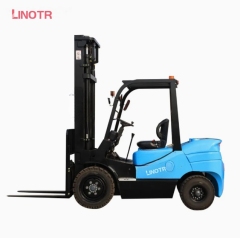
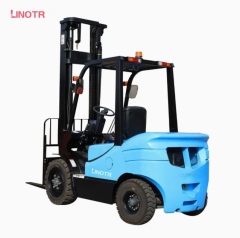
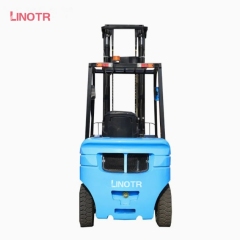
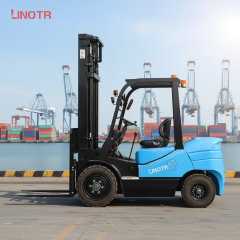
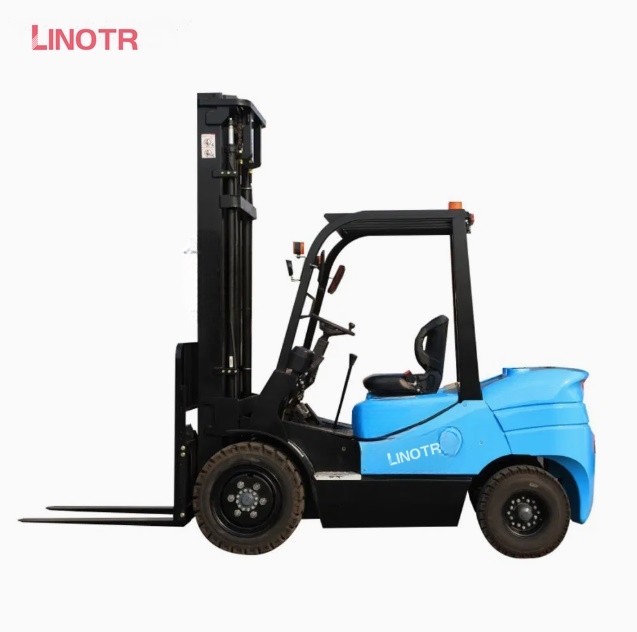
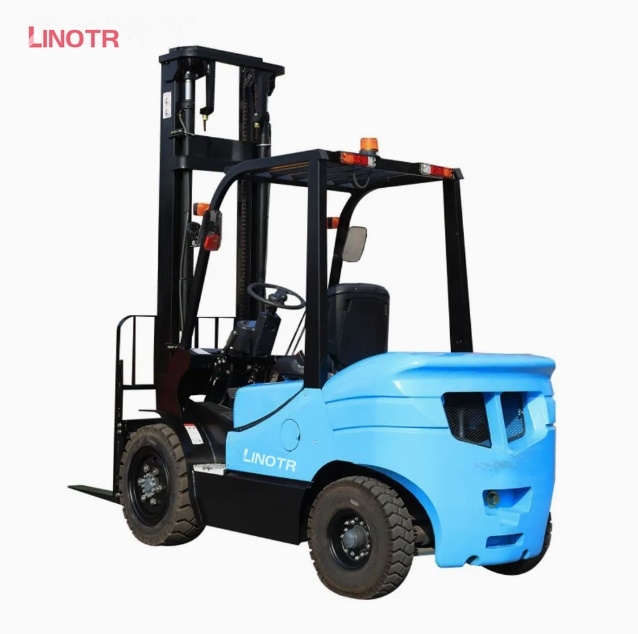
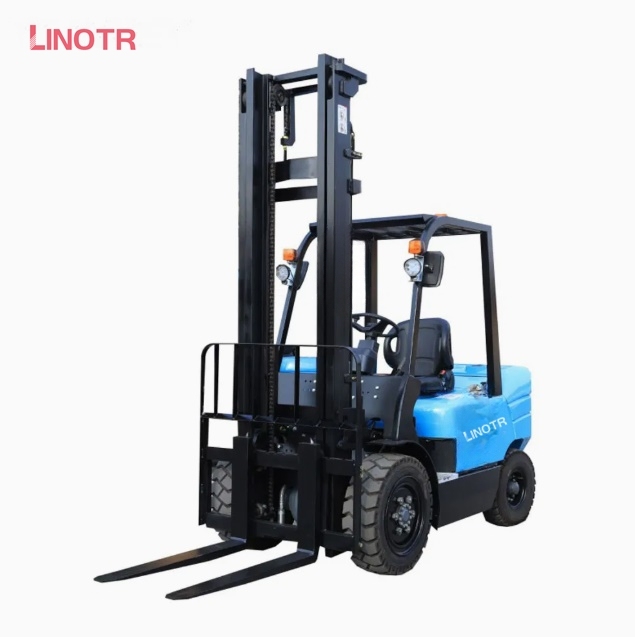
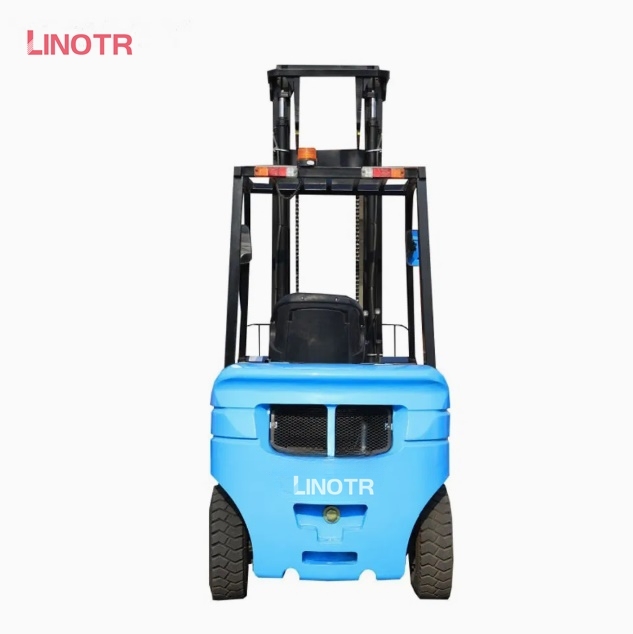
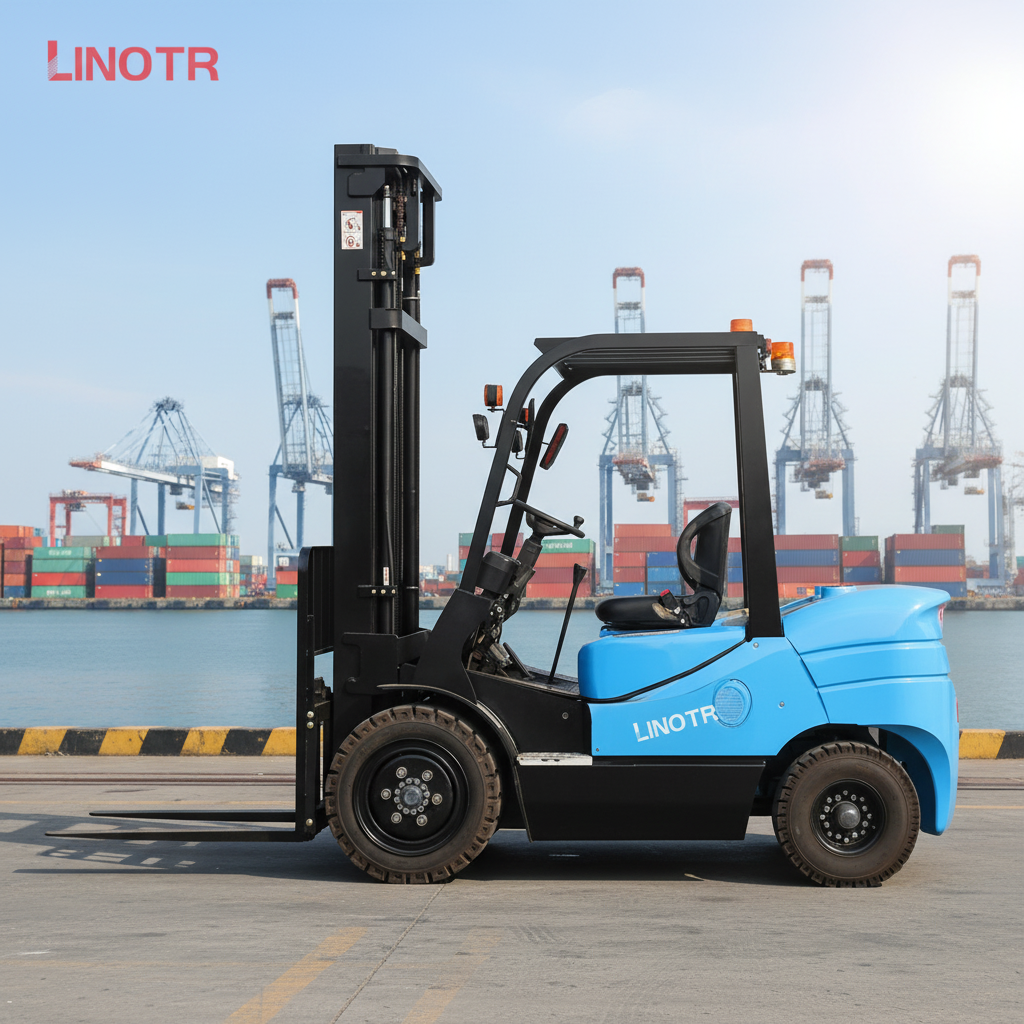
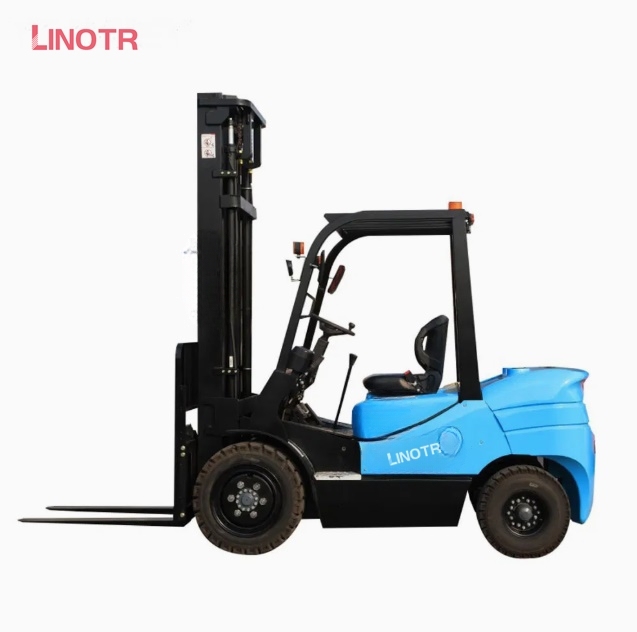
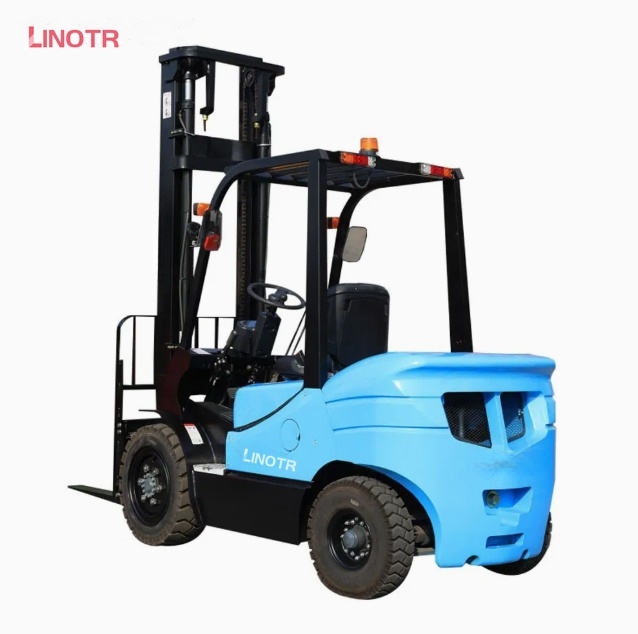
A diesel forklift truck of this size is bought for one reason: the loads are heavy and the work happens outdoors. This is a seated counterbalance machine in the five-tonne class, with pneumatic tyres, a vertical mast and the counterweight to pick up steel, stone, timber and dense palletised goods that a lighter truck cannot lift safely. It works on concrete, asphalt or packed gravel, moving between the stockyard, the loading bay and the truck, and it refuels at the end of the shift rather than waiting on a charge point. Operators get a clear view forward and familiar counterbalance controls; owners get a machine that stays productive from the first lift of the day to the last.
| Specification | Value |
|---|---|
| Model | CPC-50 |
| Power source | Diesel |
| Load centre distance | 500 mm |
| Overhead guard height | 2,350 mm |
| Service weight | 6,750 kg |
| Tyres | Pneumatic, 300-15-18PR front / 7.00-12-14PR rear |
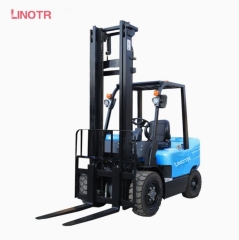
The mast is a vertical rail design with a 150 mm free-lift section, so the forks can slide under a pallet or into a low container slot before the mast itself starts to rise — useful when you are working inside a trailer or under a low beam. From the seat the operator tilts the mast forward through its working range to pick the load cleanly, then tips it back to sit the load against the carriage for travel; this model runs to 6° forward and 12° back. The carriage takes standard tapered forks, and the mast channels stay open enough to keep both the fork tips and the load in view while they are positioned. Anything bolted to the carriage changes the load centre, and the working rating changes with it.
We supply material handling equipment as a complete range rather than a single machine: electric pallet trucks and stand-on stackers for warehouse and dock work, and diesel and rough-terrain forklifts for heavier outdoor duties, covering roughly 1.5T to 5T. That breadth lets fleet buyers standardise on one supplier across indoor and outdoor sites and match each job to the right power type and capacity. Tell us your load, terrain and duty cycle, and we will help you select the correct model from the range.
A diesel forklift truck in this class takes steel coils and bundles, palletised brick and block, timber packs, precast concrete and loaded containers as ordinary daily work. Capacity is always rated at a standard load centre, and the further the load sits from the carriage, or the more you add to it, the more that figure falls away. Tell us what you lift and we will confirm the working number.
Both are diesel counterbalance trucks with the same layout, so the difference is weight carried and space taken. The 3.5-tonne model suits mixed yard loads — lumber, bricks, palletised goods — while this truck is the one for dense, heavy lifts such as steel plate, coils and container work. If your loads sit between the two, tell us the heaviest item you move every day.
The pneumatic tyres suit concrete, asphalt and packed gravel yards, and they absorb the bumps that rattle a cushion-tyred machine. This is not a rough terrain forklift: on soft, rutted or sloping ground, tell us before you order, because we are also a rough terrain forklift manufacturer and the machine built for that surface is a different one.
It is an open counterbalance station: the operator sits at the wheel with the mast and fork tips in view, under an overhead guard above the seat. There is no enclosed cab on this model, so plan for outdoor weather and make sure the truck has room to vent when it works close to buildings. Controls follow the standard forklift layout.
Engine and emission configuration depends on where the truck will work — fuel quality, local rules and the market it is delivered into all affect the specification. Tell us the country and the working environment when you enquire, and the engine specification for your unit is confirmed on the order.
The daily checks are the usual ones: engine oil and coolant, hydraulic oil level, tyre condition, brakes, horn and lights, plus a look at the forks and mast chains. Servicing follows the intervals in the operator manual supplied with the truck, and the common items are filters, hydraulic oil and mast wear parts. Keep the load chart visible in the station.