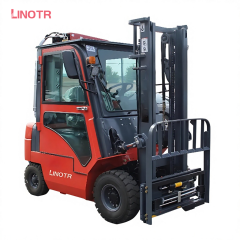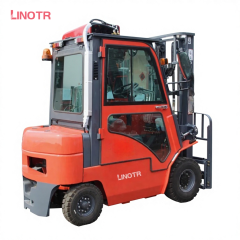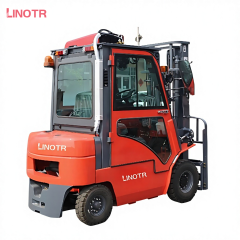
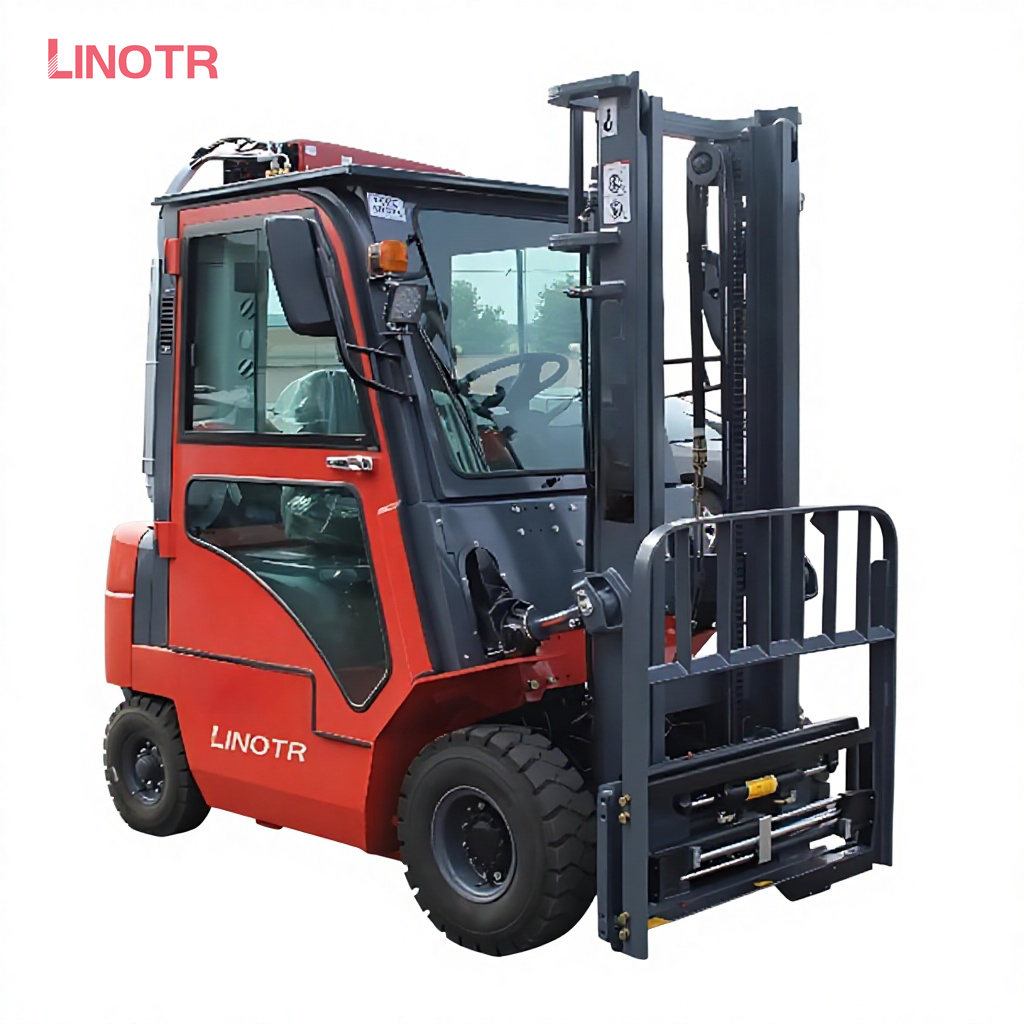
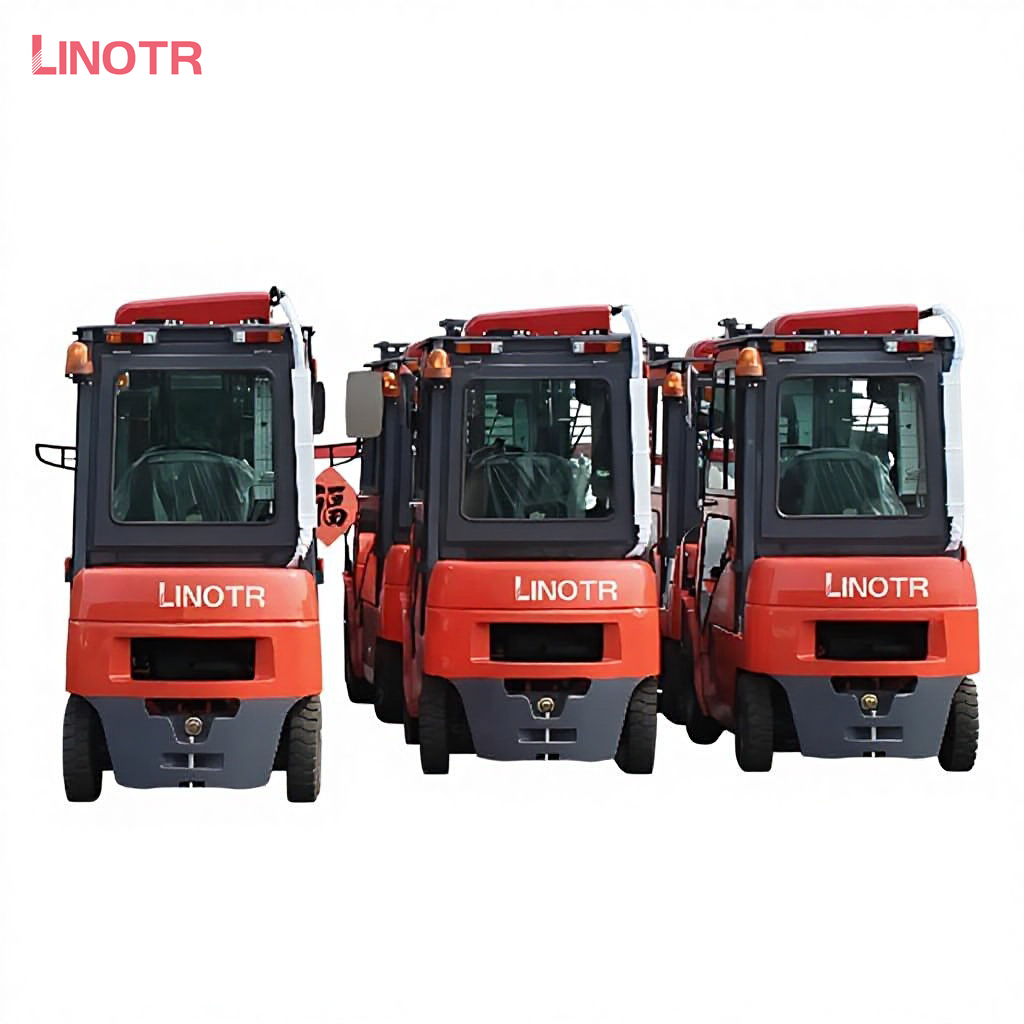
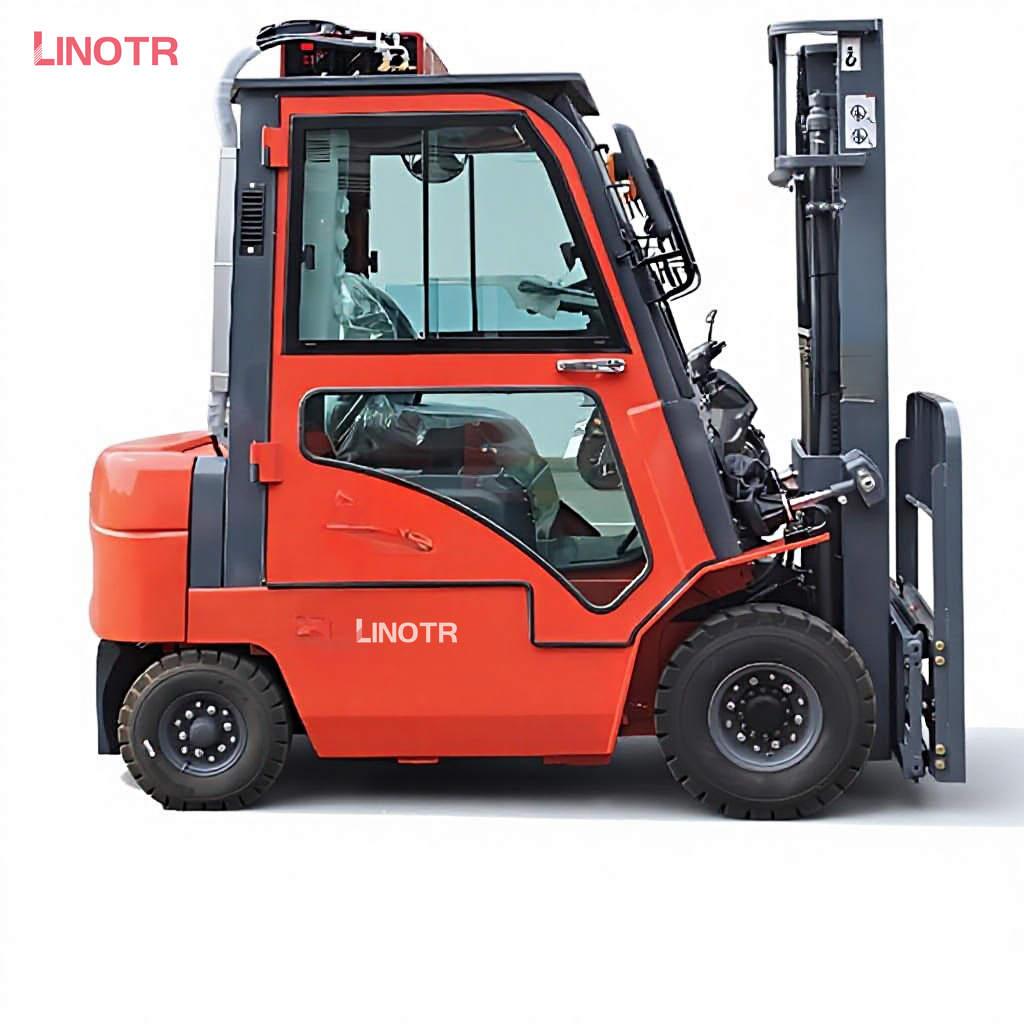
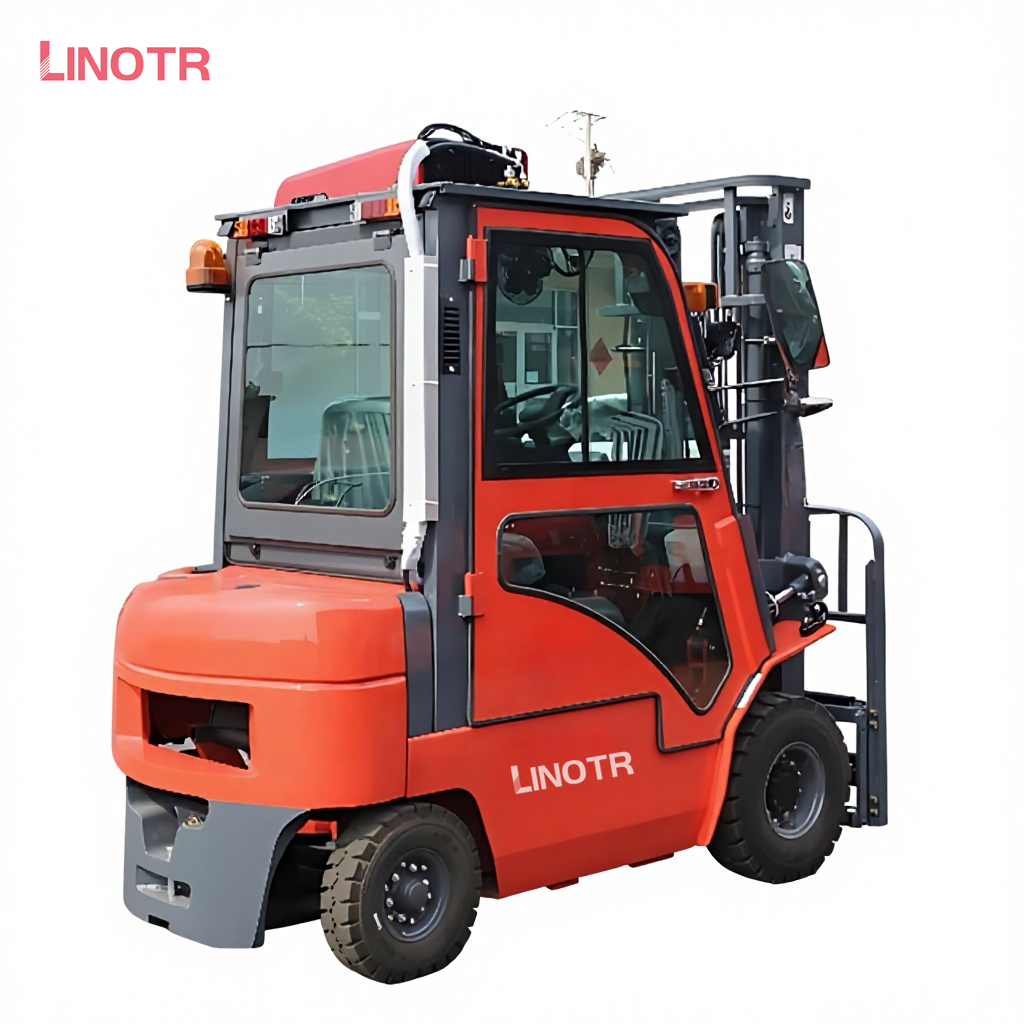
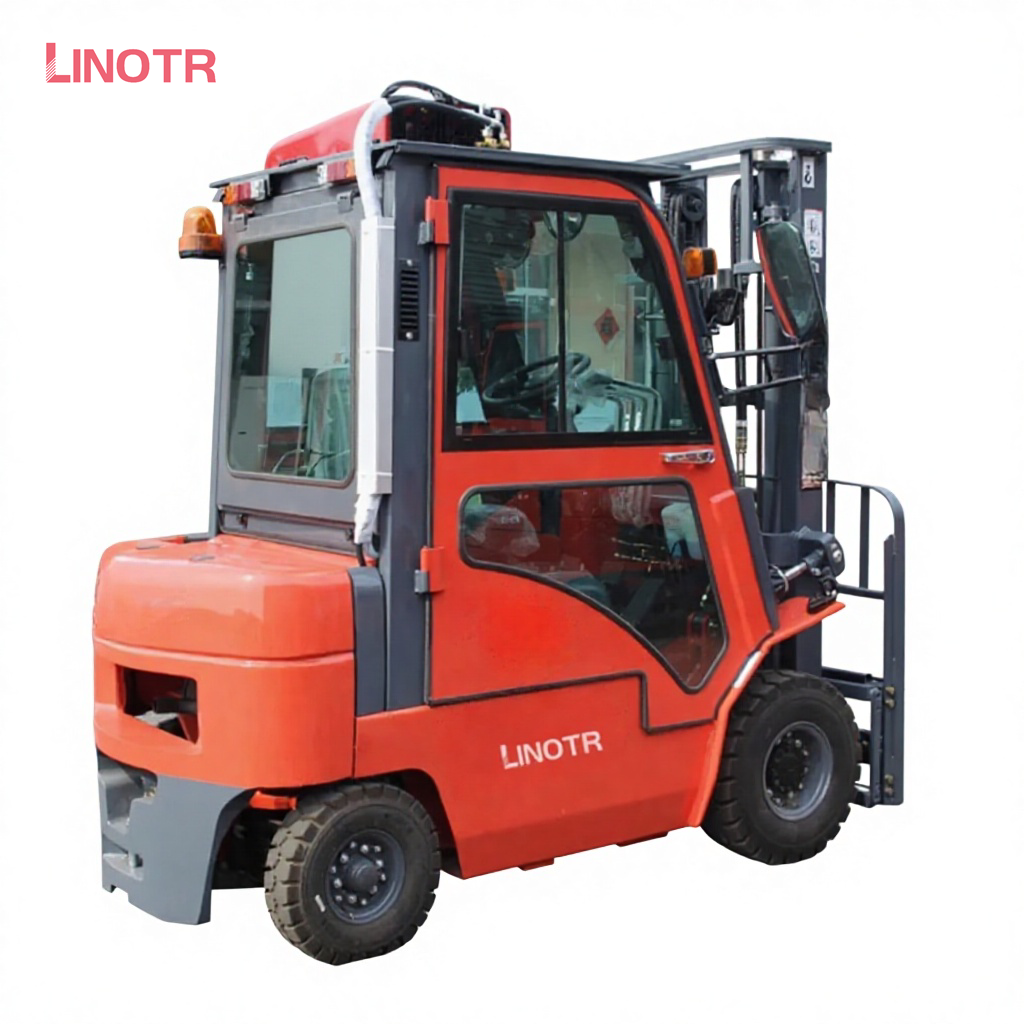
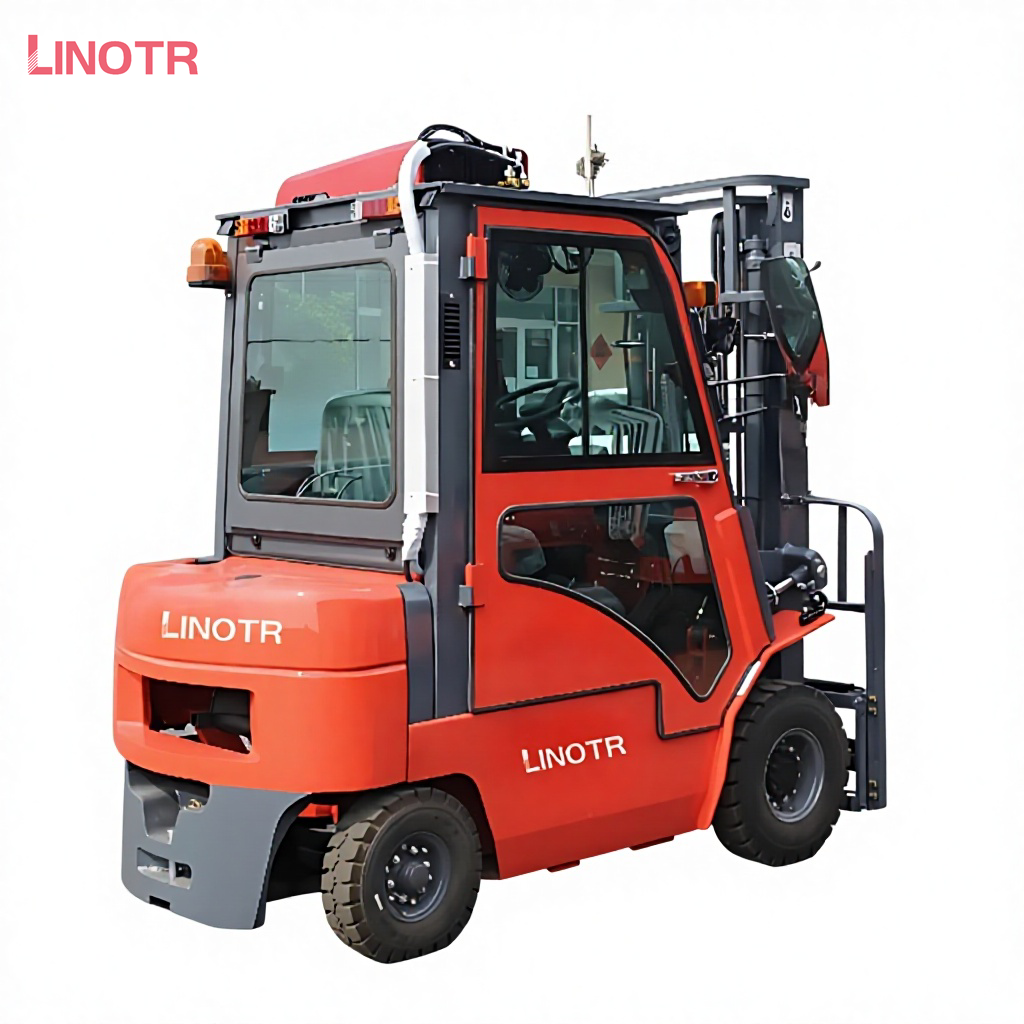
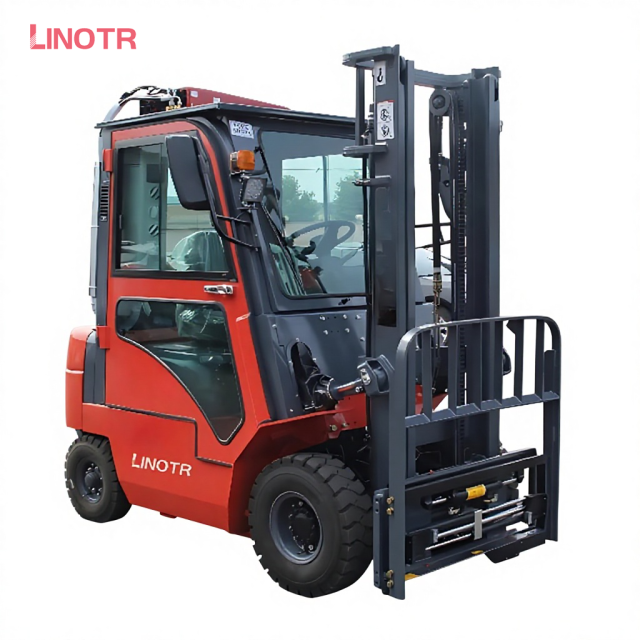
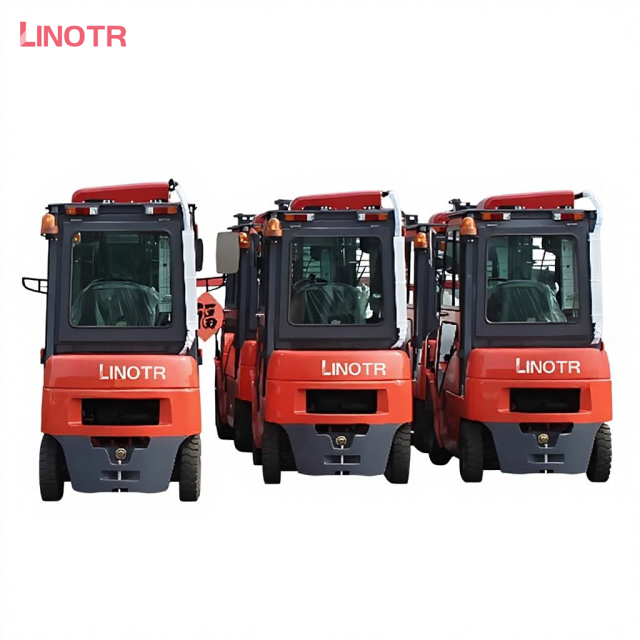
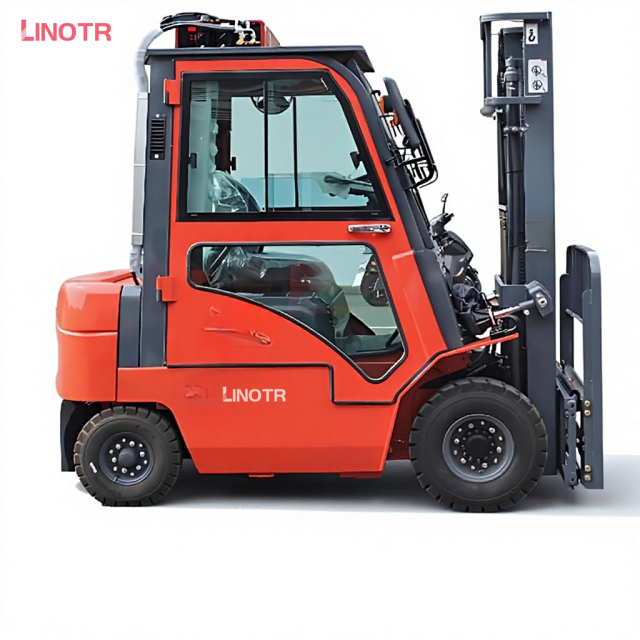
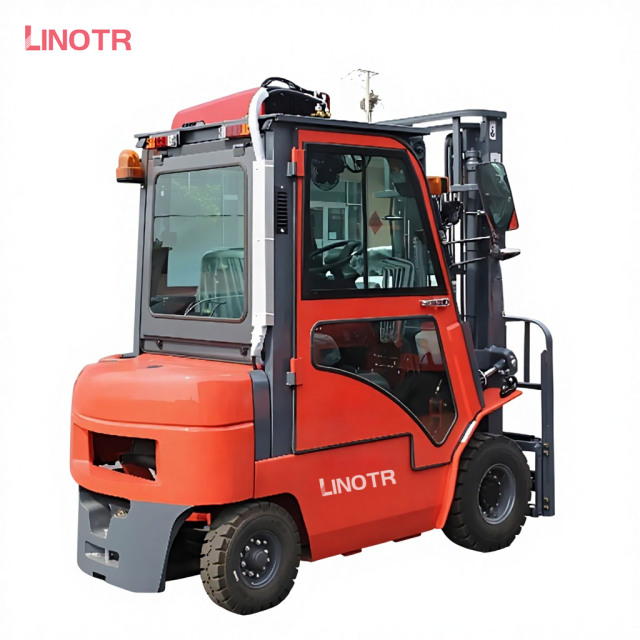
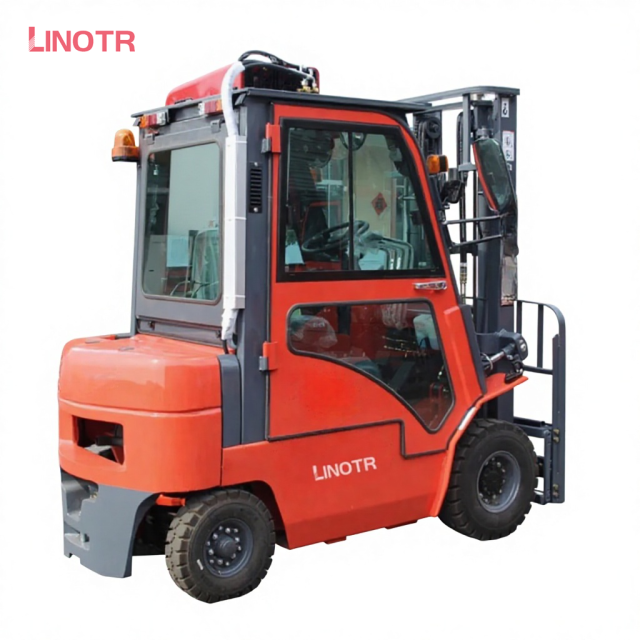
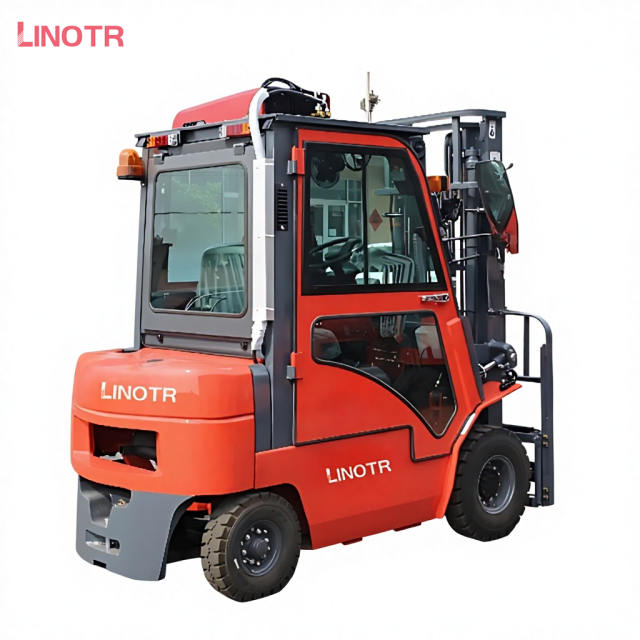
| Model :CPC-35 | ||
| propulsion | - | Diesel |
| Rated lifting capacity | kg | 3500 |
| Load center distance | mm | 500 |
| Driving style | - | seated |
| Maximum height (with blocking shelf, unloaded) | mm | 4217 |
| Maximum lifting height | mm | 3000 |
| Full height of the gantry (forks on the ground) | mm | 2120 |
| Free lifting height | mm | 150 |
| Height of roof rack | mm | 2140 |
| Overall length (with/without forks) | mm | 3820/2750 |
| Front overhang | mm | 484 |
| Rear overhang | mm | 520 |
| Wheelbase | mm | 1750 |
| Minimum Ground Clearance | mm | 135 |
| Overall width | mm | 1225 |
| Minimum Turning Radius (Outside) | mm | 2400 |
| Minimum Right Angle Aisle Width | mm | 2750 |
| Mast tilt (front/rear) | deg | 6/12 |
| Fork size | mm | 1070×125×50 |
| total weight | Kg | 4600 |
| Number of wheels (X = drive wheels) | - | 2X2 |
| Tire Type | - | pneumatic tire |
| Tire Size (Front) | - | 28x9-15-14PR |
| Tire Size (Rear) | - | 6.5-10-10PR |


The CPC-35 is the general-purpose machine in our diesel counterbalance line: standard pallets, banded packs and unitised loads go straight on the forks with no special attachment. The operator sits at the wheel, so a full shift of loading, stacking and truck-to-stack movement stays manageable, and this diesel forklift truck keeps running through long hours outdoors. It is a working truck for a mixed yard rather than a machine built around one commodity.
Building-material and paving yards are home ground: banded packs of slabs, kerbs and blocks come off the stack onto flatbeds and curtain-siders without upsetting the yard layout. Timber and board merchants move banded packs from the saw shed to the loading bay through the day. Distribution depots and 3PL sites run it on the outdoor apron between the dock doors and the trailer across the morning dispatch and the evening intake, while industrial and agricultural suppliers use it for bagged feed, fertiliser and similar unitised goods. Rental fleets favour this capacity class because it hires across a wide mix of jobs, from palletised freight to building supplies. Where a site combines a yard with an indoor store, this machine covers the outdoor side while warehouse handling equipment keeps the aisles moving.
We supply material handling equipment as a complete range rather than a single machine: electric pallet trucks and stand-on stackers for warehouse and dock work, and diesel and rough-terrain forklifts for heavier outdoor duties, covering roughly 1.5T to 5T. That breadth lets fleet buyers standardise on one supplier across indoor and outdoor sites and match each job to the right power type and capacity. Tell us your load, terrain and duty cycle, and we will help you select the correct model from the range.
Standard forks cover the common pallet footprints, and a longer or shorter set changes how the load sits on them. Tell us your pallet size and the height you lift to, and we will confirm the fork length and mast to match; special attachments can be built with the machine. If you load trailers or work under a low canopy, mention it, because free lift raises the forks before the mast extends and keeps the load clear of the opening.
Start with three dimensions: the overall width, the mast height with the forks down, and the unloaded height with the blocking shelf fitted. Those decide whether the truck clears a gateway, a roller door or a loading canopy, and they are worth measuring before you commit to the build. If your apron is tight, plan the turning route before delivery rather than after.
Capacity is rated at the standard load centre, and anything that pushes the load further forward — long timber, a wide attachment or an off-centre pallet — lowers the safe working weight. Size the truck on the heaviest routine lift rather than the headline number, and check that the attachment you plan to use is covered by the rating you are working to. As a rule, the closer the load sits to the fork heel, the more of the rated capacity you keep.
Pneumatic tyres are fitted as standard, and they cushion the machine over yard surfaces rather than passing every bump up through the mast. Keep them at the correct pressure and check for cuts and embedded debris during the pre-shift walkaround, particularly where the yard collects offcuts or scrap. Replace a soft tyre before it damages the rim, and keep the same size and ply rating as the original fitment.
Engines built to EPA or Euro V emission standards can be supplied for markets with strict regulations. Tell us the country the truck will work in and we will confirm what can be fitted before the build starts. Fixing the emission specification early avoids re-work later, so raise it at the enquiry stage.
Start with a short walkaround before the first start of the day: tyre condition, fork heels and pins, mast chains, and any hydraulic weep under the machine. Then check engine oil, coolant and fuel, and clear dust from the radiator and mast area when the yard is dry and dusty. Warm the engine briefly and test the service brake, parking brake and mast tilt before entering a loaded area, and park at the end of the shift with the forks down.