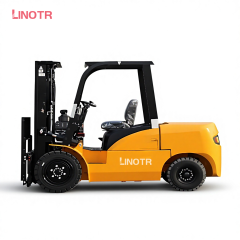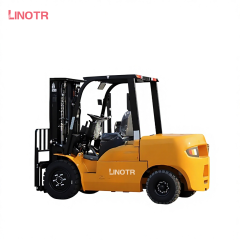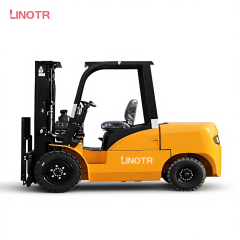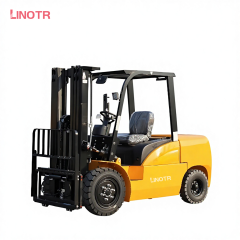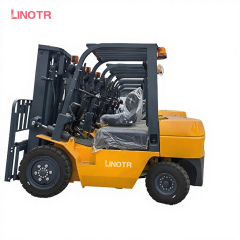
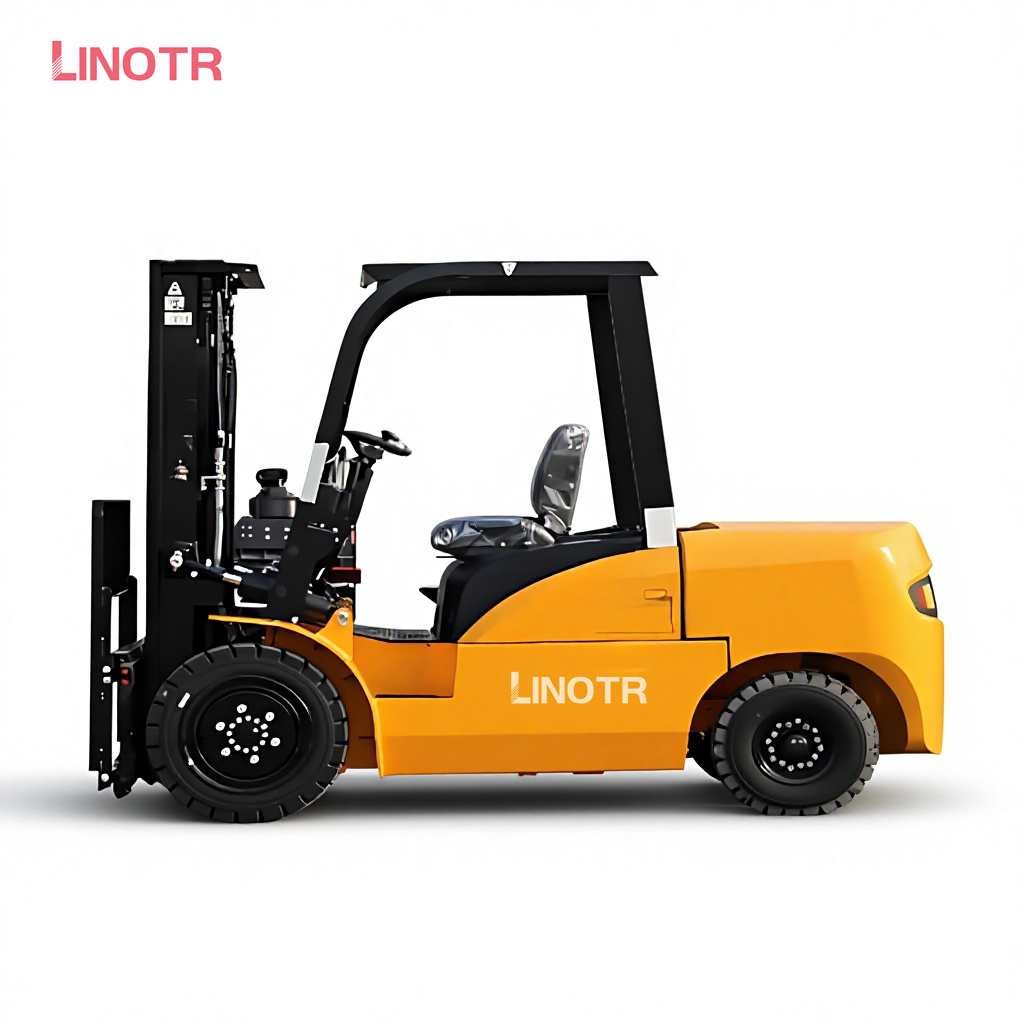
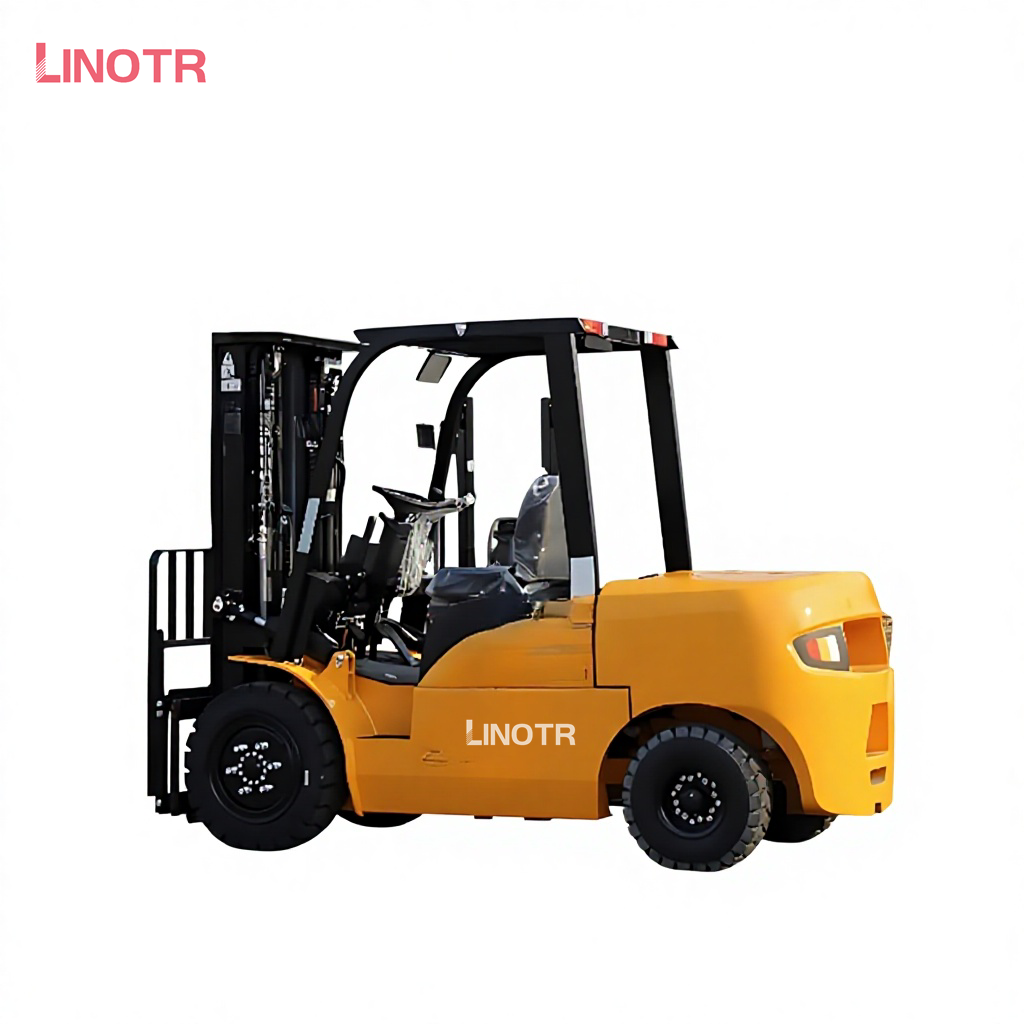
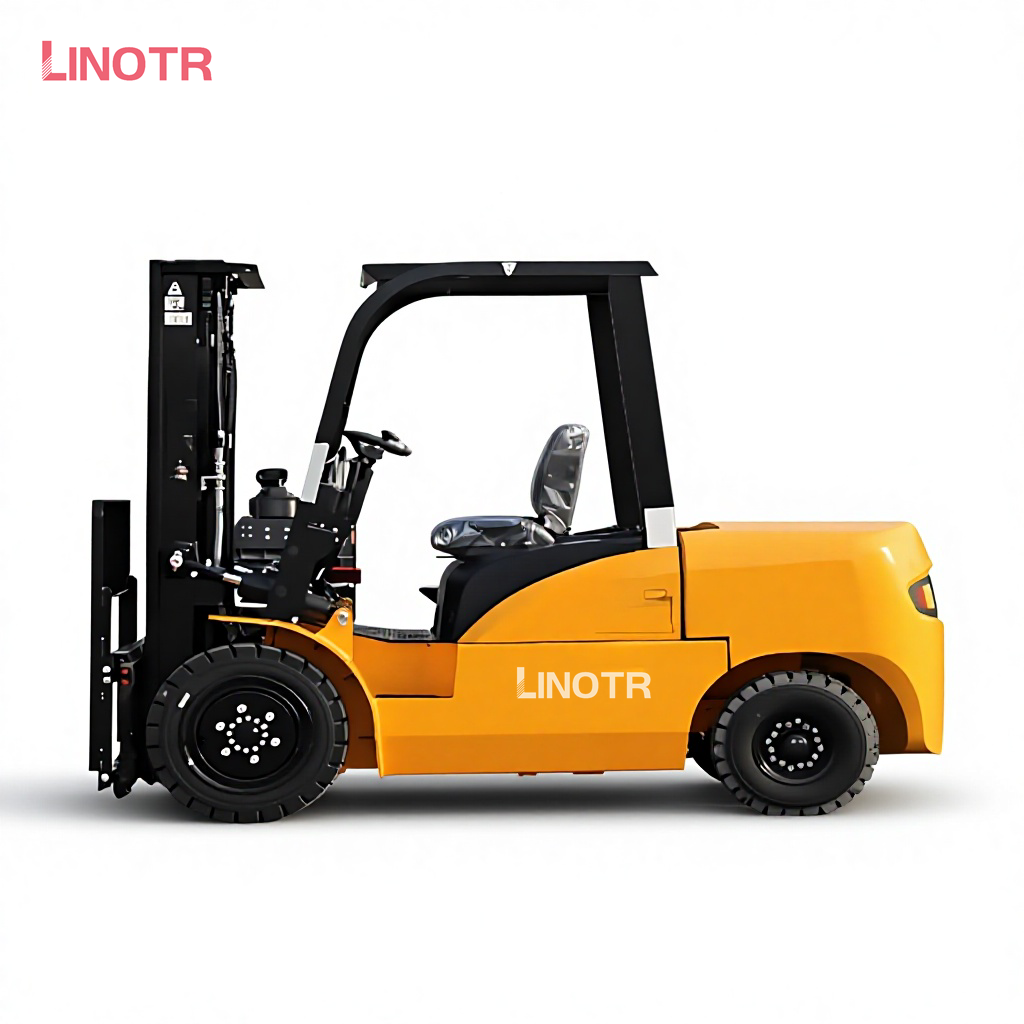
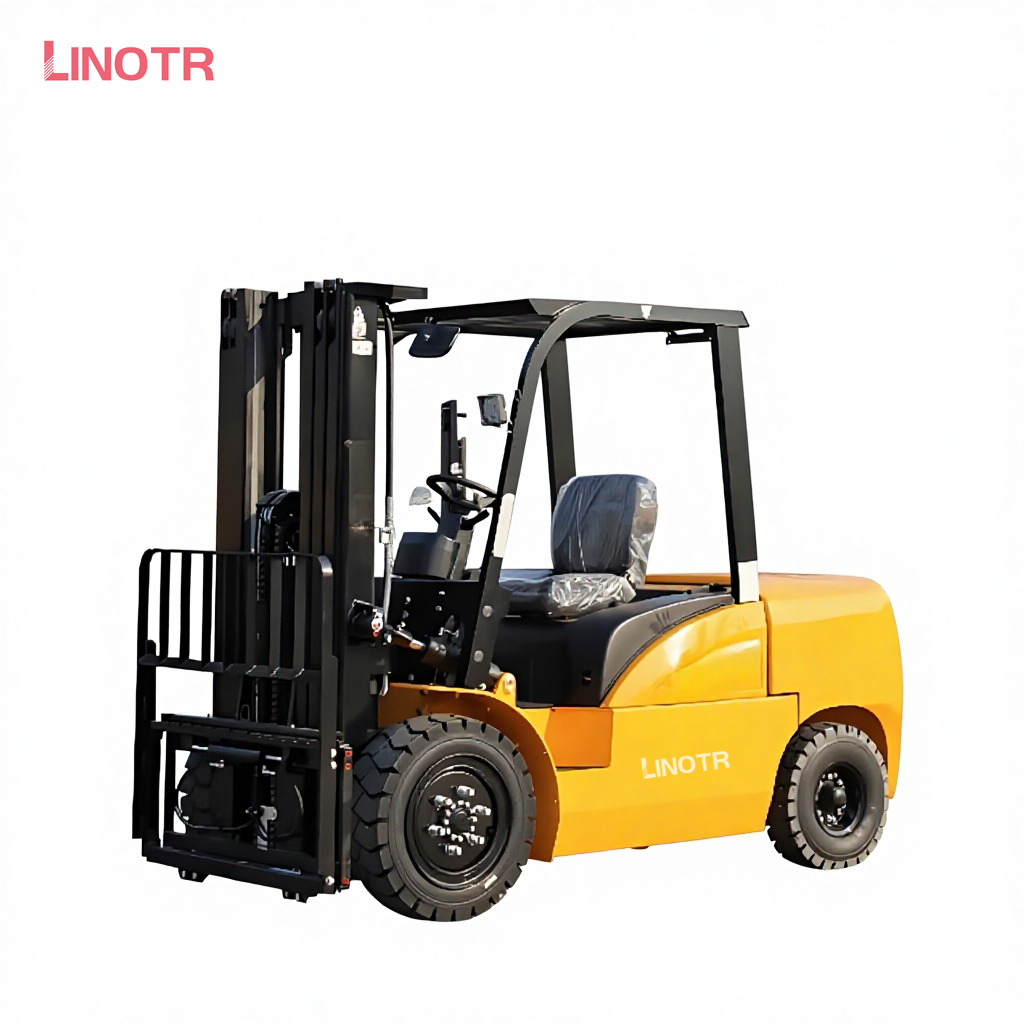
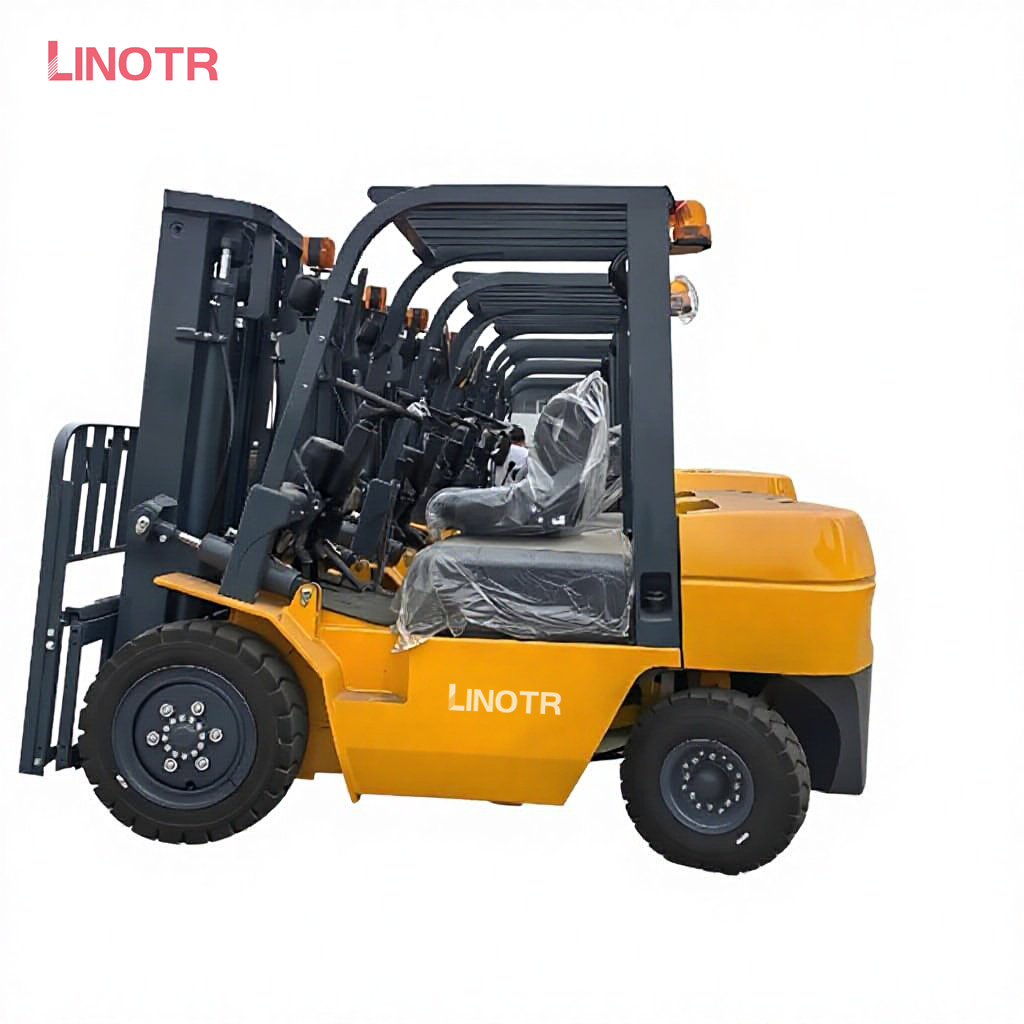
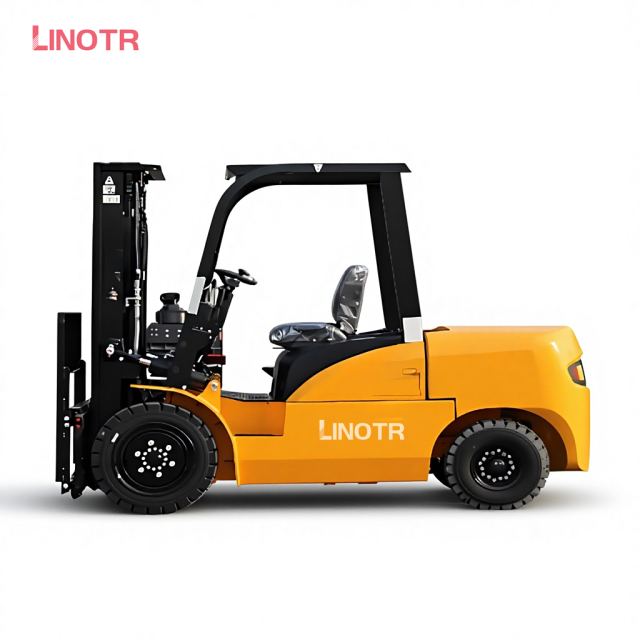
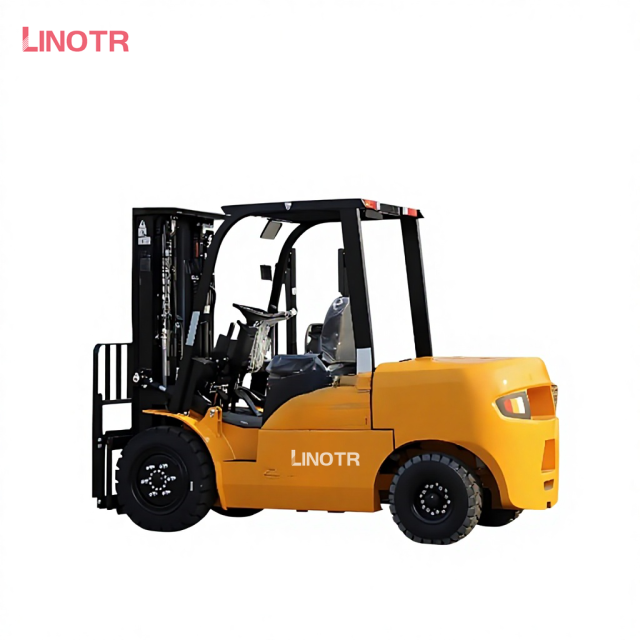
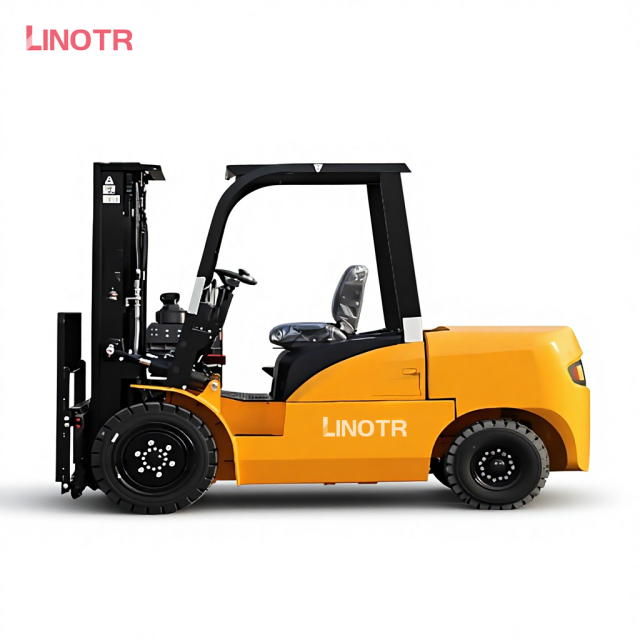
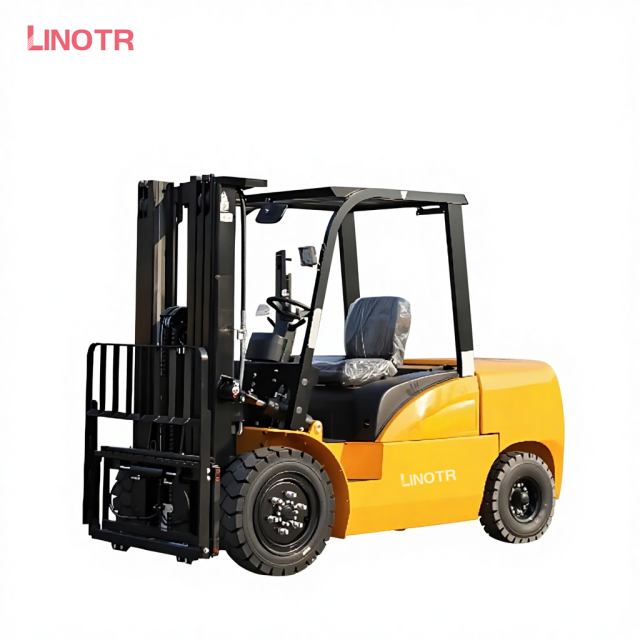
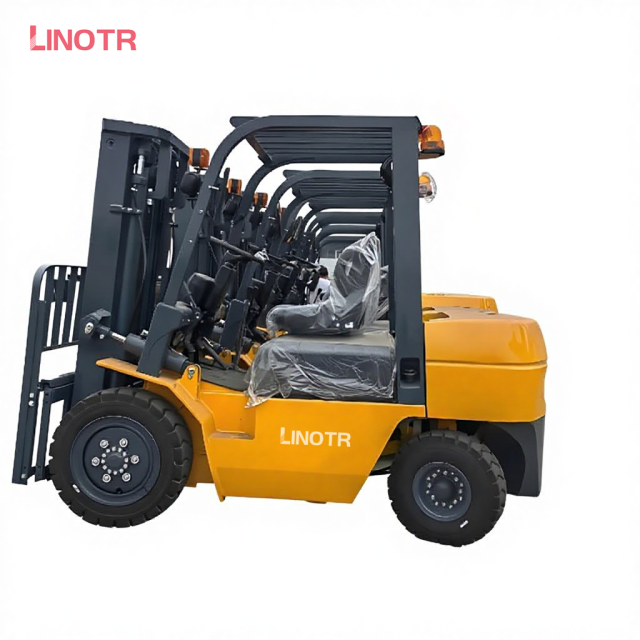
| Model: CPC-30 | ||
| propulsion | - | Diesel |
| Rated lifting capacity | kg | 3000 |
| Load center distance | mm | 500 |
| Driving style | - | seated |
| Maximum height (with blocking shelf, unloaded) | mm | 4217 |
| Maximum lifting height | mm | 3000 |
| Full height of the gantry (forks on the ground) | mm | 2070 |
| Free lifting height | mm | 150 |
| Height of roof rack | mm | 2140 |
| Overall length (with/without forks) | mm | 3814/2744 |
| Front overhang | mm | 478 |
| Rear overhang | mm | 520 |
| Wheelbase | mm | 1750 |
| Minimum Ground Clearance | mm | 135 |
| Overall width | mm | 1225 |
| Minimum Turning Radius (Outside) | mm | 2400 |
| Minimum Right Angle Aisle Width | mm | 2750 |
| Mast tilt (front/rear) | deg | 6/12 |
| Fork size | mm | 1070×125×45 |
| total weight | Kg | 4270 |
| Number of wheels (X = drive wheels) | - | 2X2 |
| Tire Type | - | pneumatic tire |
| Tire Size (Front) | - | 28x9-15-14PR |
| Tire Size (Rear) | - | 6.5-10-10PR |
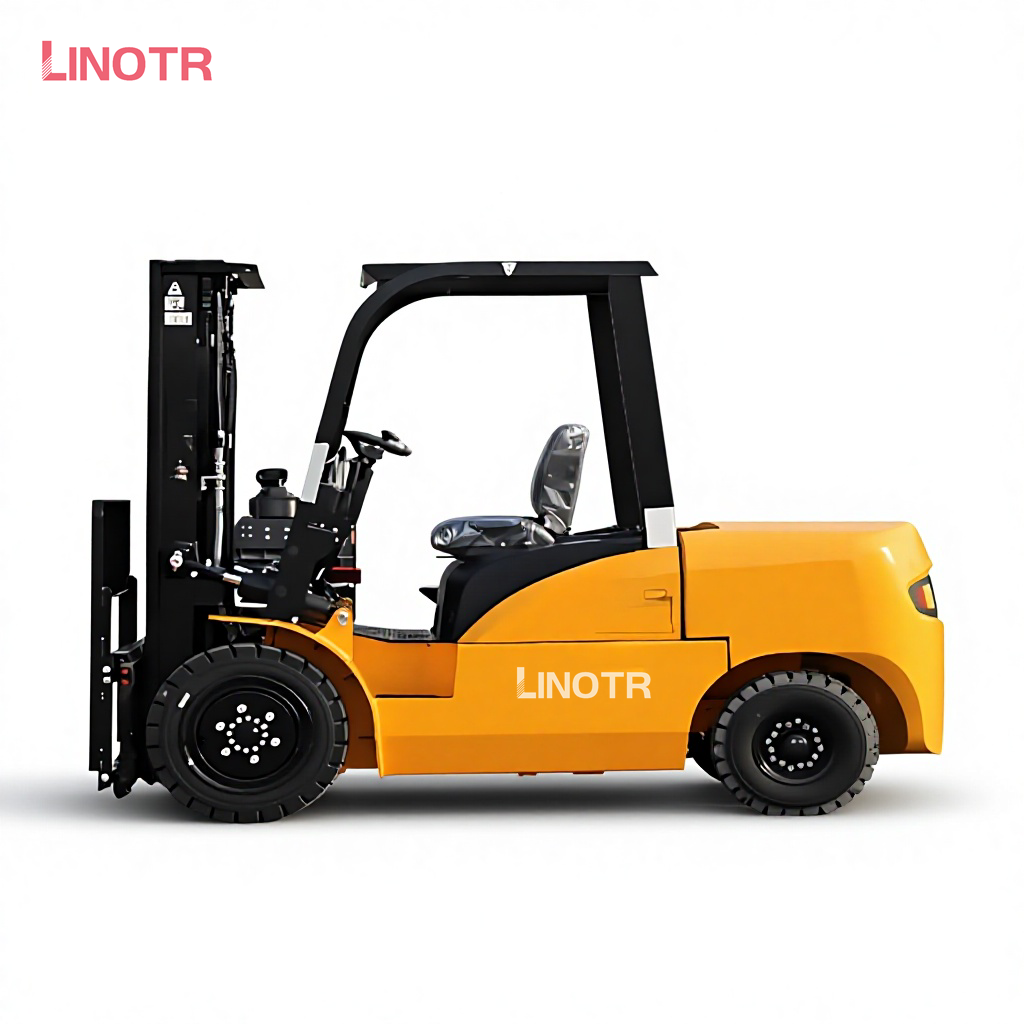
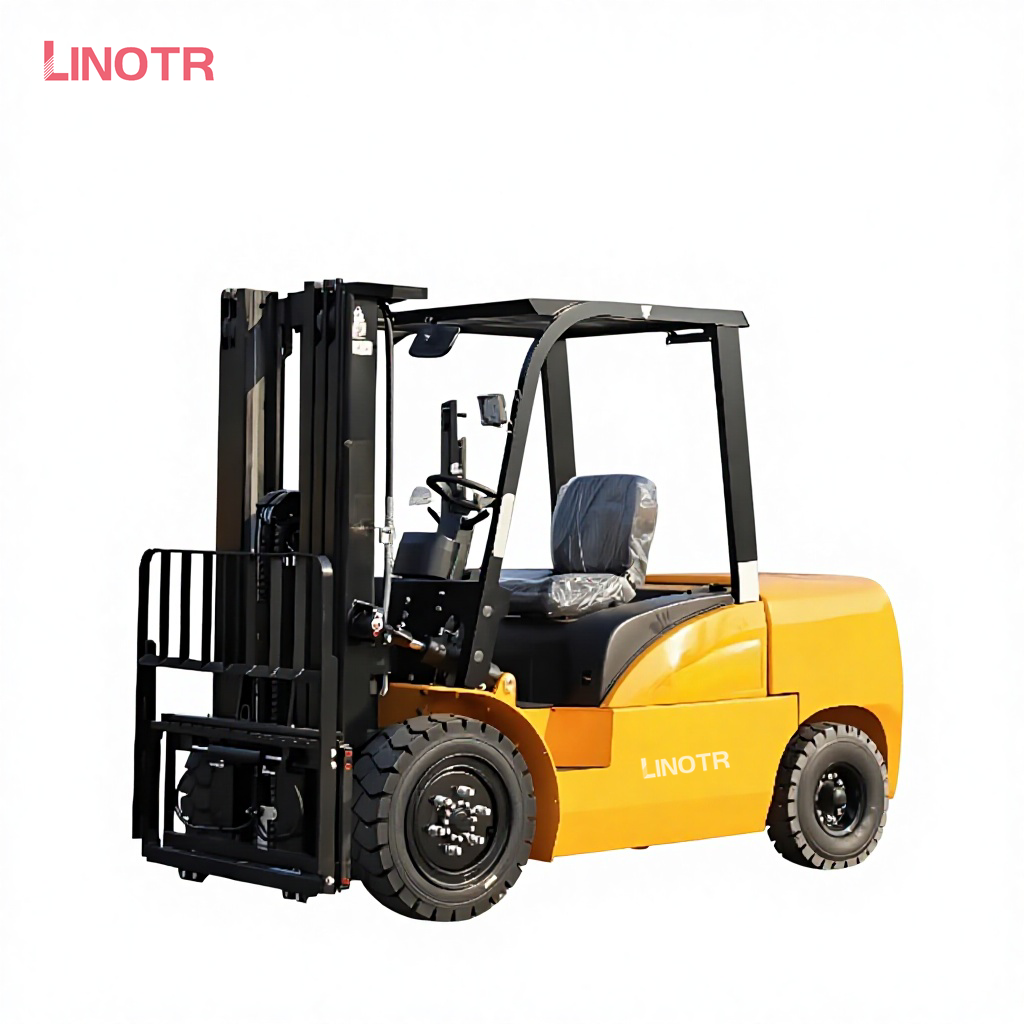
This diesel forklift truck is a counterbalance machine for yards, depots and loading bays, built to keep working through a full shift where there is no battery to charge and no waiting for a charge cycle. Buyers usually come to it for one of two reasons: outdoor duties that have outgrown a small electric unit, or an ageing diesel machine that needs replacing with something straightforward and durable. Plants that already run indoor handling equipment often add it as their dependable everyday outdoor machine.
Indoor work
A diesel engine produces exhaust fumes, so this truck belongs outdoors or in an open-sided, well-ventilated shed rather than a closed warehouse. If every lift happens inside, a battery machine is the better answer, and as an electric forklift manufacturer we build those models for exactly that duty.
Ground and surface
This truck suits packed earth, gravel and paved yards. Deep mud, steep ramps and badly broken ground are work for the rough-terrain forklift in our range rather than this machine.
Hazardous areas
It is a standard diesel counterbalance truck rather than an explosion-proof machine, so it is not the right choice where the working atmosphere is classified as hazardous or flammable.
We supply material handling equipment as a complete range rather than a single machine: electric pallet trucks and stand-on stackers for warehouse and dock work, and diesel and rough-terrain forklifts for heavier outdoor duties, covering roughly 1.5T to 5T. That breadth lets fleet buyers standardise on one supplier across indoor and outdoor sites and match each job to the right power type and capacity. Tell us your load, terrain and duty cycle, and we will help you select the correct model from the range.
Engine supply is matched to the market where the machine will work. We fit recognised units from Cummins, Perkins, Isuzu, Xinchai and Weichai, and can provide EPA or Euro V compliant versions where local regulations require them. Tell us the country of use and the emission level you need, and we will confirm the exact configuration and documentation.
The lifting capacity is rated at the standard load centre, measured from the fork face to the centre of gravity of the load, so a normal pallet sits well inside the rating. Long timber, wide crates or a fitted attachment push that centre of gravity further forward and reduce what the truck can lift safely. Send us the weight and footprint of your heaviest load and we will confirm the right set-up.
This truck is delivered with standard forks for everyday pallet work. If you handle bales, drums, bags or long stock, tell us what you move and we will confirm which forks or attachment suit the machine and how the change affects the load you can lift.
A short walk-around covers most of it: tyre condition and pressure, cracks or wear at the fork heels and carriage, hydraulic oil level and any sign of leaks, then a test of the service and parking brakes. Mast chains should be checked for tension and lubricated on the schedule in the operation manual.
The counterweight at the rear is what keeps the back wheels planted when the mast is loaded and raised, which is why the machine itself is heavy. Check that your yard surface, ramps and any floor slab the truck will cross can carry the machine plus its load. If a route looks doubtful, tell us and we will help you assess it.
Start with the heaviest load you move regularly: this model suits work that sits comfortably inside its rated capacity. If you routinely handle dense pallets, large timber packs or containers, step up to the 3.5 t or 5 t diesel models in the same family. Send us the load weights and how many hours a day they are handled, and we will recommend the right capacity.