| Model: CDD-15 | |||||||
| Category | Item | Unit | 1.6m | 2m | 2.5m | 3m | 3.5m |
|---|---|---|---|---|---|---|---|
| Feature | Drive Mode | Electric | Electric | Electric | Electric | Electric | |
| Feature | Operation Mode | Stand-on | Stand-on | Stand-on | Stand-on | Stand-on | |
| Feature | Rated Load | kg | 1500 | 1500 | 1500 | 1500 | 1500 |
| Feature | Load Center Distance | mm | 570 | 570 | 570 | 570 | 570 |
| Weight | Dead Weight | kg | 500-620 | 500-620 | 500-620 | 500-620 | 500-620 |
| Wheel & Chassis | Wheel Material | Polyurethane | Polyurethane | Polyurethane | Polyurethane | Polyurethane | |
| Wheel & Chassis | Front Wheel (Support Wheel) Size | mm | 80*70 | 80*70 | 80*70 | 80*70 | 80*70 |
| Wheel & Chassis | Auxiliary Wheel (Rear Wheel) Size | mm | 100*50 | 100*50 | 100*50 | 100*50 | 100*50 |
| Wheel & Chassis | Min. Ground Clearance of Chassis | mm | 30 | 30 | 30 | 30 | 30 |
| Wheel & Chassis | Max. Ground Clearance of Chassis | mm | 30 | 30 | 30 | 30 | 30 |
| Mast | Mast Type | Single-stage Mast | Two-stage Mast | Two-stage Mast | Two-stage Mast | Two-stage Mast | |
| Dimension | Free Lift Height | mm | 1600 | 200 | 200 | 200 | 200 |
| Dimension | Overall Static Height | mm | 2000 | 1500 | 1750 | 2000 | 2250 |
| Dimension | Max. Fork Lift Height | mm | 1600 | 2000 | 2500 | 3000 | 3500 |
| Dimension | Min. Fork Lowered Height | mm | 85 | 85 | 85 | 85 | 85 |
| Dimension | Max. Support Leg Lift Height | mm | — | — | — | — | — |
| Dimension | Anti-tip Support Leg Spread Width | mm | — | — | — | — | — |
| Dimension | Max. Mast Height After Lifting | mm | 2000 | 2420 | 2920 | 3420 | 3920 |
| Dimension | Overall Length (Pedal Retracted) | mm | 1850 | 1850 | 1850 | 1850 | 1850 |
| Dimension | Overall Width | mm | 825 | 825 | 825 | 825 | 825 |
| Dimension | Fork Length | mm | 1150 | 1150 | 1150 | 1150 | 1150 |
| Dimension | Fork Outer Width | mm | 685 | 685 | 685 | 685 | 685 |
| Dimension | Min. Aisle Width Required | mm | 2300 | 2300 | 2300 | 2300 | 2300 |
| Dimension | Turning Radius | mm | 1400 | 1400 | 1400 | 1400 | 1400 |
| Performance | Travel Speed (Loaded/Unloaded) | km/h | 4.5/6 | 4.5/6 | 4.5/6 | 4.5/6 | 4.5/6 |
| Performance | Lifting Speed (Loaded/Unloaded) | cm | 14/16 | 14/16 | 14/16 | 14/16 | 14/16 |
| Performance | Travel Brake | Electromagnetic | Electromagnetic | Electromagnetic | Electromagnetic | Electromagnetic | |
| Motor & Battery | Drive Motor Power | kw | 1.2 | 1.2 | 1.2 | 1.2 | 1.2 |
| Motor & Battery | Lifting Motor Power | kw | 2.2 | 2.2 | 2.2 | 2.2 | 2.2 |
| Motor & Battery | System Voltage | v | 48 | 48 | 48 | 48 | 48 |
| Motor & Battery | Battery Capacity | ah | 32*4 | 32*4 | 32*4 | 32*4 | 32*4 |
| Motor & Battery | Battery Type | Maintenance-free | Maintenance-free | Maintenance-free | Maintenance-free | Maintenance-free | |
| Motor & Battery | Operator Ear Noise Level | dB(A) | 65 | 65 | 65 | 65 | 65 |
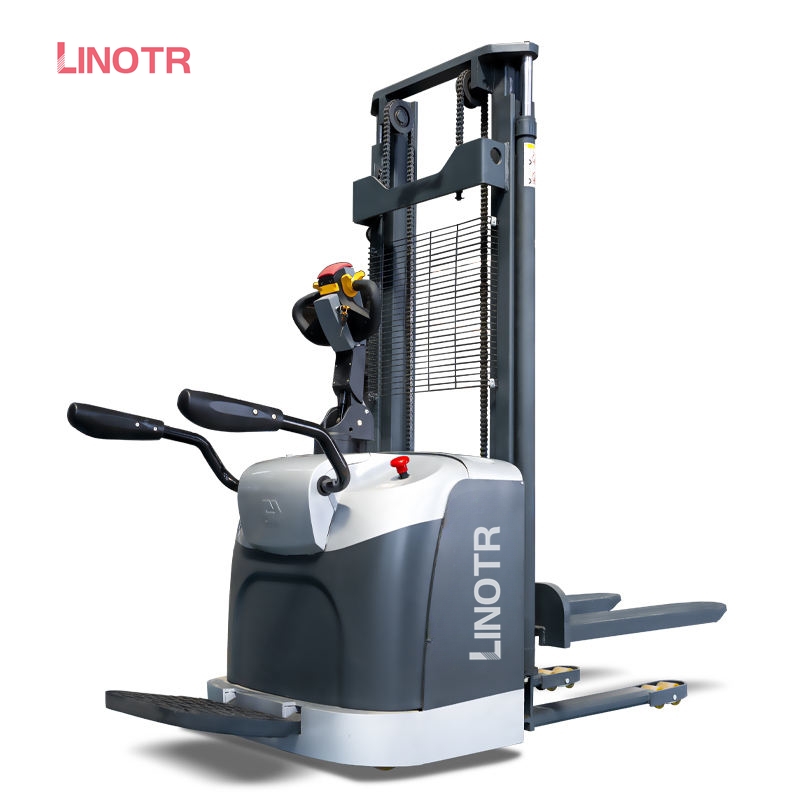
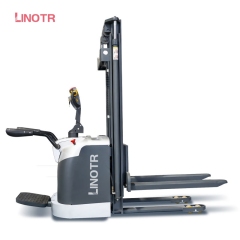
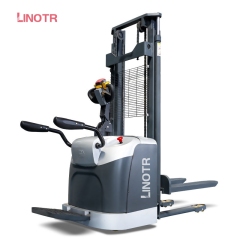
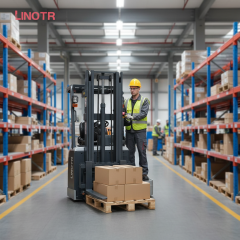
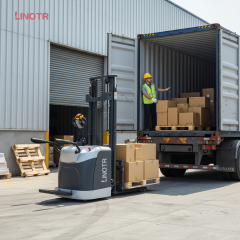
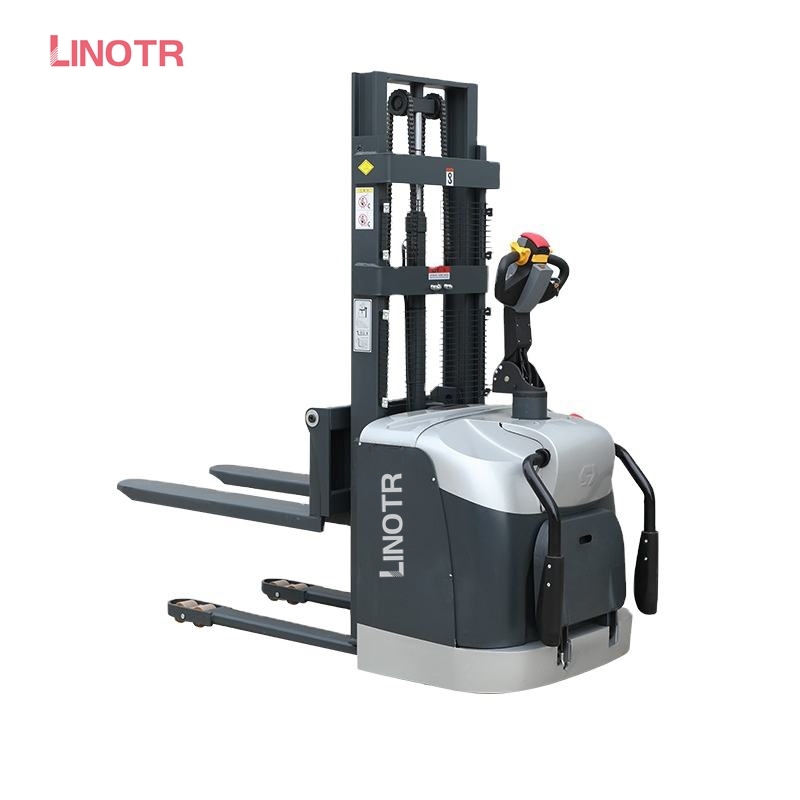
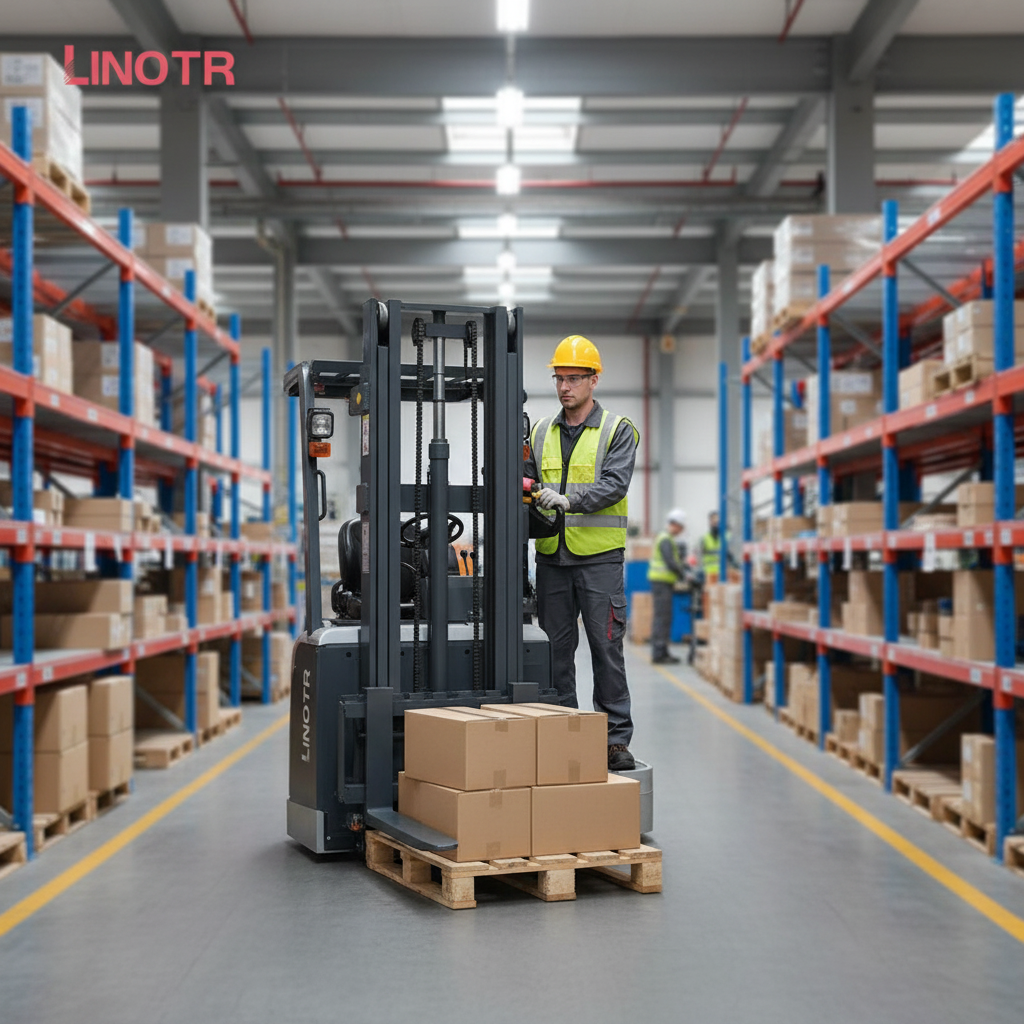
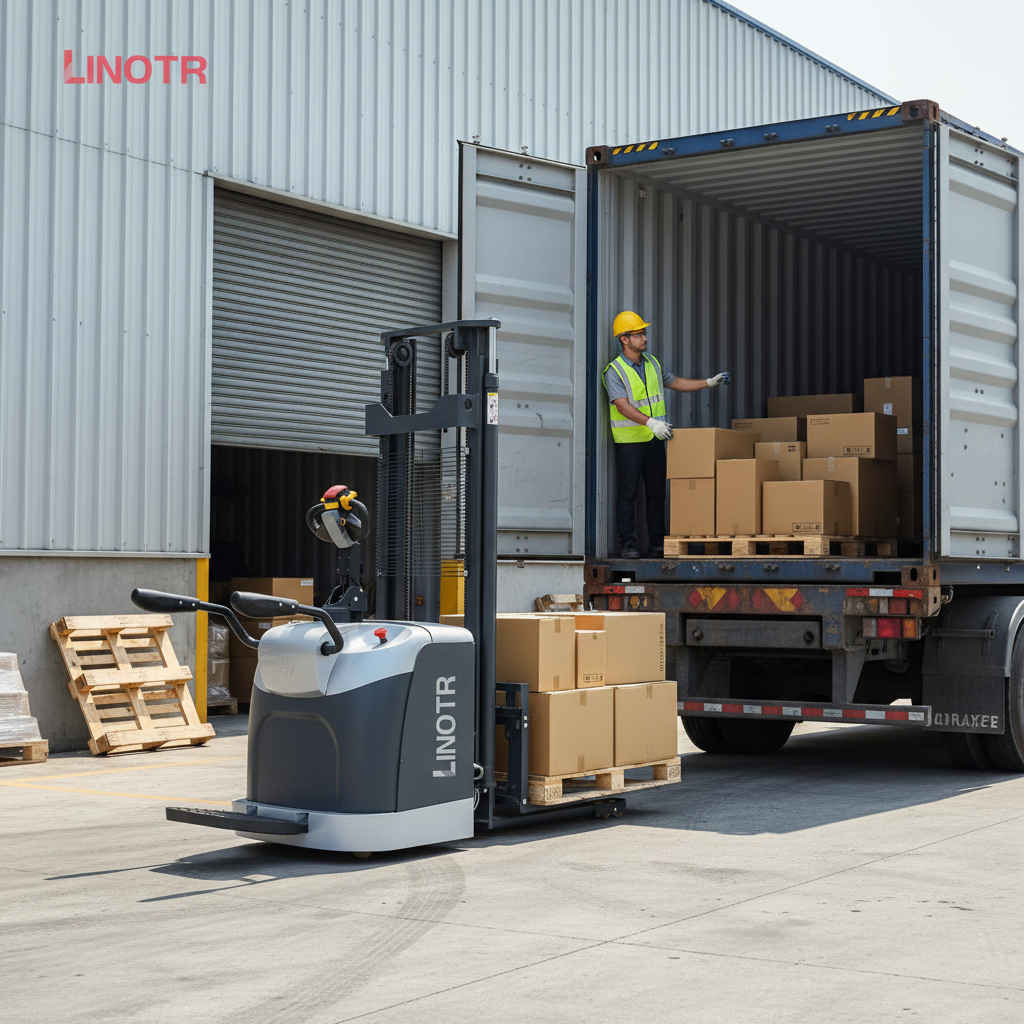
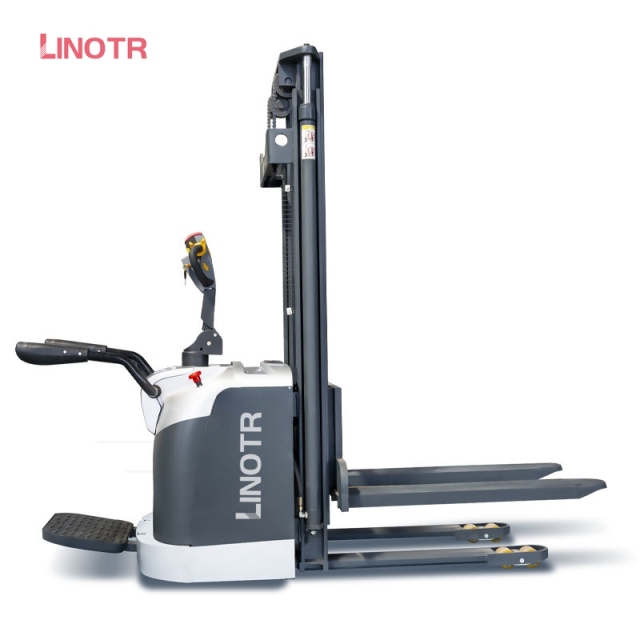
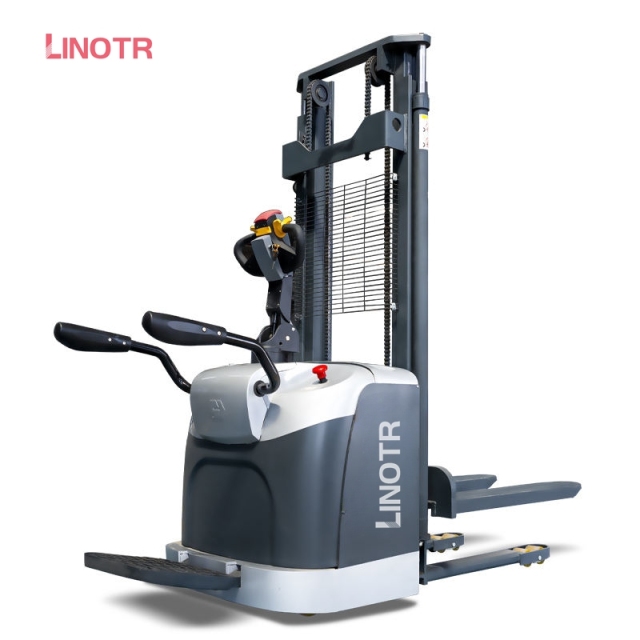
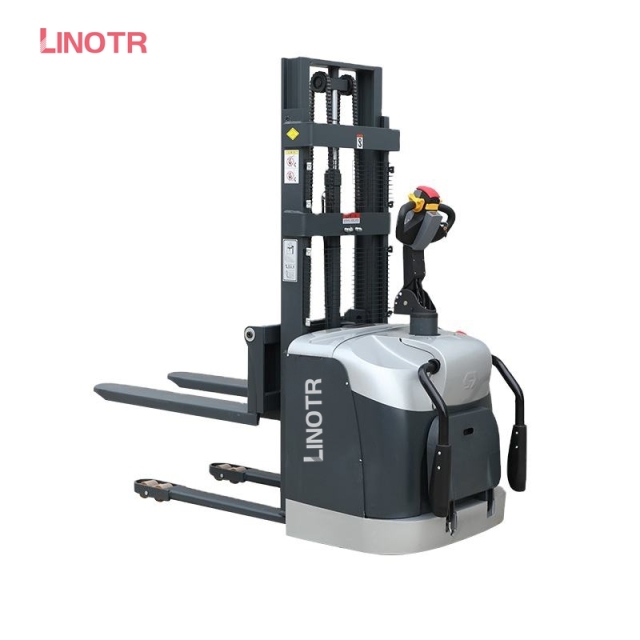
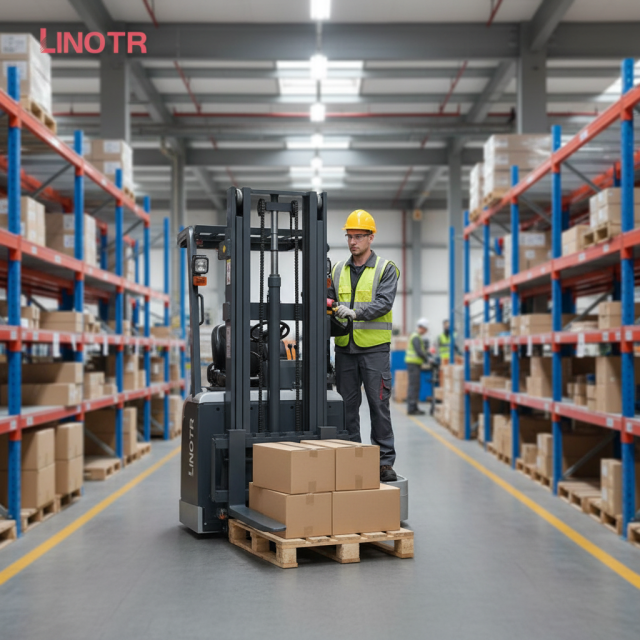
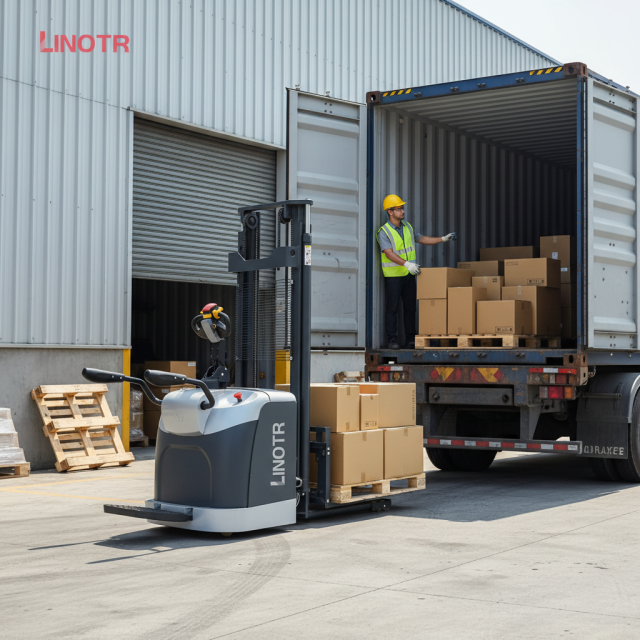
We are electric stacker manufacturers, and this stand-on machine is the lift-to-height unit in our warehouse range. It takes a pallet from the staging lane to a racking beam, stacks it two or three high where there is no racking, and raises it to dock or trailer height for loading. The operator stands on the platform, steers and controls the truck from the tiller, and rides with the load instead of walking behind it, which is what keeps a long shift of put-away and replenishment moving at a steady pace. If your pallets never leave the floor, a pallet truck is the simpler machine; once they have to go up onto a beam, this is the class to buy.
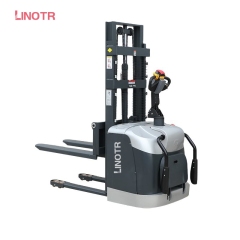
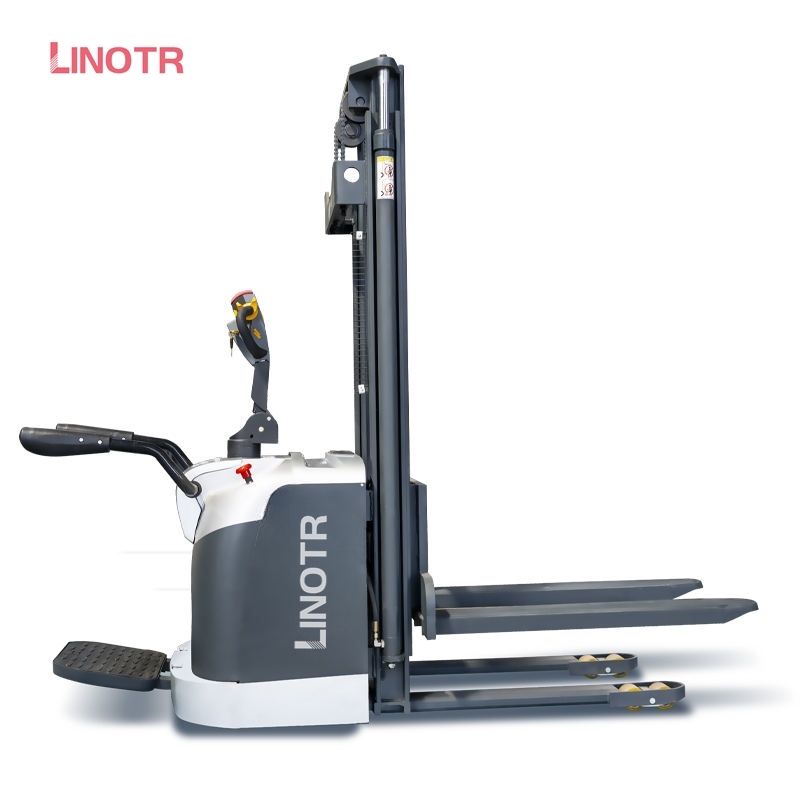
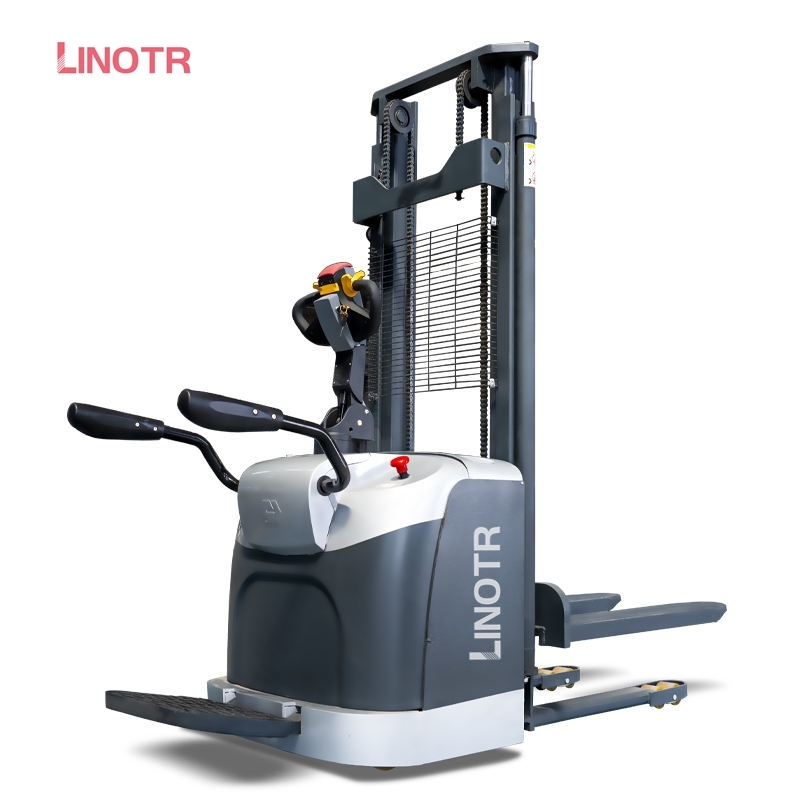
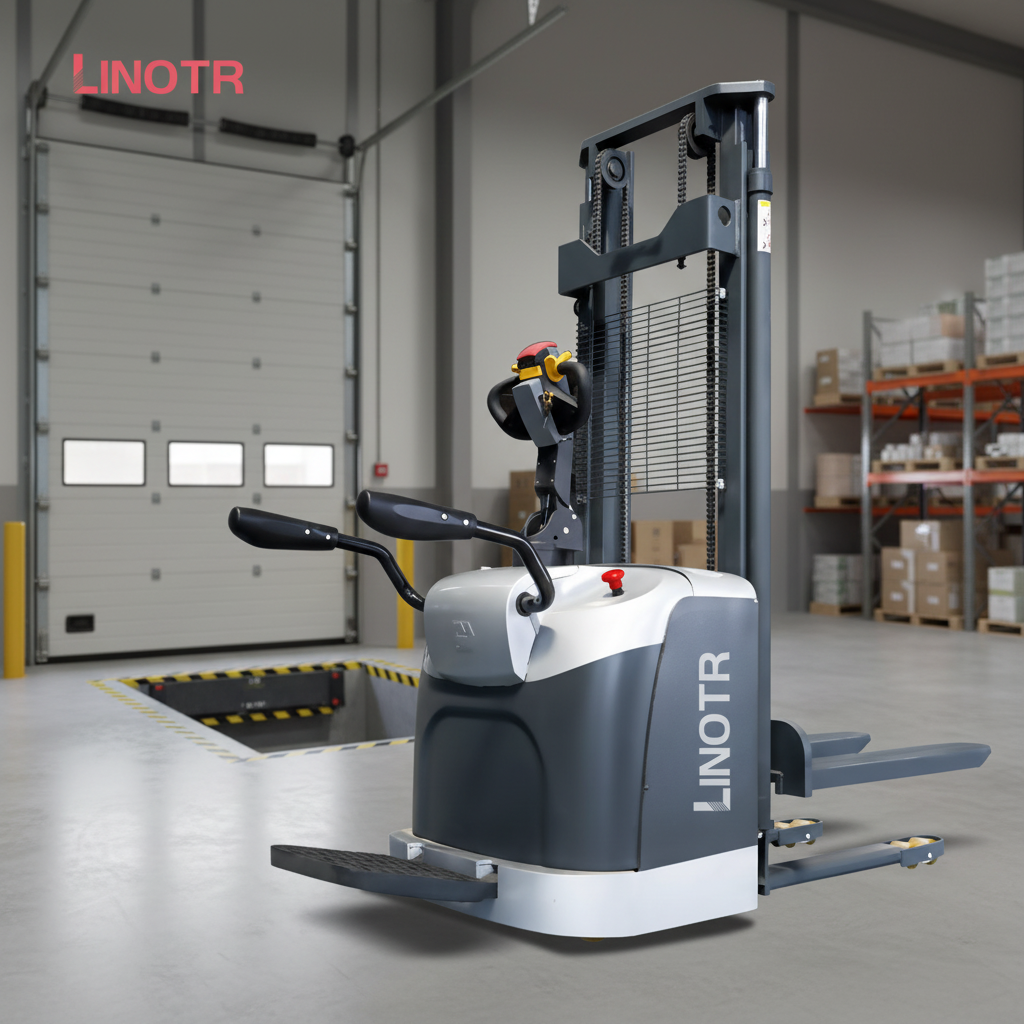
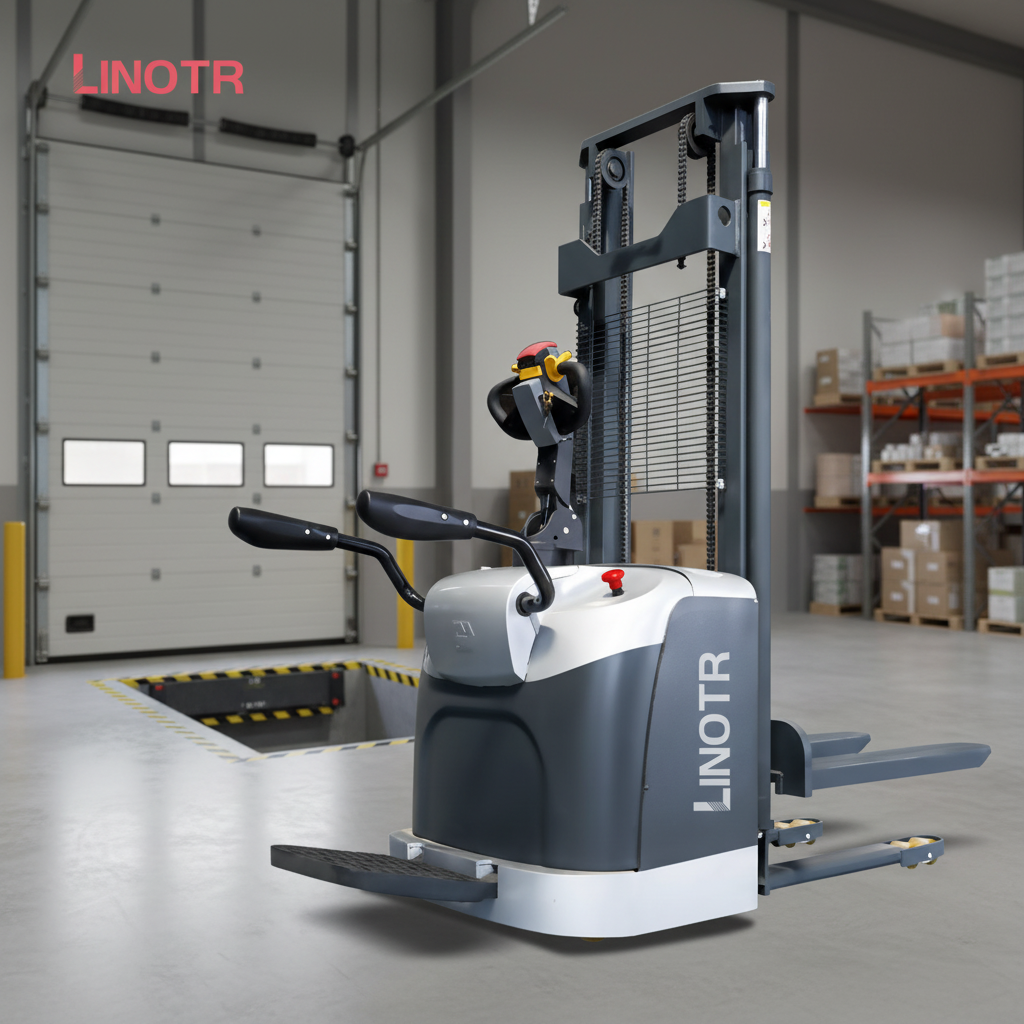
Lifting is chain driven, and the load rides on wheels under the fork carriage, so a pallet stays steady at the top of the mast instead of swaying as it rises. The tiller carries twin butterfly levers that put lift, lower, travel and horn under the thumbs, and the same grip works left- or right-handed for operators rotating between shifts. Steering runs through the tiller as well — there is no separate steering wheel — which is what makes an electric stacker truck quick to turn in a tight aisle. Travel braking is electromagnetic rather than a mechanical grab, so the stop stays smooth and repeatable under a full load. The wheels roll quietly over concrete and suit sealed and coated warehouse floors, and the body is finished in gloss paint over a matte metal mast.
We build the whole material handling line rather than one truck: electric pallet trucks and stand-on stackers for indoor warehouse and dock work, and diesel and rough-terrain forklifts for outdoor yards, covering roughly 1.5 t to 5 t. As an electric forklift manufacturer, we supply the counterbalance trucks that take over when a load is too heavy or the ground too rough for a warehouse machine. That range matters when a site runs both sides of the job, because a fleet can be specified to the actual load, terrain and power supply instead of being forced into a single model, and units bought together share controls and wearing parts. Tell us your load, aisle and duty cycle and we will help you pick the right capacity and power type.
We supply material handling equipment as a complete range rather than a single machine: electric pallet trucks and stand-on stackers for warehouse and dock work, and diesel and rough-terrain forklifts for heavier outdoor duties, covering roughly 1.5T to 5T. That breadth lets fleet buyers standardise on one supplier across indoor and outdoor sites and match each job to the right power type and capacity. Tell us your load, terrain and duty cycle, and we will help you select the correct model from the range.
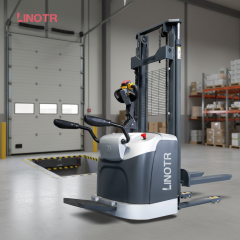
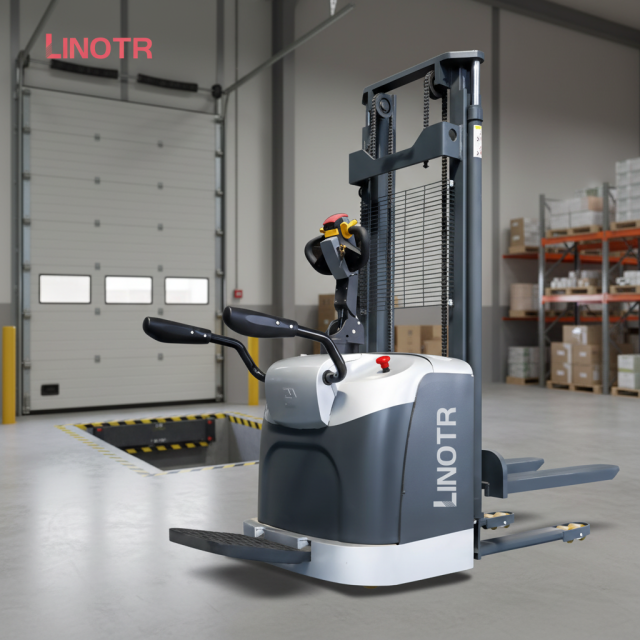
The truck is built for indoor work — smooth concrete, sealed warehouse floors and level dock aprons — so gravel yards, dirt and slopes are not its territory. Where a site works outdoors, that job belongs to a rough-terrain or diesel forklift, and as an electric forklift manufacturer we build those as well. Tell us how your site is laid out and we will help you decide which unit belongs on each part of it.
Distance and volume decide it. When an operator covers a long run between the dock and the racking, or completes hundreds of lifts in a shift, riding with the load takes the walking out of the job and keeps the pace steady. A walk-behind stacker makes sense for short, occasional lifts in tight spots; if your operators are on the electric stacker all day, stand-on is the easier machine to leave them on.
Start with two figures from your building: the highest beam you load a pallet onto and the lowest overhead the truck passes under. The single-stage mast is the one for low door frames and mezzanine openings, because it holds one fixed overall height whether the forks are up or down, while the two-stage masts cover the taller single-deep racking. Send us both figures and we will confirm which version suits your electric stacker truck, including the free lift you get before the mast starts to rise.
The forks on this electric pallet stacker lower close to floor level, so the tines slide into the entry openings of a standard pallet without the carriage having to lift the bottom boards. Check the entry height and bottom-board clearance on your own pallets — worn, damp or non-standard pallets are the usual reason a truck will not pick up cleanly. Send us a pallet drawing and we will confirm the fork dimensions against it.
The rating covers the great majority of palletised warehouse loads, and it is the capacity most single-deep racking operations run all day. Step up when your routine pallets sit close to the limit, when they are stacked high, or when the truck has to lift and travel at the same time. As electric stacker manufacturers we build the next capacity up, so send us your heaviest pallet weights and dimensions and we will tell you plainly which model to take.
Operator ear noise is around 65 dB(A), and because the truck runs on battery there are no exhaust fumes at the point of use. That combination is why electric warehouse handling equipment is standard in food, beverage and packaged-goods buildings, where air quality and noise both matter. A pallet meeting pallet is usually the loudest sound on a busy dock.