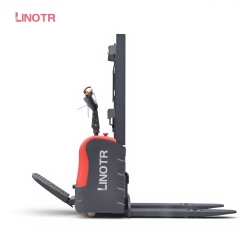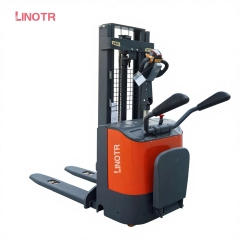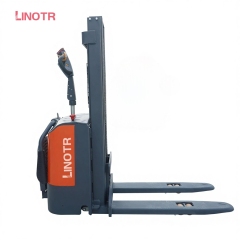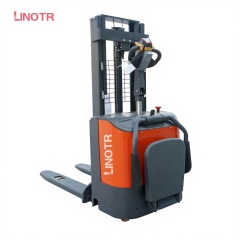
| Model: CDD-15 | |||||||
| Category | Item | Unit | 1.6m | 2m | 2.5m | 3m | 3.5m |
|---|---|---|---|---|---|---|---|
| Feature | Drive Mode | Electric | Electric | Electric | Electric | Electric | |
| Feature | Operation Mode | Stand-on | Stand-on | Stand-on | Stand-on | Stand-on | |
| Feature | Rated Load | kg | 1500 | 1500 | 1500 | 1500 | 1500 |
| Feature | Load Center Distance | mm | 570 | 570 | 570 | 570 | 570 |
| Weight | Dead Weight | kg | 500-620 | 500-620 | 500-620 | 500-620 | 500-620 |
| Wheel & Chassis | Wheel Material | Polyurethane | Polyurethane | Polyurethane | Polyurethane | Polyurethane | |
| Wheel & Chassis | Front Wheel (Support Wheel) Size | mm | 80*70 | 80*70 | 80*70 | 80*70 | 80*70 |
| Wheel & Chassis | Auxiliary Wheel (Rear Wheel) Size | mm | 100*50 | 100*50 | 100*50 | 100*50 | 100*50 |
| Wheel & Chassis | Min. Ground Clearance of Chassis | mm | 30 | 30 | 30 | 30 | 30 |
| Wheel & Chassis | Max. Ground Clearance of Chassis | mm | 30 | 30 | 30 | 30 | 30 |
| Mast | Mast Type | Single-stage Mast | Two-stage Mast | Two-stage Mast | Two-stage Mast | Two-stage Mast | |
| Dimension | Free Lift Height | mm | 1600 | 200 | 200 | 200 | 200 |
| Dimension | Overall Static Height | mm | 2000 | 1500 | 1750 | 2000 | 2250 |
| Dimension | Max. Fork Lift Height | mm | 1600 | 2000 | 2500 | 3000 | 3500 |
| Dimension | Min. Fork Lowered Height | mm | 85 | 85 | 85 | 85 | 85 |
| Dimension | Max. Support Leg Lift Height | mm | — | — | — | — | — |
| Dimension | Anti-tip Support Leg Spread Width | mm | — | — | — | — | — |
| Dimension | Max. Mast Height After Lifting | mm | 2000 | 2420 | 2920 | 3420 | 3920 |
| Dimension | Overall Length (Pedal Retracted) | mm | 1850 | 1850 | 1850 | 1850 | 1850 |
| Dimension | Overall Width | mm | 825 | 825 | 825 | 825 | 825 |
| Dimension | Fork Length | mm | 1150 | 1150 | 1150 | 1150 | 1150 |
| Dimension | Fork Outer Width | mm | 685 | 685 | 685 | 685 | 685 |
| Dimension | Min. Aisle Width Required | mm | 2300 | 2300 | 2300 | 2300 | 2300 |
| Dimension | Turning Radius | mm | 1400 | 1400 | 1400 | 1400 | 1400 |
| Performance | Travel Speed (Loaded/Unloaded) | km/h | 4.5/6 | 4.5/6 | 4.5/6 | 4.5/6 | 4.5/6 |
| Performance | Lifting Speed (Loaded/Unloaded) | cm | 14/16 | 14/16 | 14/16 | 14/16 | 14/16 |
| Performance | Travel Brake | Electromagnetic | Electromagnetic | Electromagnetic | Electromagnetic | Electromagnetic | |
| Motor & Battery | Drive Motor Power | kw | 1.2 | 1.2 | 1.2 | 1.2 | 1.2 |
| Motor & Battery | Lifting Motor Power | kw | 2.2 | 2.2 | 2.2 | 2.2 | 2.2 |
| Motor & Battery | System Voltage | v | 48 | 48 | 48 | 48 | 48 |
| Motor & Battery | Battery Capacity | ah | 32*4 | 32*4 | 32*4 | 32*4 | 32*4 |
| Motor & Battery | Battery Type | Maintenance-free | Maintenance-free | Maintenance-free | Maintenance-free | Maintenance-free | |
| Motor & Battery | Operator Ear Noise Level | dB(A) | 65 | 65 | 65 | 65 | 65 |
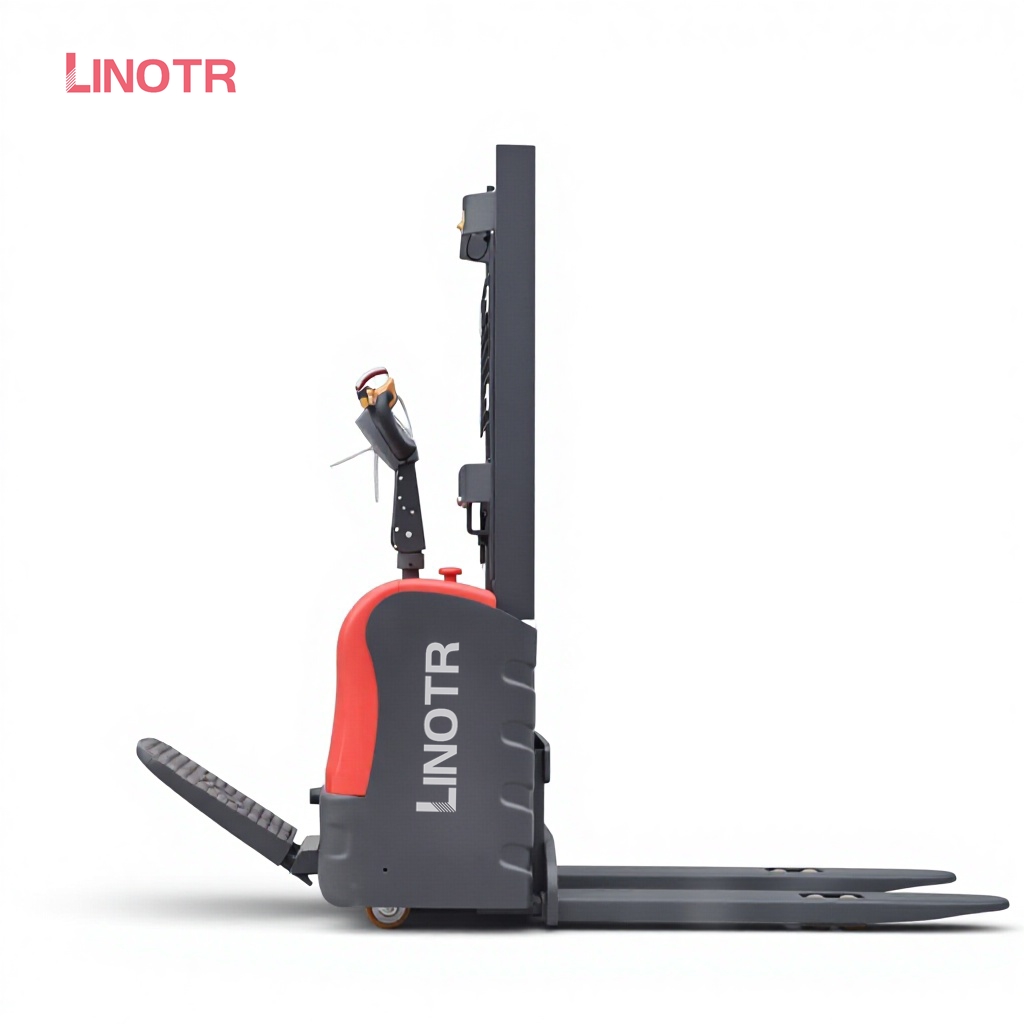
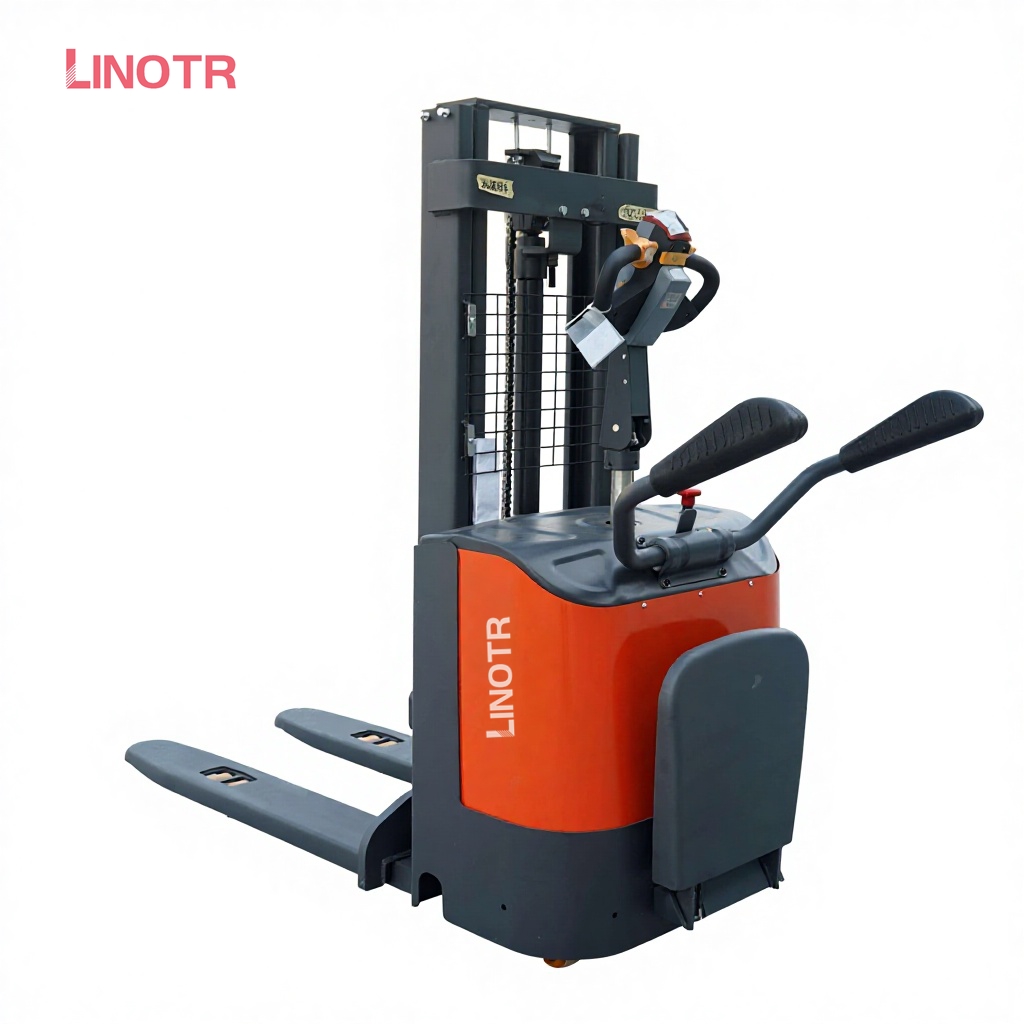
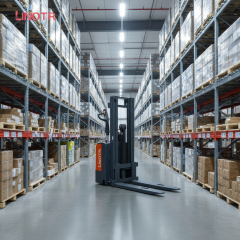
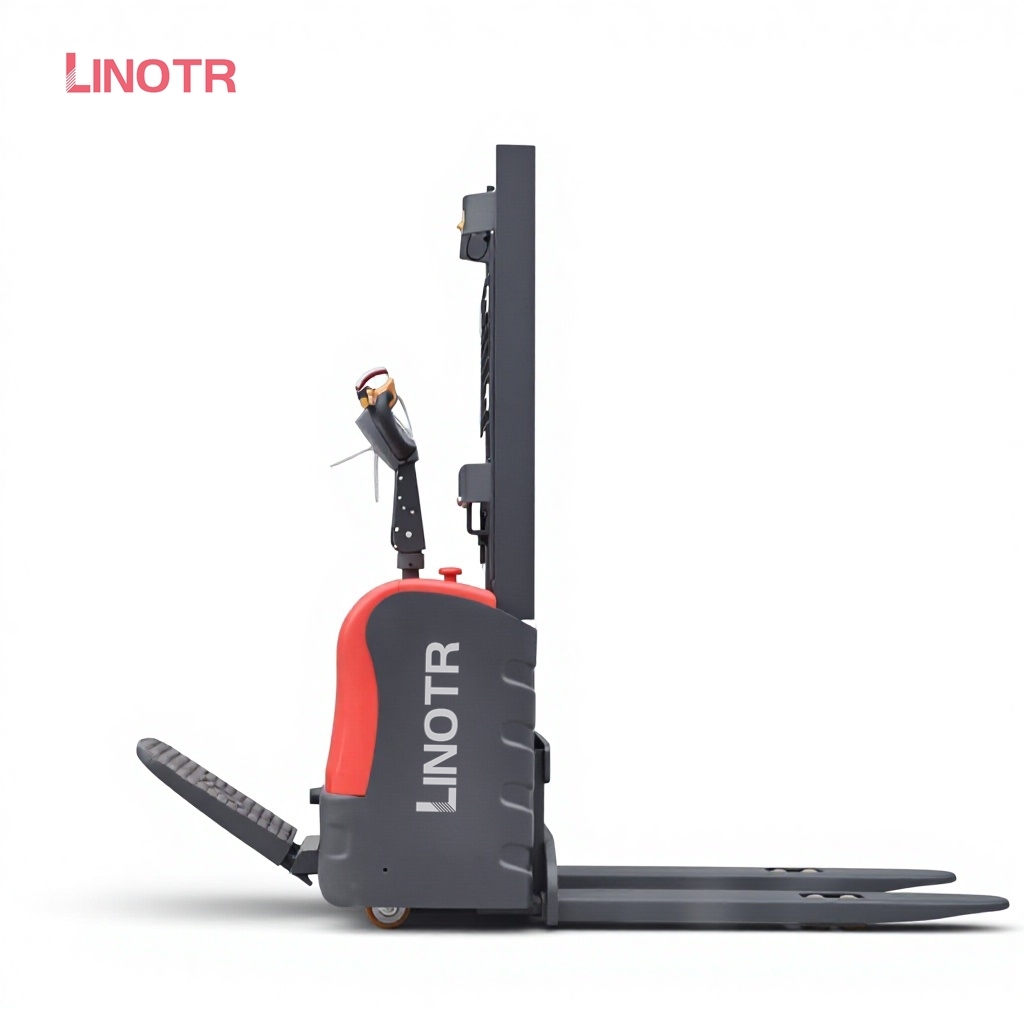
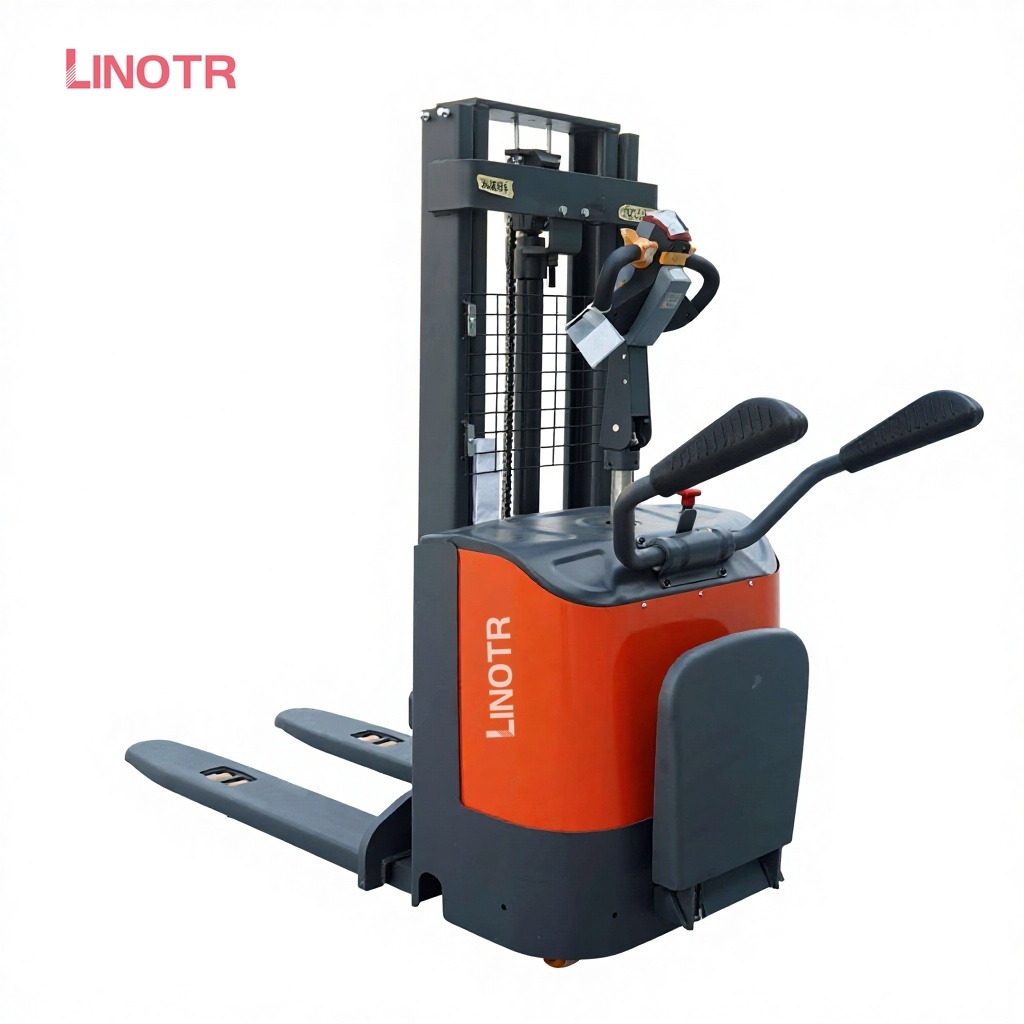
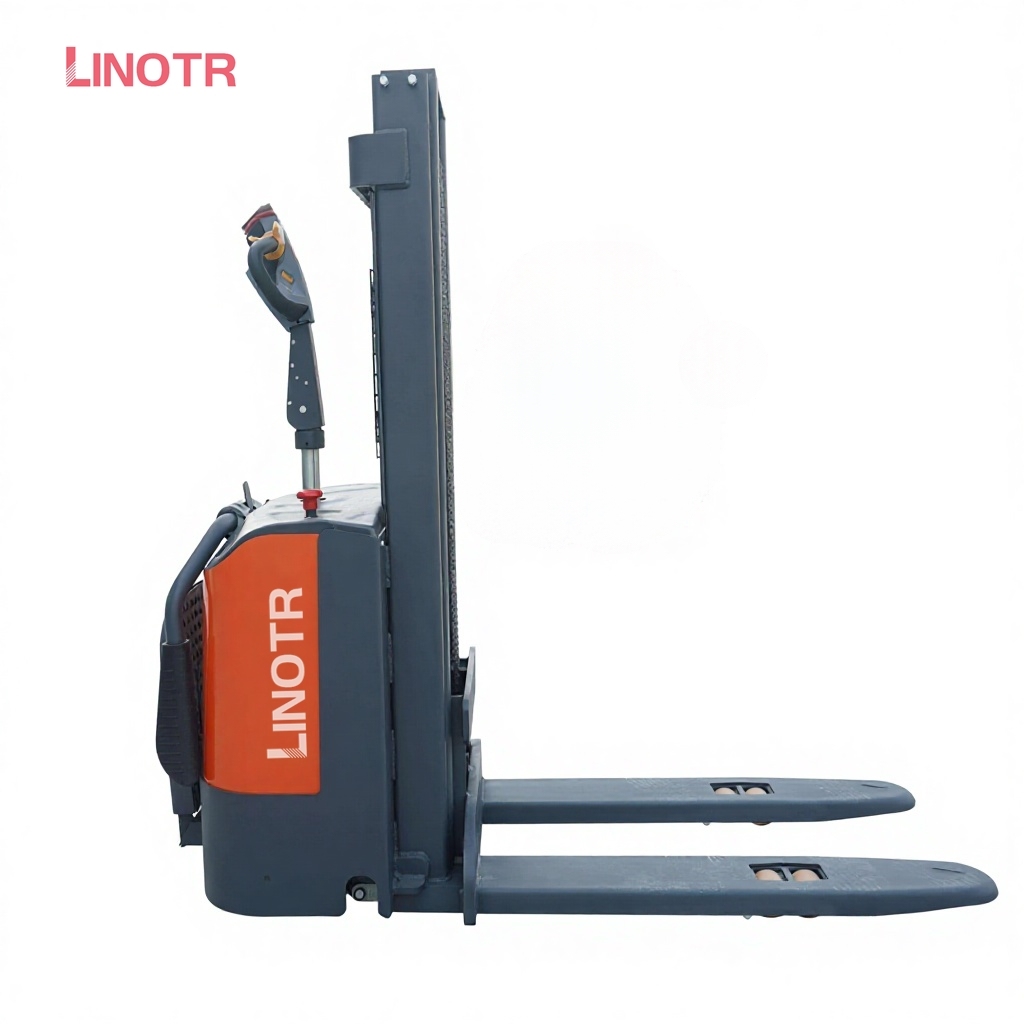
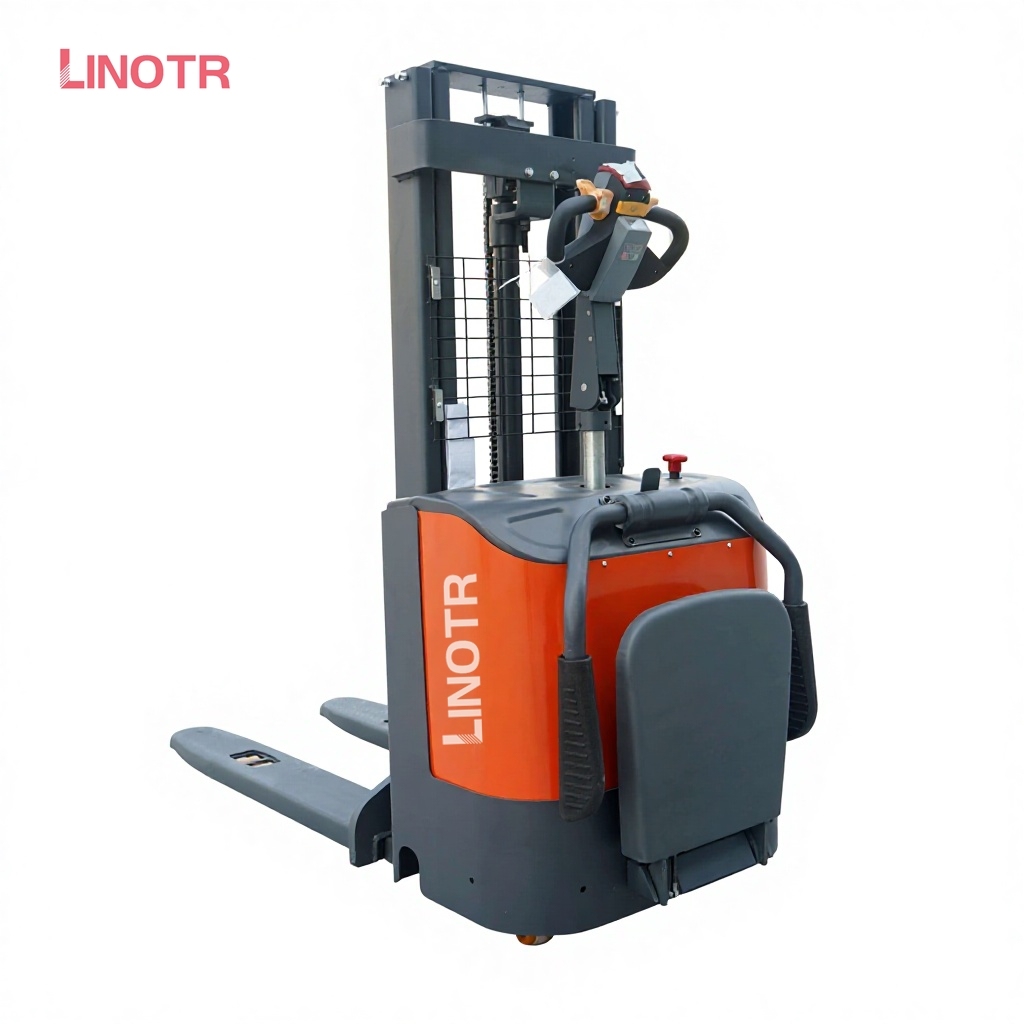
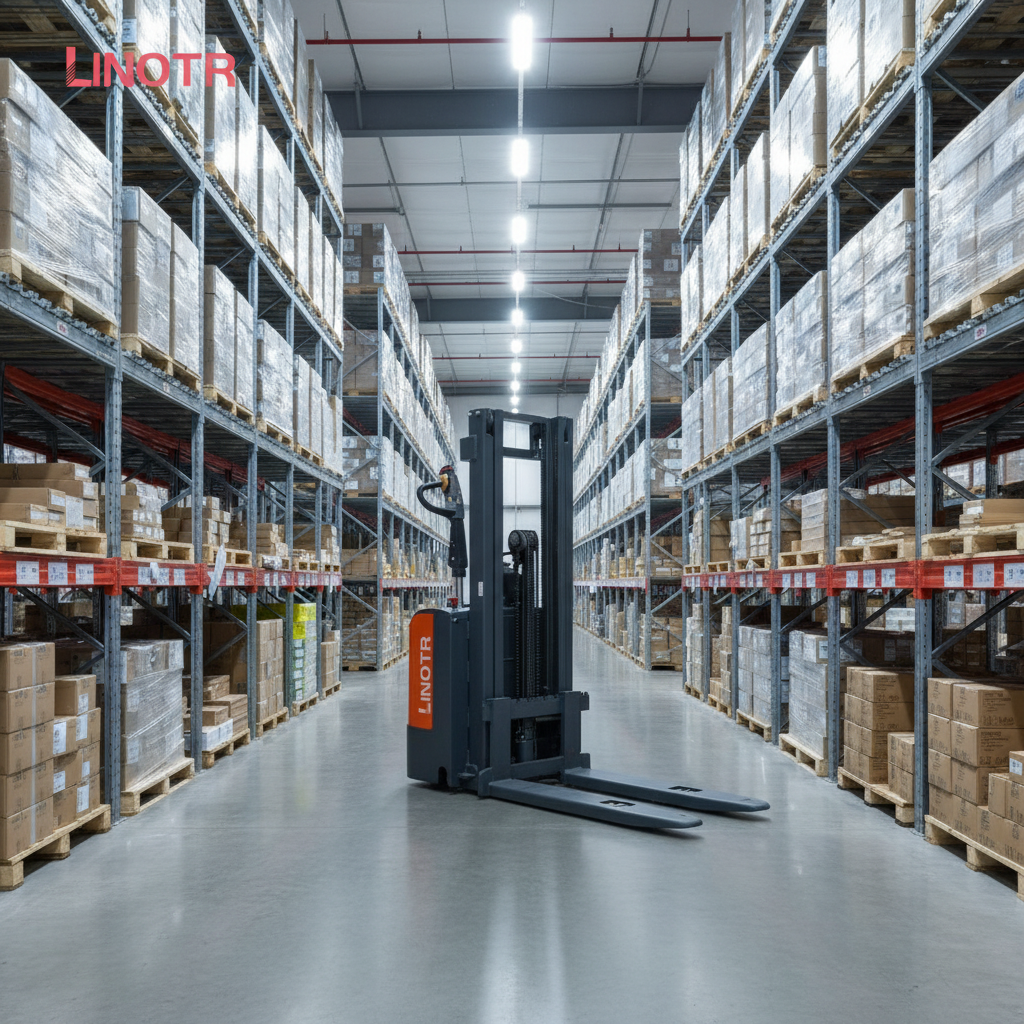
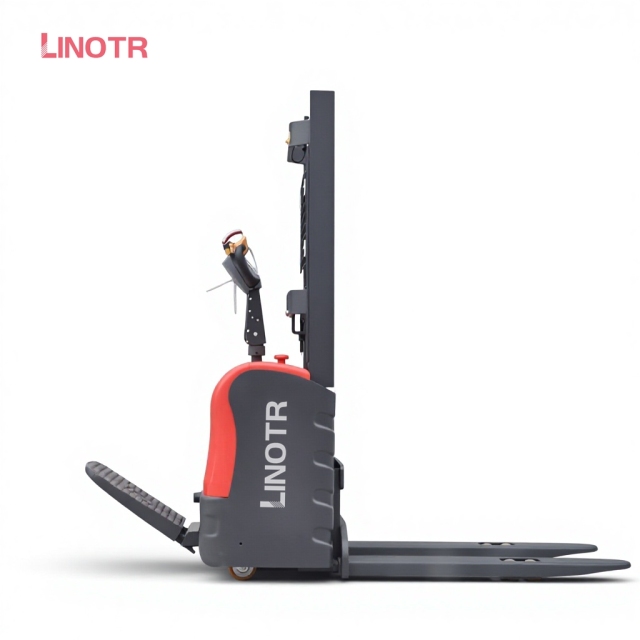
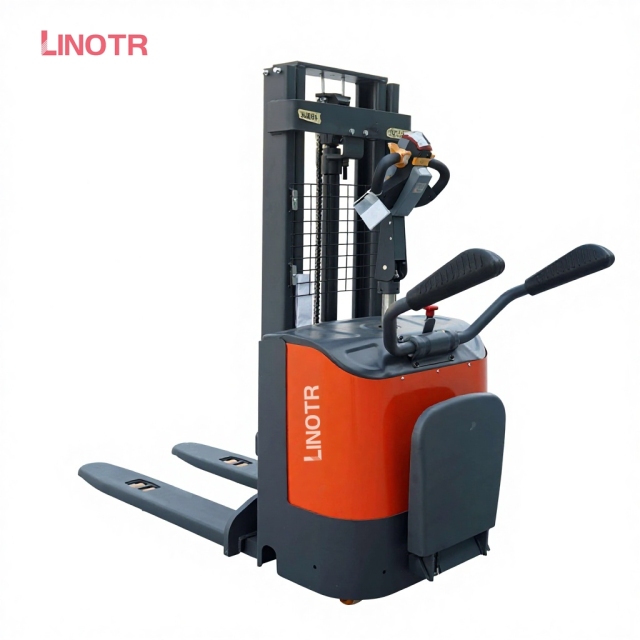
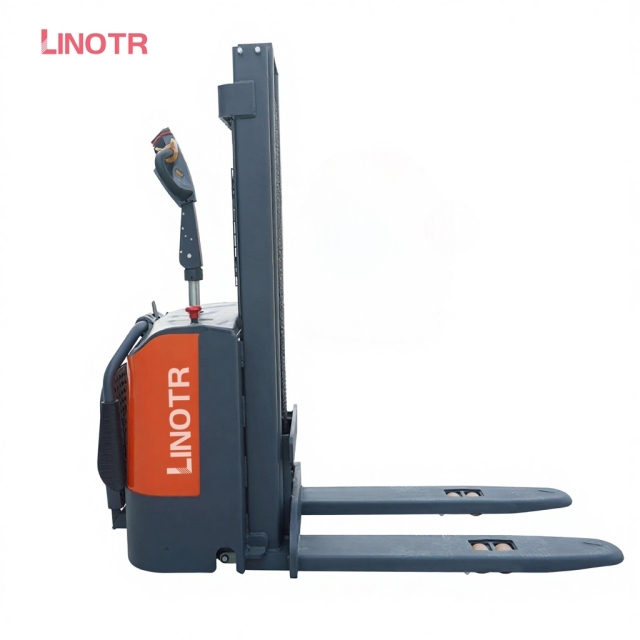
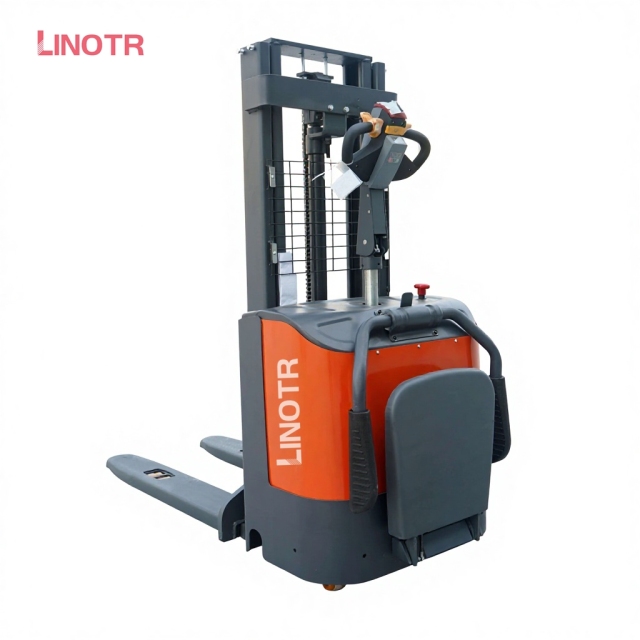
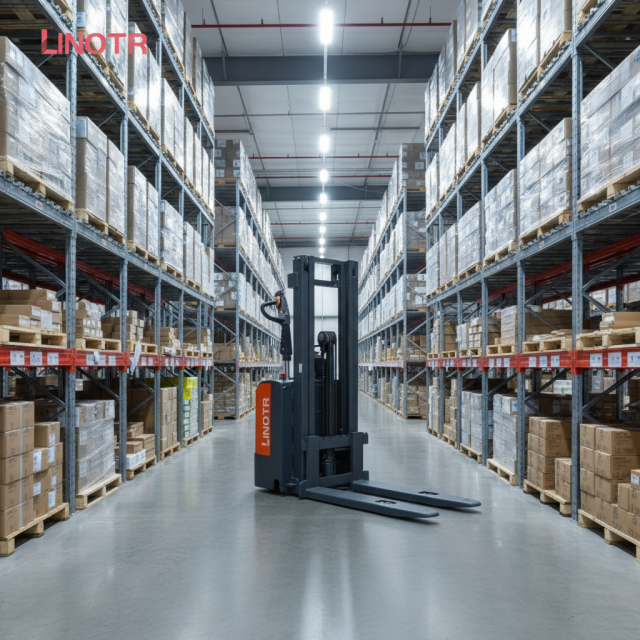
This stand-on electric stacker is built for warehouses that put pallets into racking rather than only moving them across the floor. The operator stands on the platform and rides with the load, so a put-away round costs a fraction of the walking a hand-guided truck demands. Mast options cover low-level block stacking through to high-level racking, and the truck is designed around indoor conditions — sealed floors, standard pallets and repeated lift cycles. It is the machine you keep on the put-away route all shift rather than a specialist unit for occasional lifts.
We supply material handling equipment as a complete range rather than a single machine: electric pallet trucks and stand-on stackers for warehouse and dock work, and diesel and rough-terrain forklifts for heavier outdoor duties, covering roughly 1.5T to 5T. That breadth lets fleet buyers standardise on one supplier across indoor and outdoor sites and match each job to the right power type and capacity. Tell us your load, terrain and duty cycle, and we will help you select the correct model from the range.
A pallet truck moves loads horizontally at low height, while this stacker raises them to rack level, so a put-away finishes in one pass instead of being staged on the floor and handled twice. That lifting ability is what changes the job: the same truck carries the pallet to the rack face and places it. If your work is dock-to-rack transport with no lifting involved, a pallet truck stays the simpler machine.
Size the truck on your heaviest routine pallet rather than the average one, and check that the load stays inside the rated capacity with a margin. As electric stacker manufacturers we build the same stand-on platform in a 2 t version, so the step up is straightforward if loads regularly sit close to the rating or if you stack near the top of the mast range. If your pallets are standard and your racking sits comfortably inside the mast heights, the smaller rating is the more economical choice.
Plan on a minimum aisle width of 2,300 mm and a turning radius of 1,400 mm, which fits standard warehouse layouts rather than only open floor. Measure the tightest point of the route — rack ends, doorways and column bases — instead of the average aisle. Where the layout is genuinely tight, treat the turn at the rack end the way you would with a narrow aisle electric forklift and re-check it before committing.
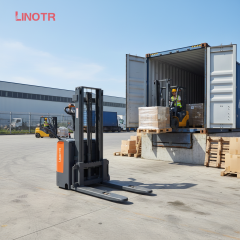
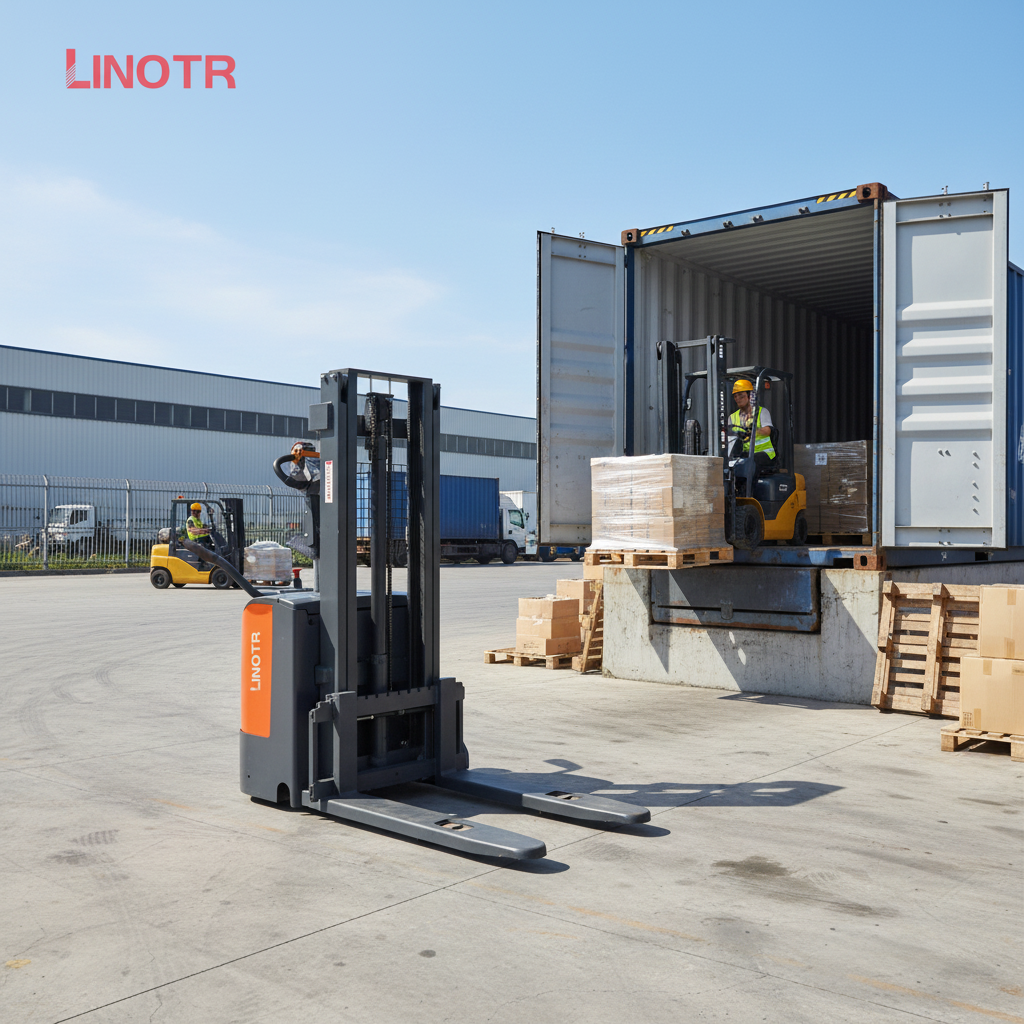
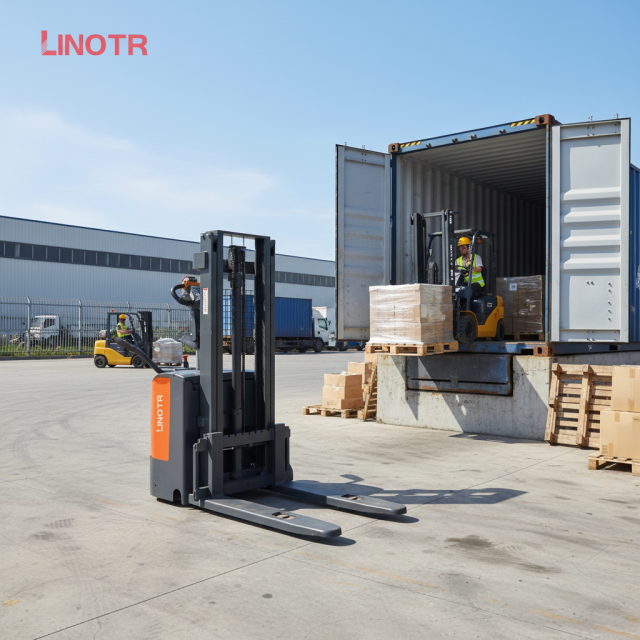
Yes, for palletised loads that stay inside the rated capacity. The stand-on platform keeps the operator steady on a dock plate, and the forks are sized for standard pallets so the load sits close to the carriage. Check the plate or ramp for condition and gradient, travel with the load low and confirm the trailer floor will take the truck and load together; for heavy or non-palletised loads, a counterbalance truck is the better tool, and as electric forklift manufacturers we build that class too.
At 65 dB(A) at the operator's ear it is about the level of ordinary conversation, and the drive is fully electric with no exhaust note and no fumes. That is why this class of truck is common in food, pharmaceutical and packaging facilities where air quality and shared working space matter. If your site runs its own noise assessment, use that alongside the figure above.
A short walkaround before each shift covers most of it: look for flat spots or damage on the wheels and load rollers, check the lifting chain and mast rollers for wear or slack, and inspect the forks and load guard for cracks or bends. Test the control handles and travel brake response before the truck goes into service, and keep the battery charged to suit your shift pattern with the terminals clean and dry. Report anything unusual to maintenance rather than working around it, because most stacking damage starts as a small fault left alone.