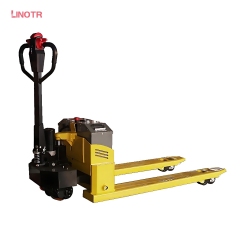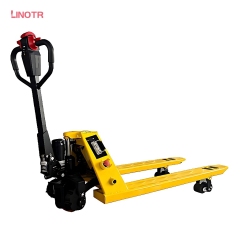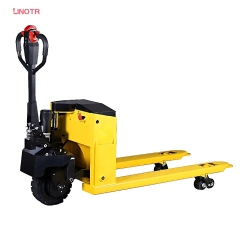
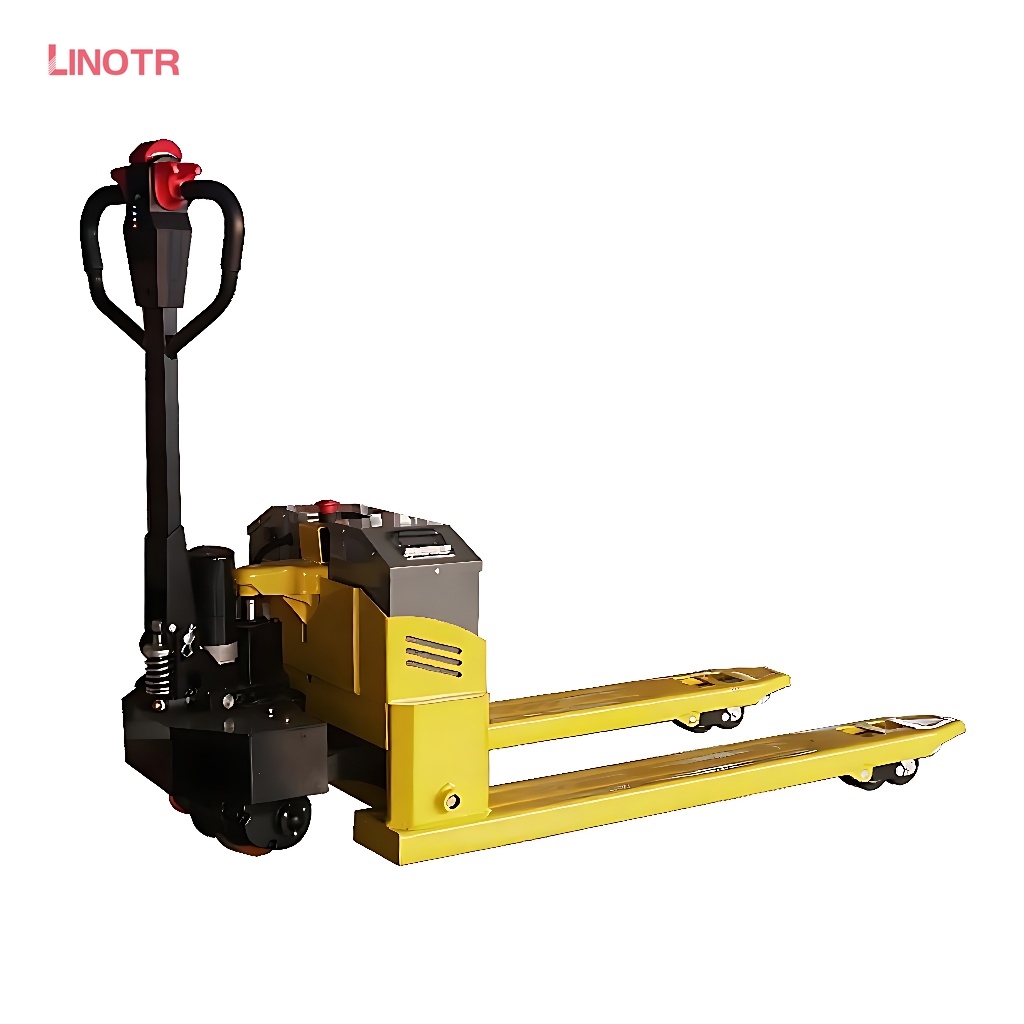
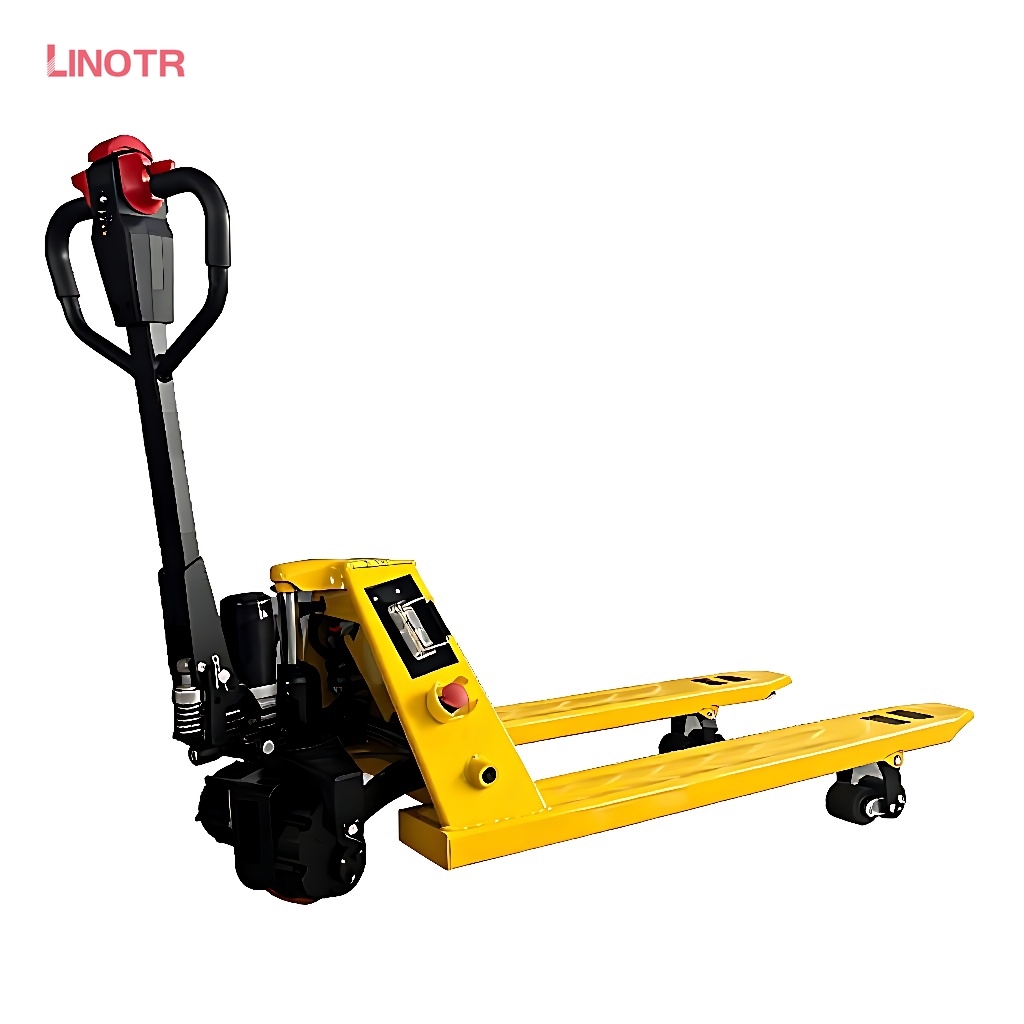
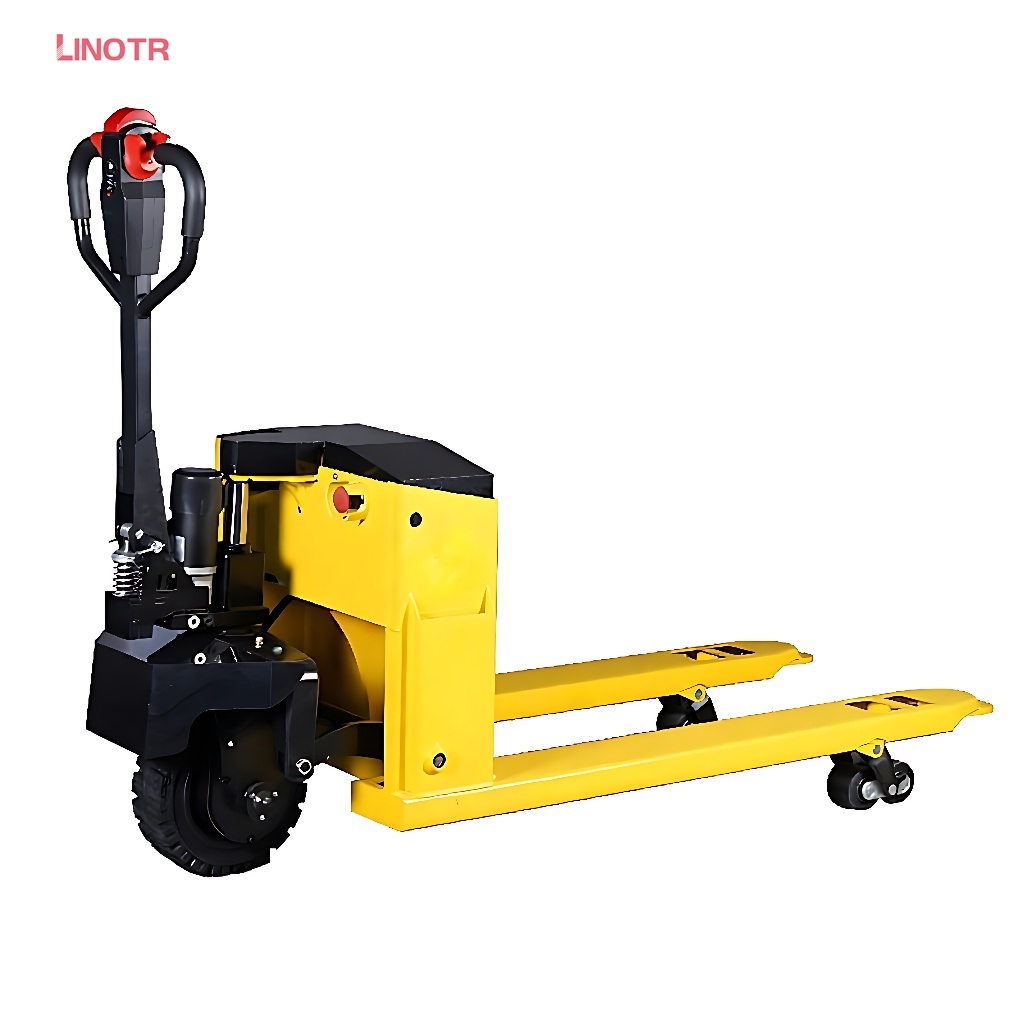
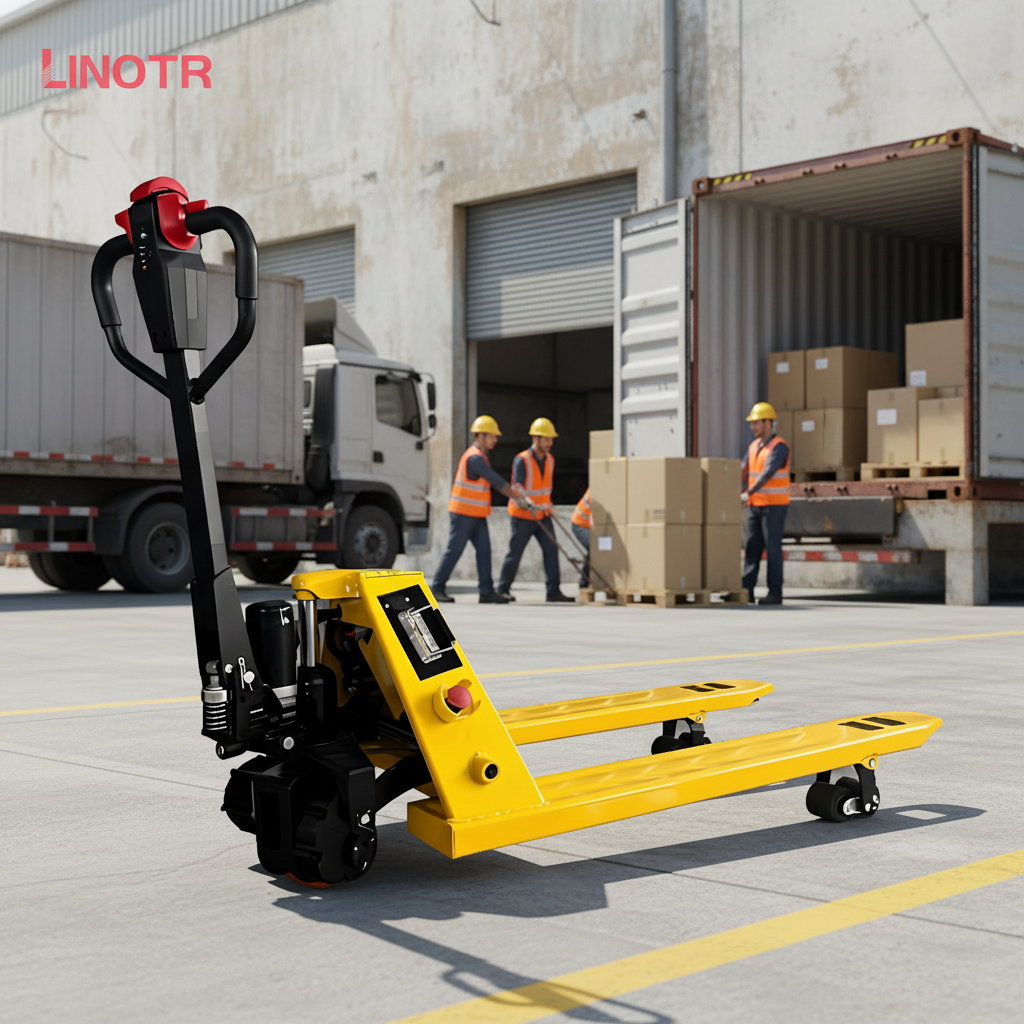
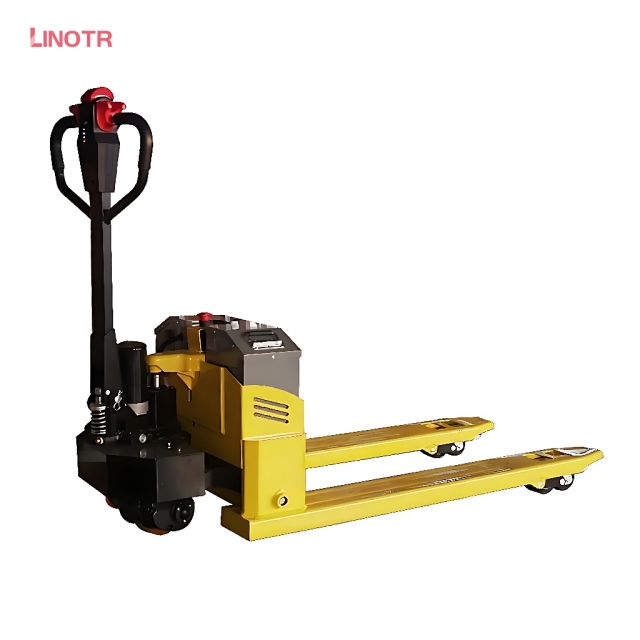
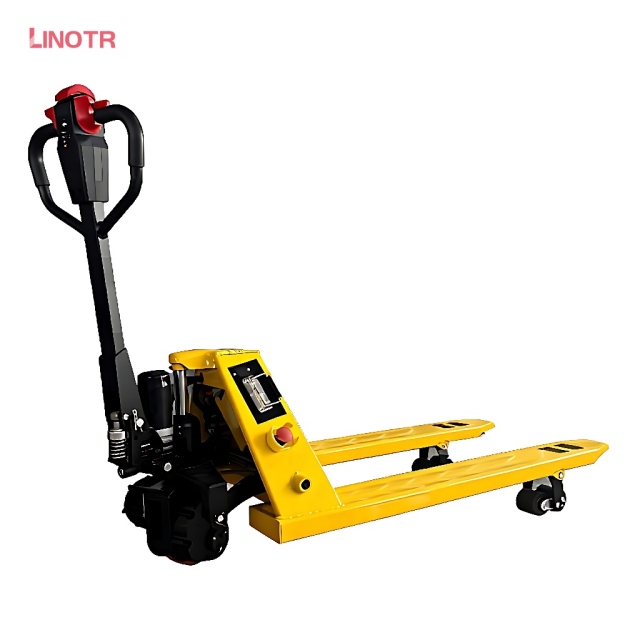
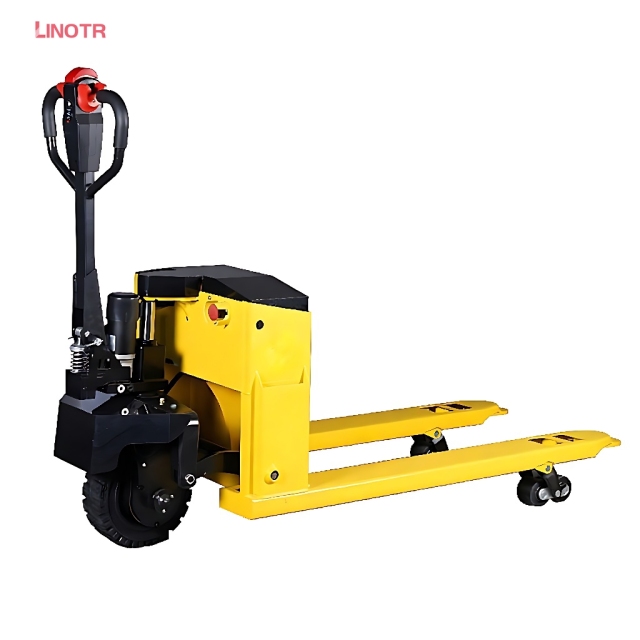
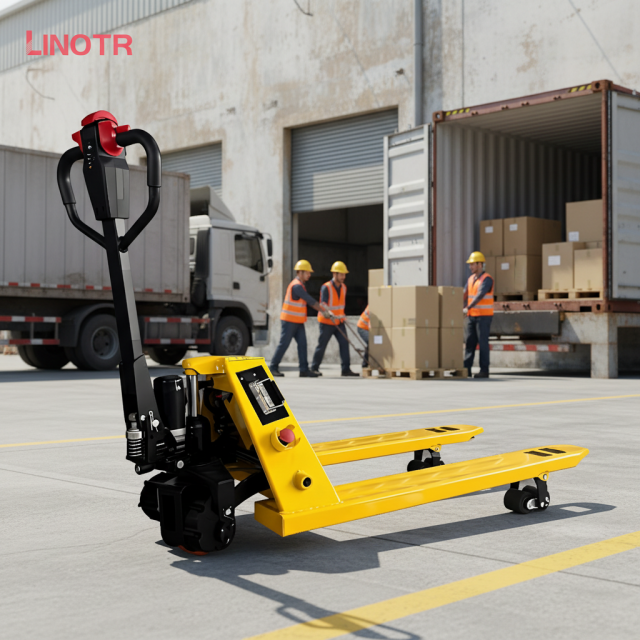
| Model | CBD-15 |
| Fork length | 1160mm |
| total width | 550/685mm |
| overall length | 1600mm |
| total height | 1240mm |
| operating method | Motorized Lifting Motorized Walking |
| output voltage | Charge 220V/Output 48V |
| Battery Type | lead-acid battery |
| Lifting height | 85mm-200mm |
| rated load | 1500KG |


Warehouse work is mostly horizontal: a pallet arrives on a trailer, travels to a storage bay or a pick face, and moves again once the order is picked. The CBD-15 is built for that traffic — a 1.5-tonne truck that lifts and drives under motor power, so the operator steers from the tiller and walks beside a loaded pallet. We are an electric forklift manufacturer, and this model sits at the light end of the range we build. Most buyers are equipping a warehouse, a distribution centre, a manufacturing plant or a wholesale store, and they want everyday pallet movement covered without the cost and footprint of a counterbalance forklift.
On any industrial electric pallet truck the battery sets the pace of the working day, and this model carries a lead-acid pack under a covered compartment behind the control housing. Lead-acid is a long-established traction battery with simple ownership routines: charge after every shift rather than part-way through one, check the cells regularly, and keep the cover closed so dust and splashes stay off the terminals. Park the charger on a dry, ventilated surface with the cable clear of the traffic path, and tell us the mains supply at your site when you order so the charger matches your building. Keeping the compartment clean and the terminals dry is the main thing that protects battery life.
We supply material handling equipment as a complete range rather than a single machine: electric pallet trucks and stand-on stackers for warehouse and dock work, and diesel and rough-terrain forklifts for heavier outdoor duties, covering roughly 1.5T to 5T. That breadth lets fleet buyers standardise on one supplier across indoor and outdoor sites and match each job to the right power type and capacity. Tell us your load, terrain and duty cycle, and we will help you select the correct model from the range.
No — the forks on this model cover the low lift a pallet truck needs to get a load off the floor and travel with it, not the shelf-height lift that stacking calls for. Putting pallets away on racking is a job for a stand-on electric stacker or a counterbalance forklift, and both sit in the same warehouse handling equipment range we build.
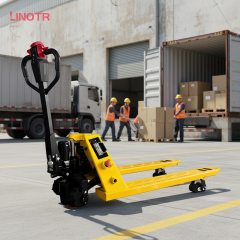
That is the job this truck is sized for. Travel and lift are both powered, so a full pallet moves with the operator walking alongside instead of pulling the load by hand, and the effort of a long shift drops away. Teams usually put an electric pallet truck like this on receiving, dock-to-storage runs and line feeding, where a manual jack is too slow and a forklift is more machine than the task needs.
It is built for firm, level floors — warehouse aisles, loading bays and paved dock aprons. Ramps and unpaved yards call for a different machine, which is where our rough-terrain forklifts and diesel trucks come in. If your route does include a slope or a rough patch, send us the layout before you order and we will tell you plainly whether this truck suits it.
There is a red emergency stop button on the tiller, within reach of the hand that is already steering. Pressing it cuts the drive immediately, and normal travel is controlled through the same tiller, so the operator never has to reach past the load. Steer, travel and stop all sit under one hand on this electric powered pallet truck.
This electric pallet truck is offered with two fork widths. Measure the entry opening on the pallets you handle most often and tell us the measurement, and we will confirm the right option — narrower forks suit the common pallet sizes, while wider or heavier pallets may call for the wider set. Settling it at order stage means the forks slide in cleanly first time, every time.
Running time on an industrial electric pallet truck depends on the load, the distance covered and the condition of the battery, so it is matched to your shift rather than quoted as a single number. Tell us how many hours and how many pallets a day the truck will cover, and we will confirm the battery provision that suits — including a spare pack where one truck has to cover two shifts.